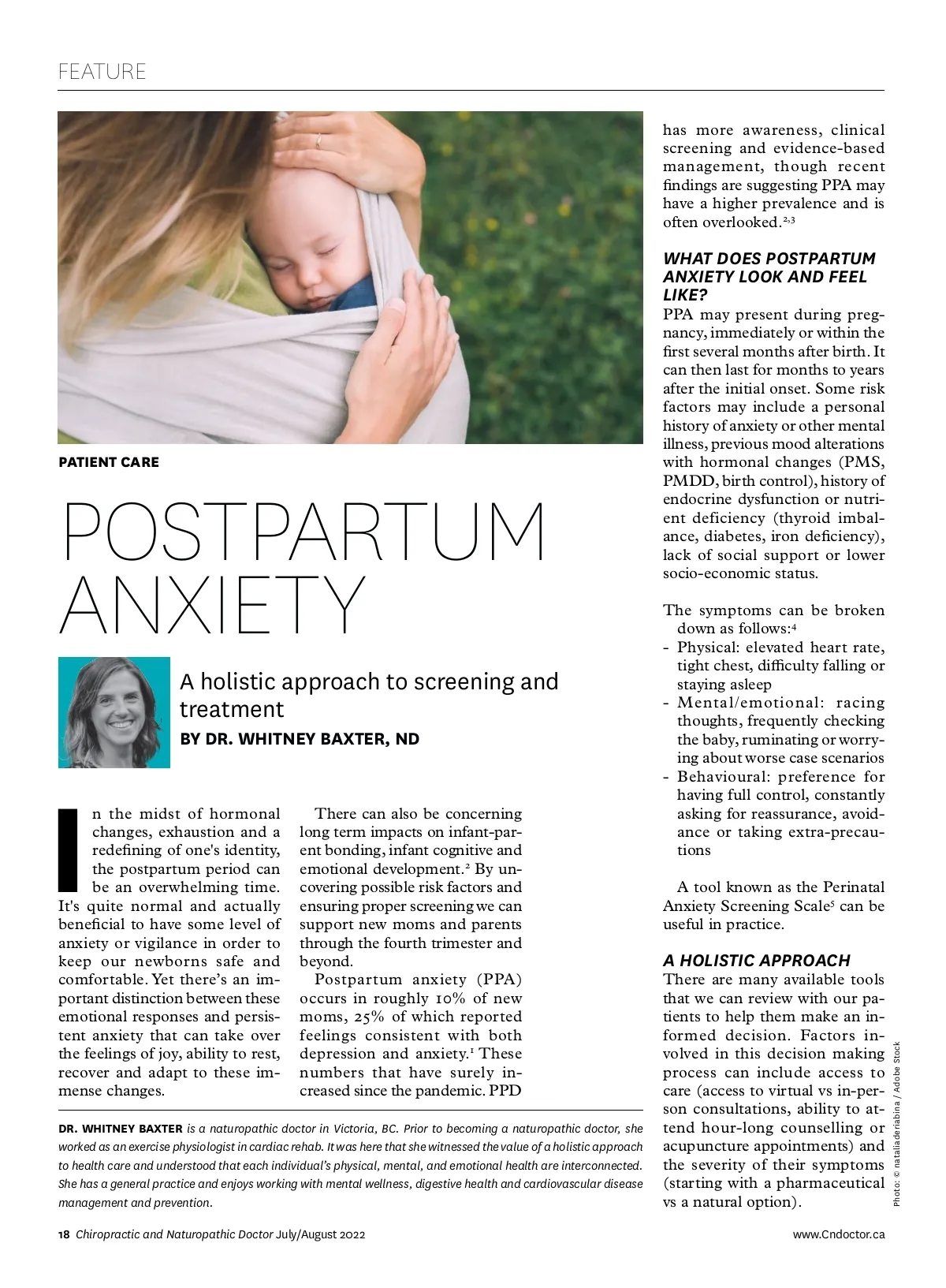
FEATURE has more awareness, clinical screening and evidence-based management, though recent findings are suggesting PPA may have a higher prevalence and is often overlooked. 2,3 WHAT DOES POSTPARTUM ANXIETY LOOK AND FEEL LIKE? PATIENT CARE POSTPARTUM ANXIETY A holistic approach to screening and treatment PPA may present during preg-nancy, immediately or within the first several months after birth. It can then last for months to years after the initial onset. Some risk factors may include a personal history of anxiety or other mental illness, previous mood alterations with hormonal changes (PMS, PMDD, birth control), history of endocrine dysfunction or nutri-ent deficiency (thyroid imbal-ance, diabetes, iron deficiency), lack of social support or lower socio-economic status. The symptoms can be broken down as follows: 4 -Physical: elevated heart rate, tight chest, difficulty falling or staying asleep -Mental/emotional: racing thoughts, frequently checking the baby, ruminating or worry-ing about worse case scenarios -Behavioural: preference for having full control, constantly asking for reassurance, avoid-ance or taking extra-precau-tions A tool known as the Perinatal Anxiety Screening Scale 5 can be useful in practice. I BY DR. WHITNEY BAXTER, ND DR. WHITNEY BAXTER is a naturopathic doctor in Victoria, BC. Prior to becoming a naturopathic doctor, she worked as an exercise physiologist in cardiac rehab. It was here that she witnessed the value of a holistic approach to health care and understood that each individual’s physical, mental, and emotional health are interconnected. She has a general practice and enjoys working with mental wellness, digestive health and cardiovascular disease management and prevention. 18 Chiropractic and Naturopathic Doctor July/August 2022 www.Cndoctor.ca Photo: © nataliaderiabina / Adobe Stock n the midst of hormonal changes, exhaustion and a redefining of one's identity, the postpartum period can be an overwhelming time. It's quite normal and actually beneficial to have some level of anxiety or vigilance in order to keep our newborns safe and comfortable. Yet there’s an im-portant distinction between these emotional responses and persis-tent anxiety that can take over the feelings of joy, ability to rest, recover and adapt to these im-mense changes. There can also be concerning long term impacts on infant-par-ent bonding, infant cognitive and emotional development. 2 By un-covering possible risk factors and ensuring proper screening we can support new moms and parents through the fourth trimester and beyond. Postpartum anxiety (PPA) occurs in roughly 10% of new moms, 25% of which reported feelings consistent with both depression and anxiety. 1 These numbers that have surely in-creased since the pandemic. PPD A HOLISTIC APPROACH There are many available tools that we can review with our pa-tients to help them make an in-formed decision. Factors in-volved in this decision making process can include access to care (access to virtual vs in-per-son consultations, ability to at-tend hour-long counselling or acupuncture appointments) and the severity of their symptoms (starting with a pharmaceutical vs a natural option).
Chiropractic + Naturopathic Doctor July/August 2022: Page 18