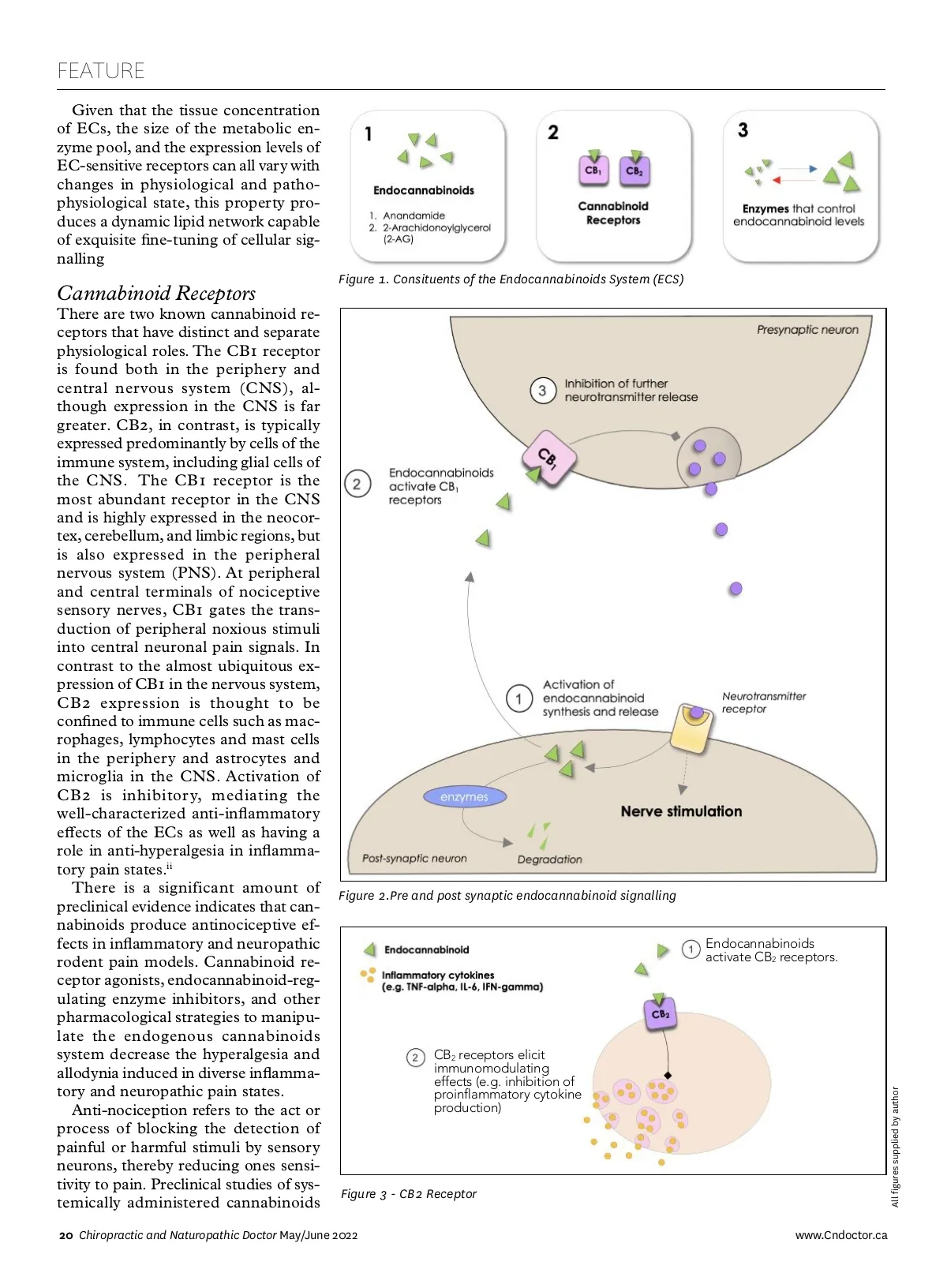
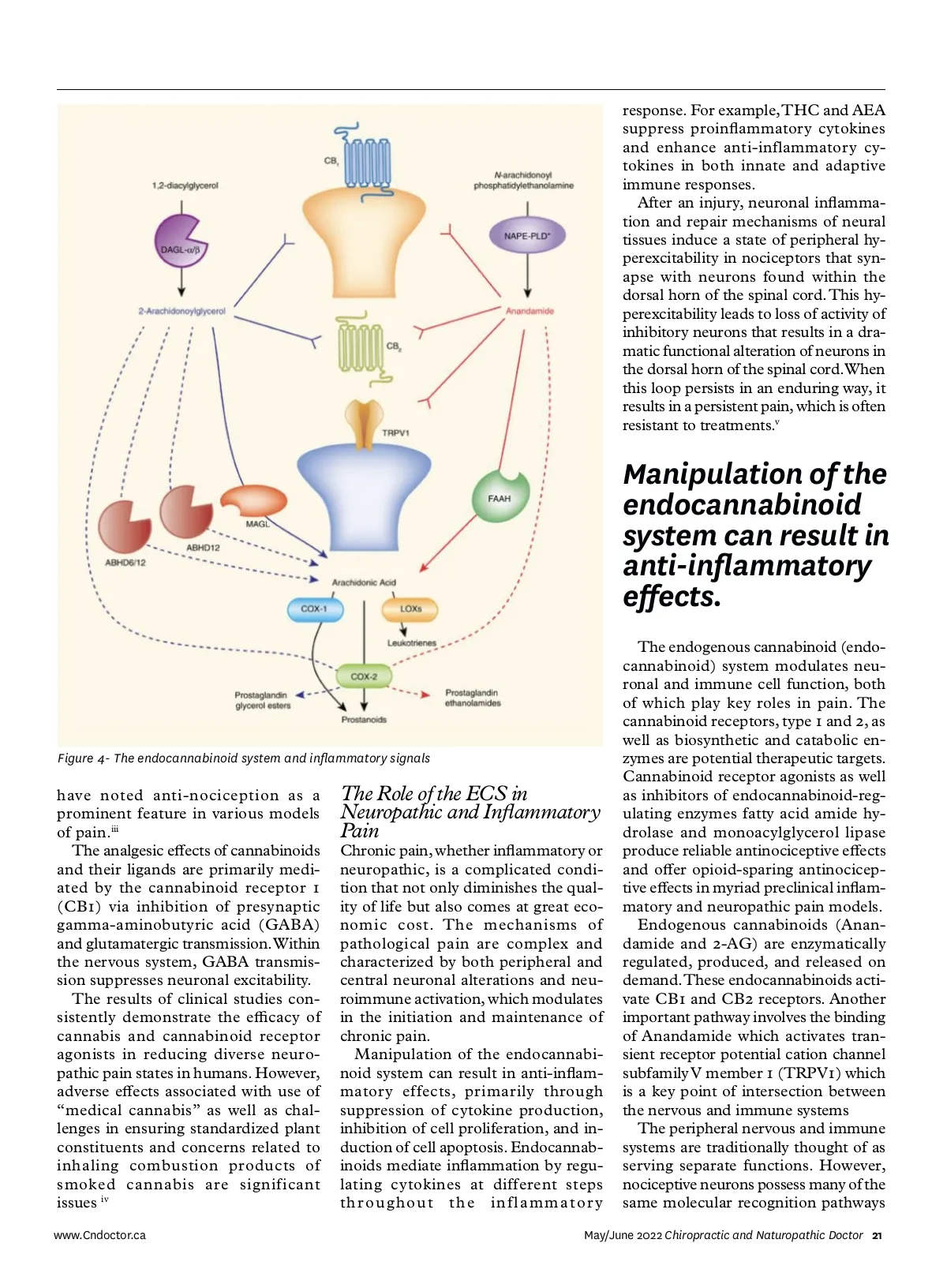
FEATURE Given that the tissue concentration of ECs, the size of the metabolic en-zyme pool, and the expression levels of EC-sensitive receptors can all vary with changes in physiological and patho-physiological state, this property pro-duces a dynamic lipid network capable of exquisite fine-tuning of cellular sig-nalling There are two known cannabinoid re-ceptors that have distinct and separate physiological roles. The CB1 receptor is found both in the periphery and central nervous system (CNS), al-though expression in the CNS is far greater. CB2, in contrast, is typically expressed predominantly by cells of the immune system, including glial cells of the CNS. The CB1 receptor is the most abundant receptor in the CNS and is highly expressed in the neocor-tex, cerebellum, and limbic regions, but is also expressed in the peripheral nervous system (PNS). At peripheral and central terminals of nociceptive sensory nerves, CB1 gates the trans-duction of peripheral noxious stimuli into central neuronal pain signals. In contrast to the almost ubiquitous ex-pression of CB1 in the nervous system, CB2 expression is thought to be confined to immune cells such as mac-rophages, lymphocytes and mast cells in the periphery and astrocytes and microglia in the CNS. Activation of CB2 is inhibitory, mediating the well-characterized anti-inflammatory effects of the ECs as well as having a role in anti-hyperalgesia in inflamma-tory pain states. ii There is a significant amount of preclinical evidence indicates that can-nabinoids produce antinociceptive ef-fects in inflammatory and neuropathic rodent pain models. Cannabinoid re-ceptor agonists, endocannabinoid-reg-ulating enzyme inhibitors, and other pharmacological strategies to manipu-late the endogenous cannabinoids system decrease the hyperalgesia and allodynia induced in diverse inflamma-tory and neuropathic pain states. Anti-nociception refers to the act or process of blocking the detection of painful or harmful stimuli by sensory neurons, thereby reducing ones sensi-tivity to pain. Preclinical studies of sys-temically administered cannabinoids Cannabinoid Receptors Figure 1. Consituents of the Endocannabinoids System (ECS) Figure 2.Pre and post synaptic endocannabinoid signalling Endocannabinoids activate CB 2 receptors. Figure 3 -CB2 Receptor www.Cndoctor.ca 20 Chiropractic and Naturopathic Doctor May/June 2022 All figures supplied by author CB 2 receptors elicit immunomodulating effects (e.g. inhibition of proinflammatory cytokine production)
Chiropractic + Naturopathic Doctor June 2022: Page 20