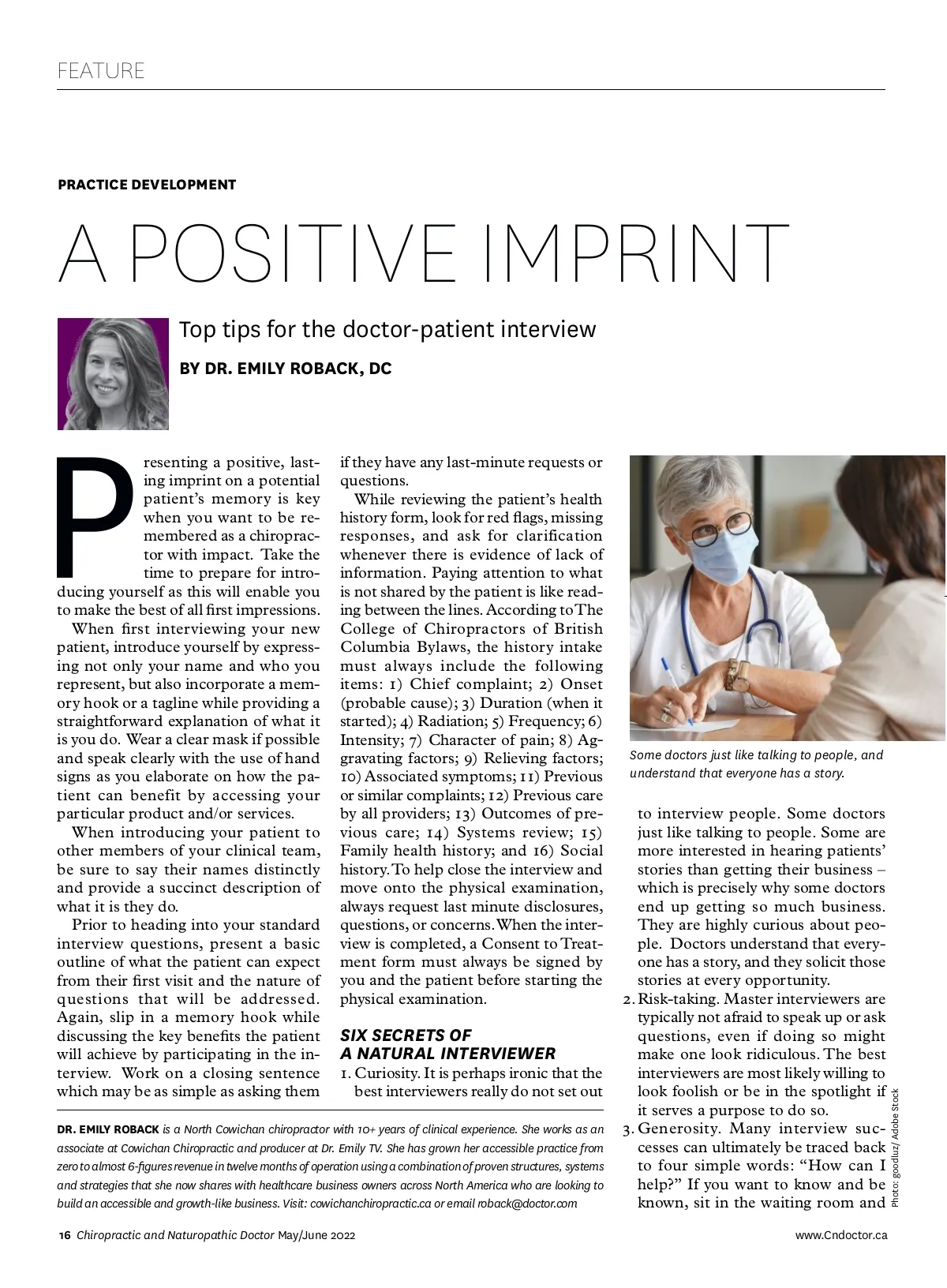
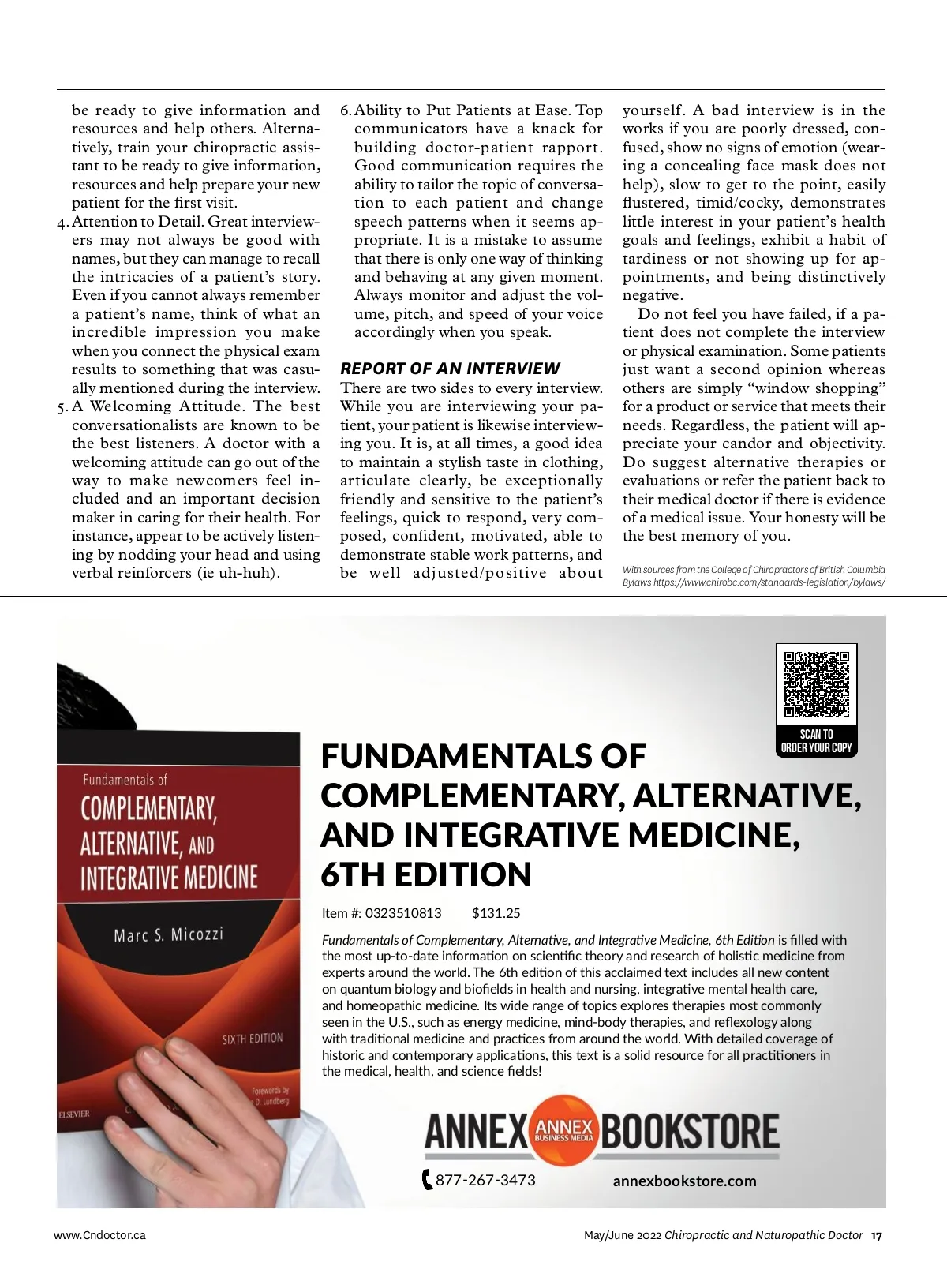
FEATURE PRACTICE DEVELOPMENT A POSITIVE IMPRINT Top tips for the doctor-patient interview BY DR. EMILY ROBACK, DC P DR. EMILY ROBACK is a North Cowichan chiropractor with 10+ years of clinical experience. She works as an associate at Cowichan Chiropractic and producer at Dr. Emily TV. She has grown her accessible practice from zero to almost 6-figures revenue in twelve months of operation using a combination of proven structures, systems and strategies that she now shares with healthcare business owners across North America who are looking to build an accessible and growth-like business. Visit: cowichanchiropractic.ca or email [email protected] 16 Chiropractic and Naturopathic Doctor May/June 2022 www.Cndoctor.ca Photo: goodluz/ Adobe Stock resenting a positive, last-ing imprint on a potential patient’s memory is key when you want to be re-membered as a chiroprac-tor with impact. Take the time to prepare for intro-ducing yourself as this will enable you to make the best of all first impressions. When first interviewing your new patient, introduce yourself by express-ing not only your name and who you represent, but also incorporate a mem-ory hook or a tagline while providing a straightforward explanation of what it is you do. Wear a clear mask if possible and speak clearly with the use of hand signs as you elaborate on how the pa-tient can benefit by accessing your particular product and/or services. When introducing your patient to other members of your clinical team, be sure to say their names distinctly and provide a succinct description of what it is they do. Prior to heading into your standard interview questions, present a basic outline of what the patient can expect from their first visit and the nature of questions that will be addressed. Again, slip in a memory hook while discussing the key benefits the patient will achieve by participating in the in-terview. Work on a closing sentence which may be as simple as asking them if they have any last-minute requests or questions. While reviewing the patient’s health history form, look for red flags, missing responses, and ask for clarification whenever there is evidence of lack of information. Paying attention to what is not shared by the patient is like read-ing between the lines. According to The College of Chiropractors of British Columbia Bylaws, the history intake must always include the following items: 1) Chief complaint; 2) Onset (probable cause); 3) Duration (when it started); 4) Radiation; 5) Frequency; 6) Intensity; 7) Character of pain; 8) Ag-gravating factors; 9) Relieving factors; 10) Associated symptoms; 11) Previous or similar complaints; 12) Previous care by all providers; 13) Outcomes of pre-vious care; 14) Systems review; 15) Family health history; and 16) Social history. To help close the interview and move onto the physical examination, always request last minute disclosures, questions, or concerns. When the inter-view is completed, a Consent to Treat-ment form must always be signed by you and the patient before starting the physical examination. Some doctors just like talking to people, and understand that everyone has a story. SIX SECRETS OF A NATURAL INTERVIEWER 1. Curiosity. It is perhaps ironic that the best interviewers really do not set out to interview people. Some doctors just like talking to people. Some are more interested in hearing patients’ stories than getting their business – which is precisely why some doctors end up getting so much business. They are highly curious about peo-ple. Doctors understand that every-one has a story, and they solicit those stories at every opportunity. 2. Risk-taking. Master interviewers are typically not afraid to speak up or ask questions, even if doing so might make one look ridiculous. The best interviewers are most likely willing to look foolish or be in the spotlight if it serves a purpose to do so. 3. Generosity. Many interview suc-cesses can ultimately be traced back to four simple words: “How can I help?” If you want to know and be known, sit in the waiting room and
Chiropractic + Naturopathic Doctor June 2022: Page 16