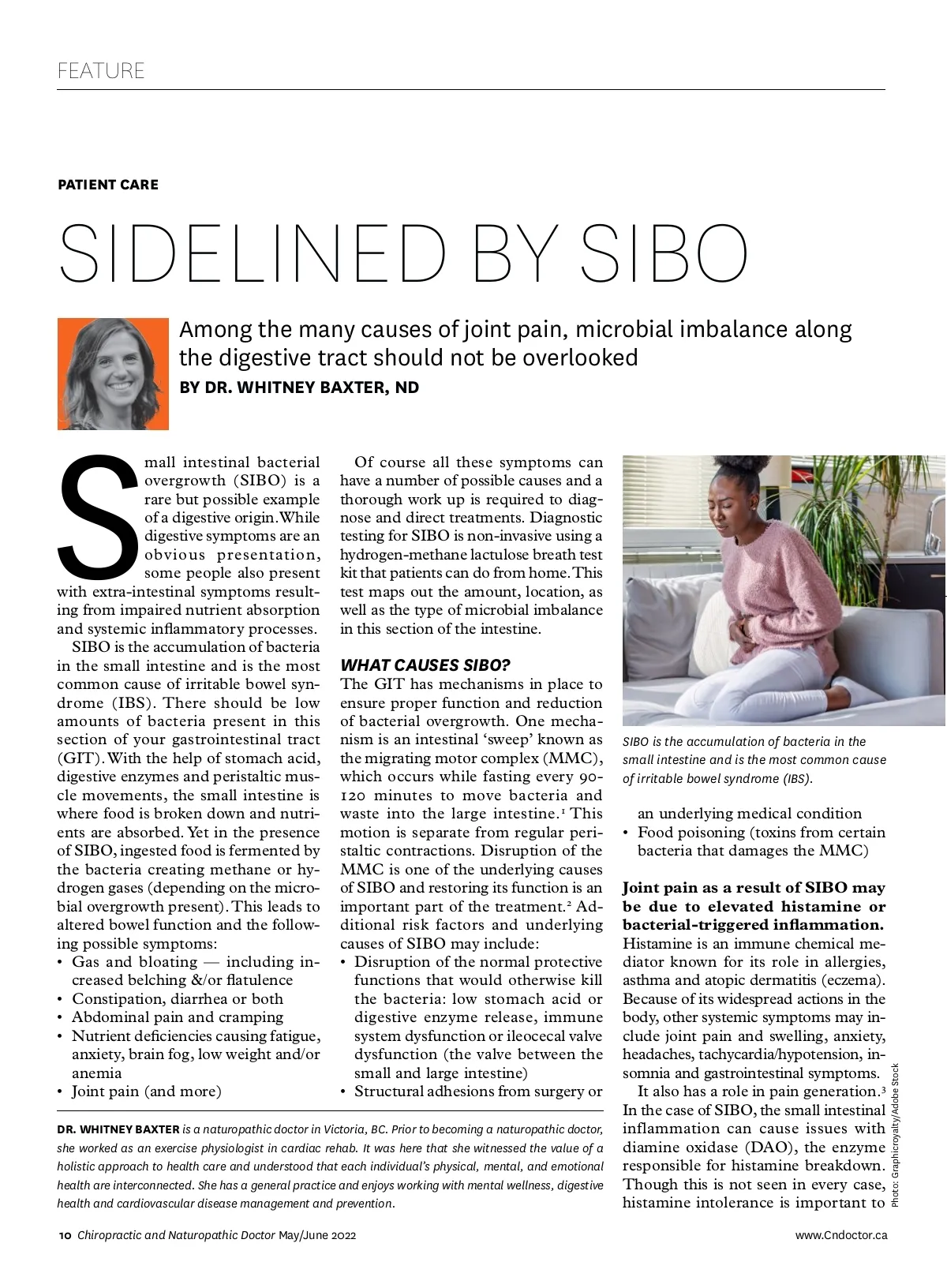
FEATURE PATIENT CARE SIDELINED BY SIBO Among the many causes of joint pain, microbial imbalance along the digestive tract should not be overlooked S BY DR. WHITNEY BAXTER, ND DR. WHITNEY BAXTER is a naturopathic doctor in Victoria, BC. Prior to becoming a naturopathic doctor, she worked as an exercise physiologist in cardiac rehab. It was here that she witnessed the value of a holistic approach to health care and understood that each individual’s physical, mental, and emotional health are interconnected. She has a general practice and enjoys working with mental wellness, digestive health and cardiovascular disease management and prevention. 10 Chiropractic and Naturopathic Doctor May/June 2022 www.Cndoctor.ca Photo: Graphicroyalty/Adobe Stock mall intestinal bacterial overgrowth (SIBO) is a rare but possible example of a digestive origin. While digestive symptoms are an obvious presentation, some people also present with extra-intestinal symptoms result-ing from impaired nutrient absorption and systemic inflammatory processes. SIBO is the accumulation of bacteria in the small intestine and is the most common cause of irritable bowel syn-drome (IBS). There should be low amounts of bacteria present in this section of your gastrointestinal tract (GIT). With the help of stomach acid, digestive enzymes and peristaltic mus-cle movements, the small intestine is where food is broken down and nutri-ents are absorbed. Yet in the presence of SIBO, ingested food is fermented by the bacteria creating methane or hy-drogen gases (depending on the micro-bial overgrowth present). This leads to altered bowel function and the follow-ing possible symptoms: • Gas and bloating — including in-creased belching &/or flatulence • Constipation, diarrhea or both • Abdominal pain and cramping • Nutrient deficiencies causing fatigue, anxiety, brain fog, low weight and/or anemia • Joint pain (and more) Of course all these symptoms can have a number of possible causes and a thorough work up is required to diag-nose and direct treatments. Diagnostic testing for SIBO is non-invasive using a hydrogen-methane lactulose breath test kit that patients can do from home. This test maps out the amount, location, as well as the type of microbial imbalance in this section of the intestine. WHAT CAUSES SIBO? The GIT has mechanisms in place to ensure proper function and reduction of bacterial overgrowth. One mecha-nism is an intestinal ‘sweep’ known as the migrating motor complex (MMC), which occurs while fasting every 90-120 minutes to move bacteria and waste into the large intestine. 1 This motion is separate from regular peri-staltic contractions. Disruption of the MMC is one of the underlying causes of SIBO and restoring its function is an important part of the treatment. 2 Ad-ditional risk factors and underlying causes of SIBO may include: • Disruption of the normal protective functions that would otherwise kill the bacteria: low stomach acid or digestive enzyme release, immune system dysfunction or ileocecal valve dysfunction (the valve between the small and large intestine) • Structural adhesions from surgery or SIBO is the accumulation of bacteria in the small intestine and is the most common cause of irritable bowel syndrome (IBS). an underlying medical condition • Food poisoning (toxins from certain bacteria that damages the MMC) Joint pain as a result of SIBO may be due to elevated histamine or bacterial-triggered inflammation. Histamine is an immune chemical me-diator known for its role in allergies, asthma and atopic dermatitis (eczema). Because of its widespread actions in the body, other systemic symptoms may in-clude joint pain and swelling, anxiety, headaches, tachycardia/hypotension, in-somnia and gastrointestinal symptoms. It also has a role in pain generation. 3 In the case of SIBO, the small intestinal inflammation can cause issues with diamine oxidase (DAO), the enzyme responsible for histamine breakdown. Though this is not seen in every case, histamine intolerance is important to
Chiropractic + Naturopathic Doctor June 2022: Page 10