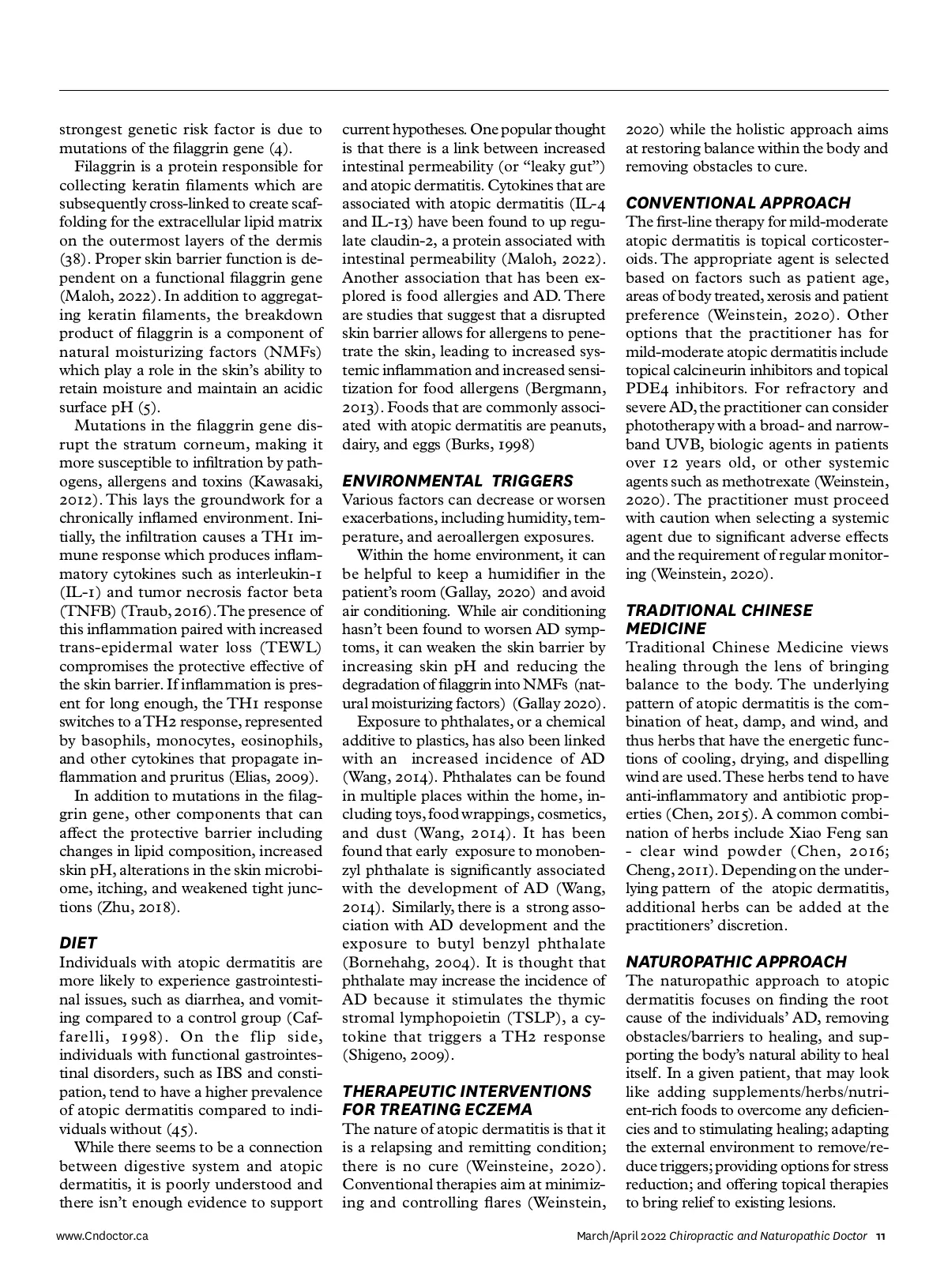
FEATURE PATIENT CARE ATOPIC DERMATITIS An integrative approach to atopic dermatitis BY DR. ESHA SINGH ND A COMMON CAUSES AND TRIGGERS AD is a complex condition with multiple DR. ESHA SINGH is is a naturopathic doctor practicing in Vancouver, BC. She has a clinical focus in skin health and uses an integrative approach to clinical dermatology. Dr. Esha strives to make information on skin health simple and accessible. 10 Chiropractic and Naturopathic Doctor March/April 2022 www.Cndoctor.ca Photo: © DragonImages / Adobe Stock topic dermatitis (AD) is one of the most com-mon dermatological conditions seen in prac-tice in both young and older patients. Up to 17% of Canadians ex-perience atopic dermatitis at some point in their lives (dermatology.ca, 2022). It affects 10-20% of the pediatric popula-tion and up to 3% of the adult population (Bieber, 2008). AD can present on its own, but is often a part of the atopic triad, which includes allergic rhinitis and asthma. Additionally, AD has been found to be associated with an increased risk of anxiety, depression, and suicidal ideation (Yaghmaje, 2013). A link between AD and cardiovascular conditions (cardio-vascular disease, coronary artery disease, and hypertension) has been acknowl-edged (Silverberg, 2015). AD is a complex condition with mul-tiple contributing factors. A singular cause has not yet been uncovered, but rather each individual may have a varied constellation of factors that lead to their development of AD. At best, it can be considered to be a T-cell driven process with epidermal barrier dysfunction. Keeping the diversity of contributing factors in mind, it is safe to say that a cookie-cutter approach may not always be appropriate or effective in managing AD. The integrative approach to man-aging atopic dermatitis takes into con-sideration factors that may predispose the individual to AD, factors that may exacerbate AD flares, current treatment guidelines, as well as proven alternative therapies on a case-by-case basis. DIAGNOSIS When dealing with a patient with AD, a detailed patient history is imperative. Not only will this provide the basic in-formation needed to make a diagnosis, but also gives the practitioner clues about which therapeutic route may be most beneficial. A diagnosis of AD can be made with a detailed patient history, a physical exam of the lesion(s) includ-ing morphology and distribution, and key symptoms (Berke, 2012). The U.K. Working Party’s Diagnostic Criteria for Atopic Dermatitis is commonly used when making a diagnosis (Russel, 2001). U.K. Working Party’s Diagnostic Criteria for Atopic Dermatitis: • Itchy skin • At least 3 of the following: • Onset under the age of two years • A history of flexural involvement • A history of asthma or hay fever/ history of atopic disease in siblings and parents if the child is under 4 years • A history of dry skin in the last year • Visible flexural dermatitis When dealing with a patient with atopic dermatitis, patient history is imperative. factors that can increase the incidence and further exacerbate it. These factors include: (1) genetics and family history; (2) cutaneous barrier dysfunction and increased permeability; (3) dysregula-tion of the immune system; (4) environ-mental factors; (5) digestive impair-ments; (6) nutritional deficiencies; and (7) stress (Maloh, 2022). GENETIC FACTORS The incidence of AD in infants is 2.6 times greater when there is a docu-mented family history of atopy (8). The genetic predisposition of AD has been extensively studied, and over 30 genetic loci have been identified (Løset, 2019). Mutations in these genes can cause immune dysregulation and disruptions in the skin barrier (8). Each mutation increases the risk of developing AD by 40-50% (Palmer, 2008). Of all the ge-netic loci that have been identified, the
Chiropractic + Naturopathic Doctor March/April 2022: Page 10