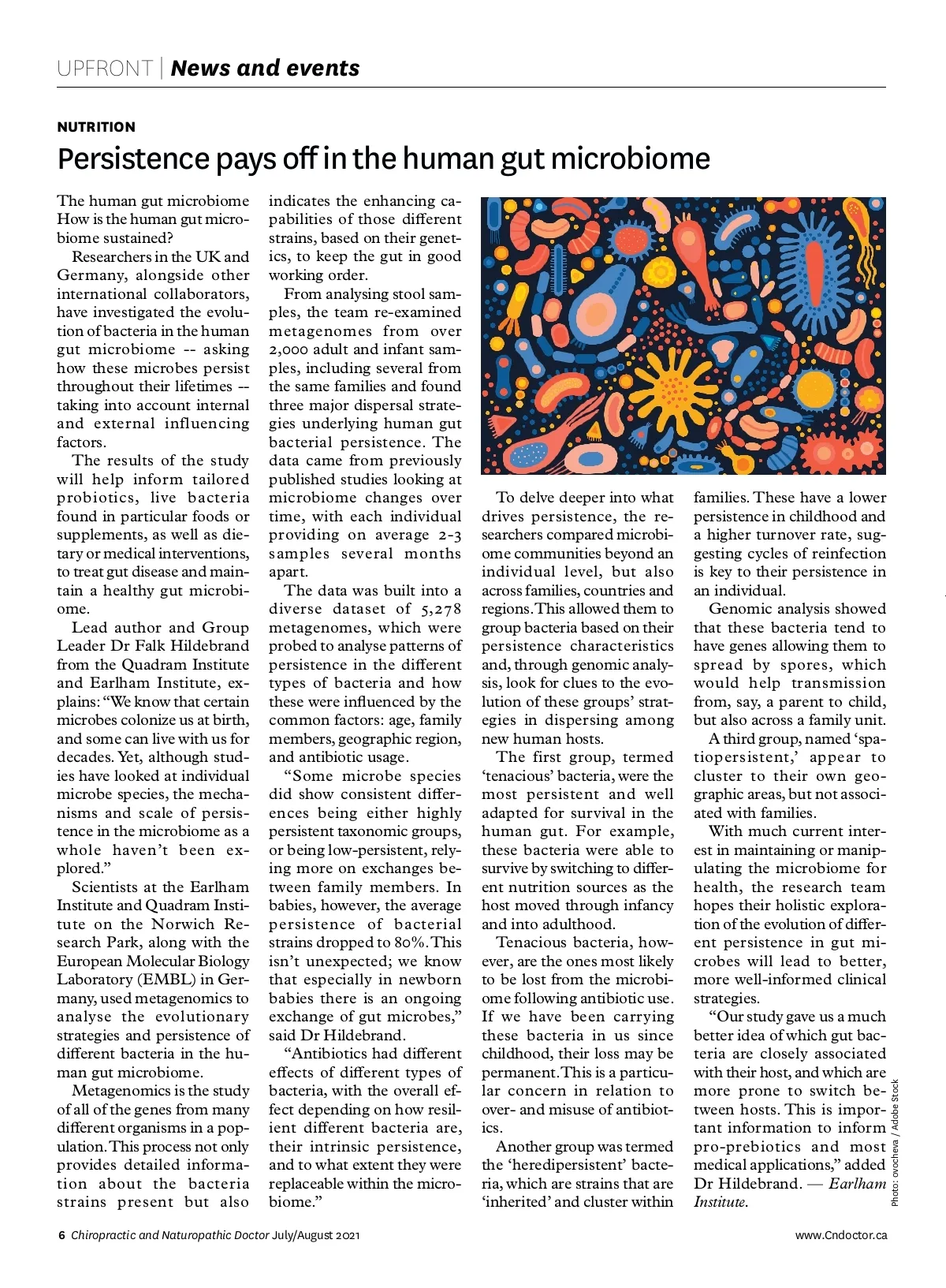
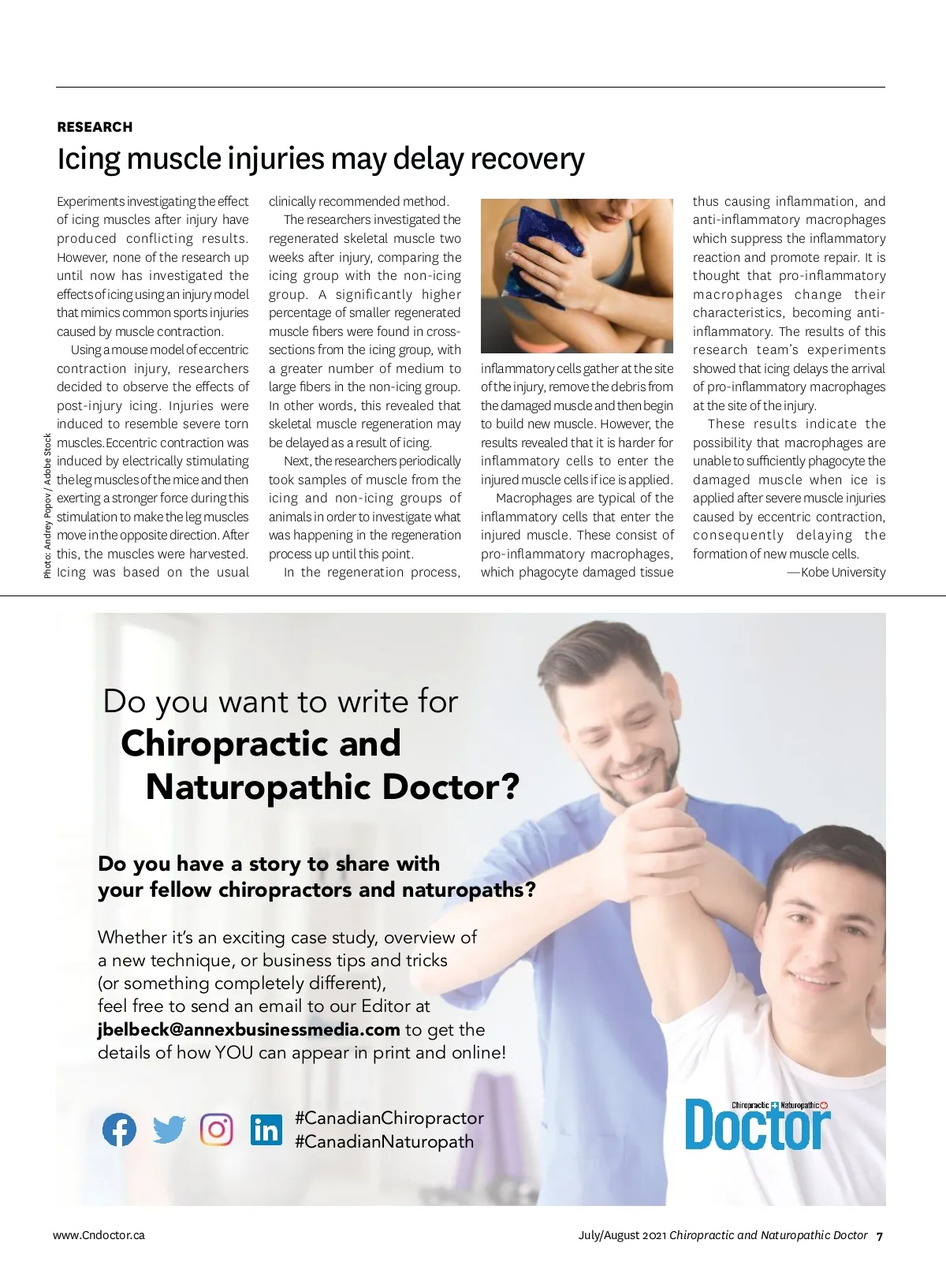
RESEARCH Icing muscle injuries may delay recovery Experiments investigating the effect of icing muscles after injury have produced conflicting results. However, none of the research up until now has investigated the effects of icing using an injury model that mimics common sports injuries caused by muscle contraction. Using a mouse model of eccentric contraction injury, researchers decided to observe the effects of post-injury icing. Injuries were induced to resemble severe torn muscles.Eccentric contraction was induced by electrically stimulating the leg muscles of the mice and then exerting a stronger force during this stimulation to make the leg muscles move in the opposite direction. After this, the muscles were harvested. Icing was based on the usual clinically recommended method. The researchers investigated the regenerated skeletal muscle two weeks after injury, comparing the icing group with the non-icing group. A significantly higher percentage of smaller regenerated muscle fibers were found in cross-sections from the icing group, with a greater number of medium to large fibers in the non-icing group. In other words, this revealed that skeletal muscle regeneration may be delayed as a result of icing. Next, the researchers periodically took samples of muscle from the icing and non-icing groups of animals in order to investigate what was happening in the regeneration process up until this point. In the regeneration process, thus causing inflammation, and anti-inflammatory macrophages which suppress the inflammatory reaction and promote repair. It is thought that pro-inflammatory macrophages change their characteristics, becoming anti-inflammatory. The results of this research team’s experiments showed that icing delays the arrival of pro-inflammatory macrophages at the site of the injury. These results indicate the possibility that macrophages are unable to sufficiently phagocyte the damaged muscle when ice is applied after severe muscle injuries caused by eccentric contraction, consequently delaying the formation of new muscle cells. — Kobe University inflammatory cells gather at the site of the injury, remove the debris from the damaged muscle and then begin to build new muscle. However, the results revealed that it is harder for inflammatory cells to enter the injured muscle cells if ice is applied. Macrophages are typical of the inflammatory cells that enter the injured muscle. These consist of pro-inflammatory macrophages, which phagocyte damaged tissue Photo: Andrey Popov / Adobe Stock Do you want to write for Chiropractic and Naturopathic Doctor? Do you have a story to share with your fellow chiropractors and naturopaths? Whether it’s an exciting case study, overview of a new technique, or business tips and tricks (or something completely different), feel free to send an email to our Editor at [email protected] to get the details of how YOU can appear in print and online! #CanadianChiropractor #CanadianNaturopath www.Cndoctor.ca CND_HouseAdwritefor_MayJune21_MLD.indd 1 July/August 2021 Chiropractic and Naturopathic Doctor 7 2021-05-06 9:10 AM
Chiropractic + Naturopathic Doctor July/August 2021: Page 7