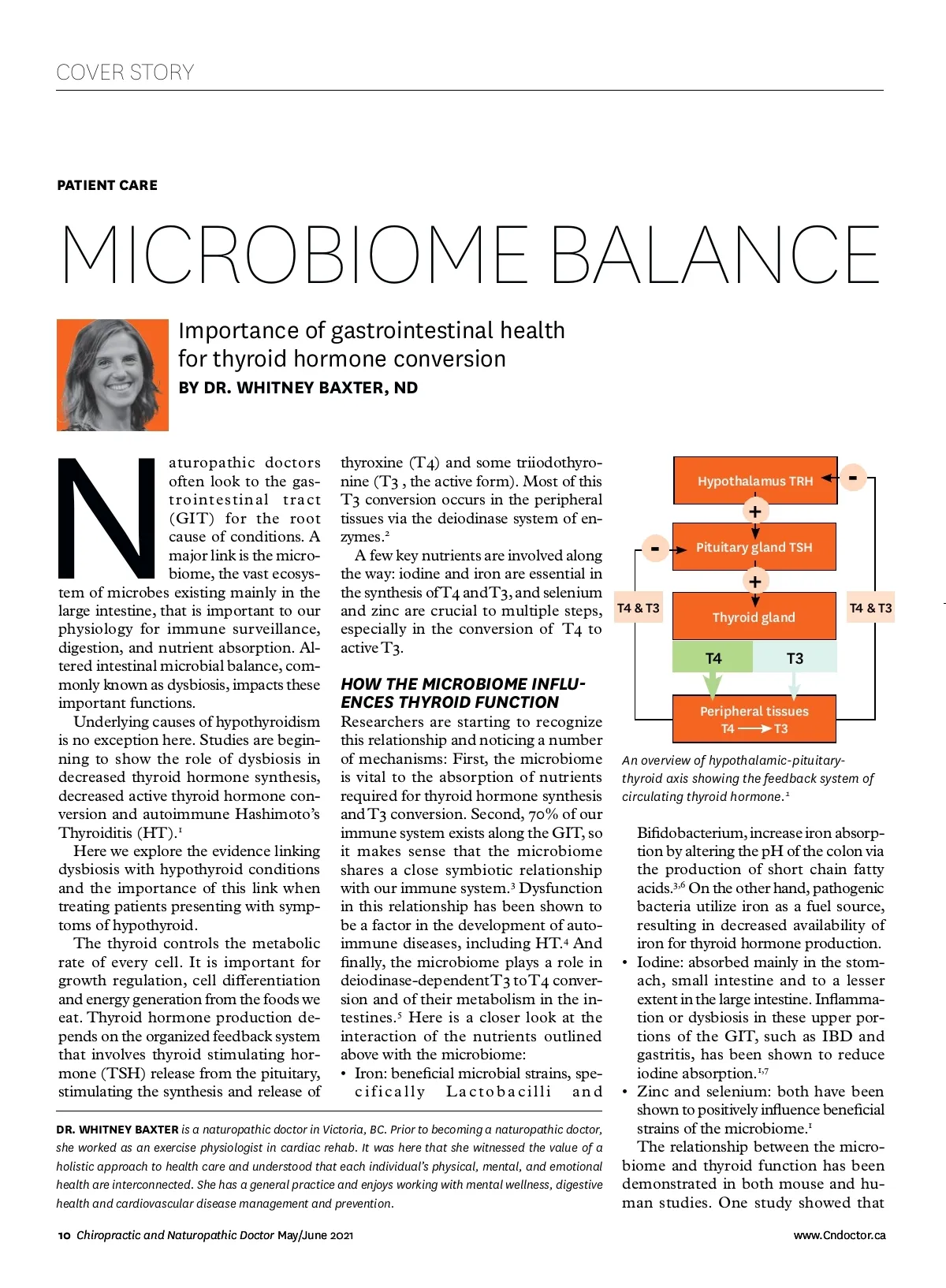
when mice were given probiotics with Lactobacillus reuterii species, there was increased thyroid function (higher levels of T4, larger thyroid gland mass, more active behaviour and thinner shape). 3 Probiotics are often used in addition to a gut healing protocol in patients with dysbiosis or other causes of GIT inflam-mation. More human studies are needed to better understand their specific ther-apeutic benefit for thyroid diseases and absorption of important minerals for T3 conversion. It has long been recognized that im-paired GIT integrity (increased perme-ability or “leaky gut”) and dysbiosis is correlated with autoimmune conditions including those of the GIT (IBD and celiac) and thyroid (both hyper – or Grave’s Disease, and hypo, HT). Different compositions of microflora are seen in those with autoimmune hypo-thyroidism and studies are beginning to discover potential mechanisms of disease etiology including self-antigen formation, reduced immune tolerance and production of inflammatory lipopolysac-charide from gram negative bacteria. 5 APPROACH TO HEALING When patients present with hypothyroid symptoms, a thorough assessment is done in order to determine underlying causes of thyroid dysfunction (symptom history, pertinent blood work and phys-ical exams). Underlying GIT inflamma-tion or dysbiosis should also be investi-gated in the presence of digestive symptoms (indigestion, bloating, etc.) or with comprehensive DNA microbial testing (stool testing). Therapies to support thyroid function include addressing nutrient status and reduction of inflammation either through the diet, supplementation or herbal med-icine. If needed, pharmaceutical inter-vention is considered to return TSH, T4 and T3 levels to their optimal range. Inflammation and dysbiosis along the GIT is treated by removing any inflam-matory triggers, supporting normal di-gestive function, and nutrients shown to repair the GIT lining and reduce inflam-mation (examples include L-glutamine, zinc and fibre). Each presenting case of hypothyroid-ism is unique, and with this comprehen-sive approach, any links between GIT health, dysbiosis and thyroid function can be discovered and supported. REFERENCES: 1. Fröhlich, E. and Wahl, R. (2019). Microbiota and Thyroid Inter-action in Health and Disease. Trends in Endocrinology and Metab-olism. Cell Press Reviews 2. Luongo, C.et al. (2019). Deiodinases and their intricate role in thyroid hormone homeostasis. Nat Rev Endocrinol 15, 479–488. https://doi.org/10.1038/s41574-019-0218-2 3. Knezevic, J. et al. (2020). Thyroid-Gut-Axis: How Does the Mi-crobiota Influence Thyroid Function?. Nutrients, 12(6), 1769. https://doi.org/10.3390/nu12061769 4. Lerner, A., Jeremias, P., & Matthias, T. (2017). Gut-thyroid axis and celiac disease. Endocrine connections, 6(4), R52–R58. https:// doi.org/10.1530/EC-17-0021 5. Virili, C., et al. (2018). Gut microbiota and Hashimoto’s thyroid-itis. Reviews in Endocrine and Metabolic Disorders. doi:10.1007/ s11154-018-9467-y 6. Yilmaz, B., & Li, H. (2018). Gut Microbiota and Iron: The Crucial Actors in Health and Disease. Pharmaceuticals (Basel, Switzerland), 11(4), 98. https://doi.org/10.3390/ph11040098 7. Beyer, S. (2016). Gut Microbes, Gut inflammation and your Thyroid. Integrative Brain and Body www.Cndoctor.ca CND_Contemporary Acupuncture_Mayjune21_CSA.indd 1 May/June 2021 Chiropractic and Naturopathic Doctor 11 2021-05-06 9:50 AM
Chiropractic + Naturopathic Doctor May/June 2021: Page 11