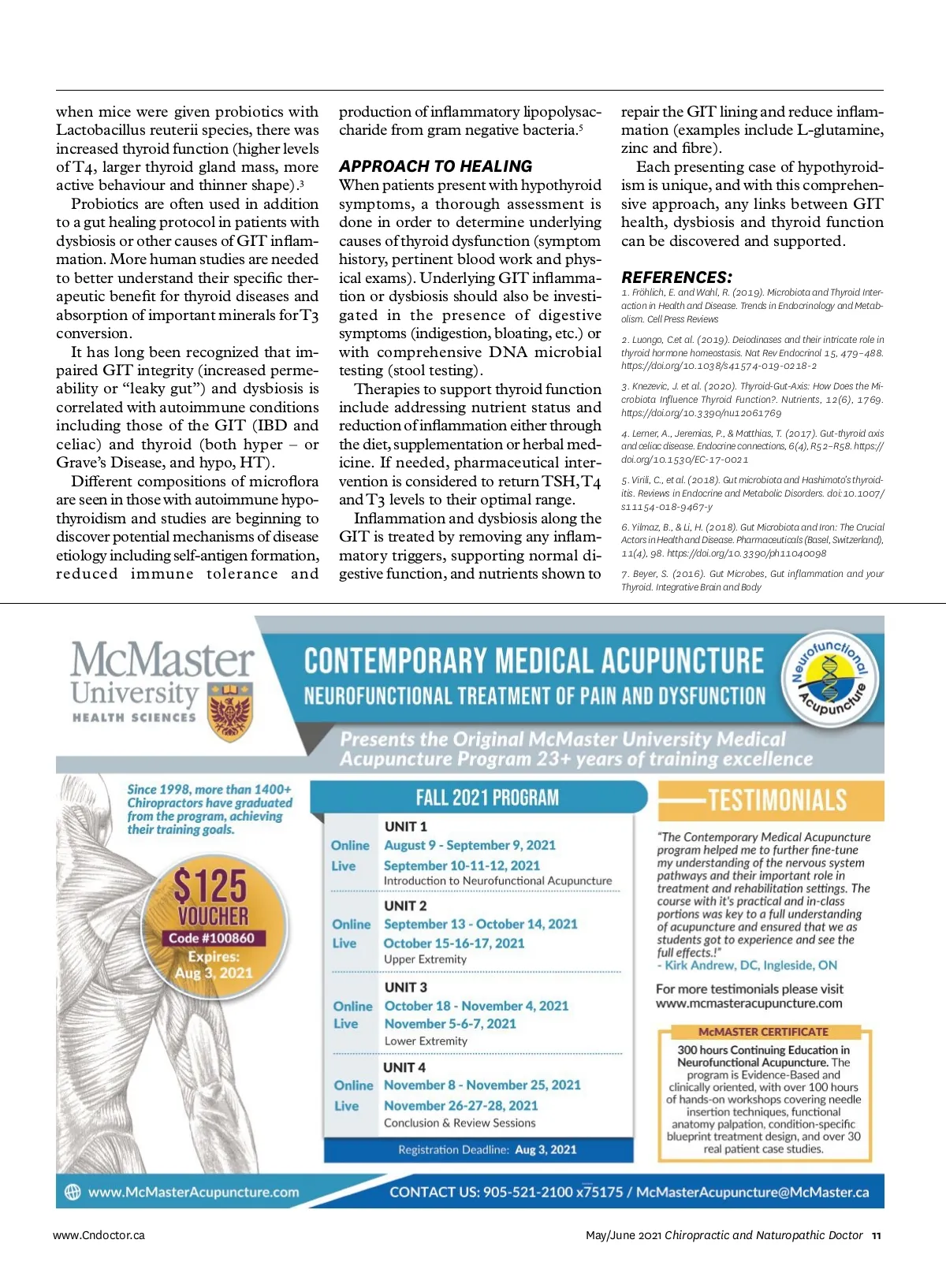
COVER STORY PATIENT CARE MICROBIOME BALANCE Importance of gastrointestinal health for thyroid hormone conversion N BY DR. WHITNEY BAXTER, ND aturopathic doctors often look to the gas-trointestinal tract (GIT) for the root cause of conditions. A major link is the micro-biome, the vast ecosys-tem of microbes existing mainly in the large intestine, that is important to our physiology for immune surveillance, digestion, and nutrient absorption. Al-tered intestinal microbial balance, com-monly known as dysbiosis, impacts these important functions. Underlying causes of hypothyroidism is no exception here. Studies are begin-ning to show the role of dysbiosis in decreased thyroid hormone synthesis, decreased active thyroid hormone con-version and autoimmune Hashimoto’s Thyroiditis (HT). 1 Here we explore the evidence linking dysbiosis with hypothyroid conditions and the importance of this link when treating patients presenting with symp-toms of hypothyroid. The thyroid controls the metabolic rate of every cell. It is important for growth regulation, cell differentiation and energy generation from the foods we eat. Thyroid hormone production de-pends on the organized feedback system that involves thyroid stimulating hor-mone (TSH) release from the pituitary, stimulating the synthesis and release of thyroxine (T4) and some triiodothyro-nine (T3 , the active form). Most of this T3 conversion occurs in the peripheral tissues via the deiodinase system of en-zymes. 2 A few key nutrients are involved along the way: iodine and iron are essential in the synthesis of T4 and T3, and selenium and zinc are crucial to multiple steps, T4 & T3 especially in the conversion of T4 to active T3. Hypothalamus TRH + + --Pituitary gland TSH Thyroid gland T4 & T3 T4 T3 Researchers are starting to recognize this relationship and noticing a number of mechanisms: First, the microbiome is vital to the absorption of nutrients required for thyroid hormone synthesis and T3 conversion. Second, 70% of our immune system exists along the GIT, so it makes sense that the microbiome shares a close symbiotic relationship with our immune system. 3 Dysfunction in this relationship has been shown to be a factor in the development of auto-immune diseases, including HT. 4 And finally, the microbiome plays a role in deiodinase-dependent T3 to T4 conver-sion and of their metabolism in the in-testines. 5 Here is a closer look at the interaction of the nutrients outlined above with the microbiome: • Iron: beneficial microbial strains, spe-cifically Lactobacilli and HOW THE MICROBIOME INFLU-ENCES THYROID FUNCTION Peripheral tissues T4 T3 An overview of hypothalamic-pituitary-thyroid axis showing the feedback system of circulating thyroid hormone. 1 DR. WHITNEY BAXTER is a naturopathic doctor in Victoria, BC. Prior to becoming a naturopathic doctor, she worked as an exercise physiologist in cardiac rehab. It was here that she witnessed the value of a holistic approach to health care and understood that each individual’s physical, mental, and emotional health are interconnected. She has a general practice and enjoys working with mental wellness, digestive health and cardiovascular disease management and prevention. 10 Chiropractic and Naturopathic Doctor May/June 2021 Bifidobacterium, increase iron absorp-tion by altering the pH of the colon via the production of short chain fatty acids. 3,6 On the other hand, pathogenic bacteria utilize iron as a fuel source, resulting in decreased availability of iron for thyroid hormone production. • Iodine: absorbed mainly in the stom-ach, small intestine and to a lesser extent in the large intestine. Inflamma-tion or dysbiosis in these upper por-tions of the GIT, such as IBD and gastritis, has been shown to reduce iodine absorption. 1,7 • Zinc and selenium: both have been shown to positively influence beneficial strains of the microbiome. 1 The relationship between the micro-biome and thyroid function has been demonstrated in both mouse and hu-man studies. One study showed that www.Cndoctor.ca
Chiropractic + Naturopathic Doctor May/June 2021: Page 10