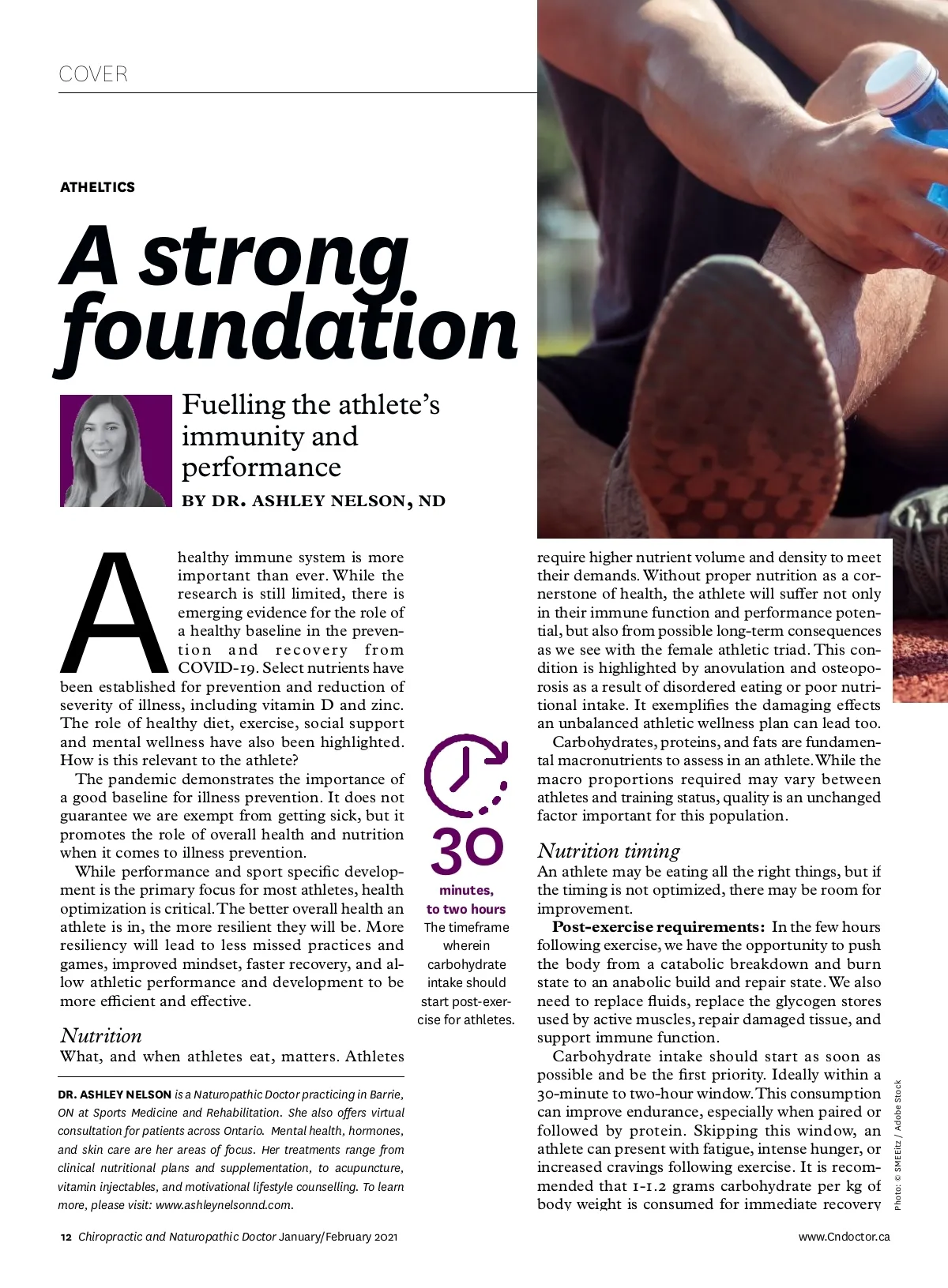
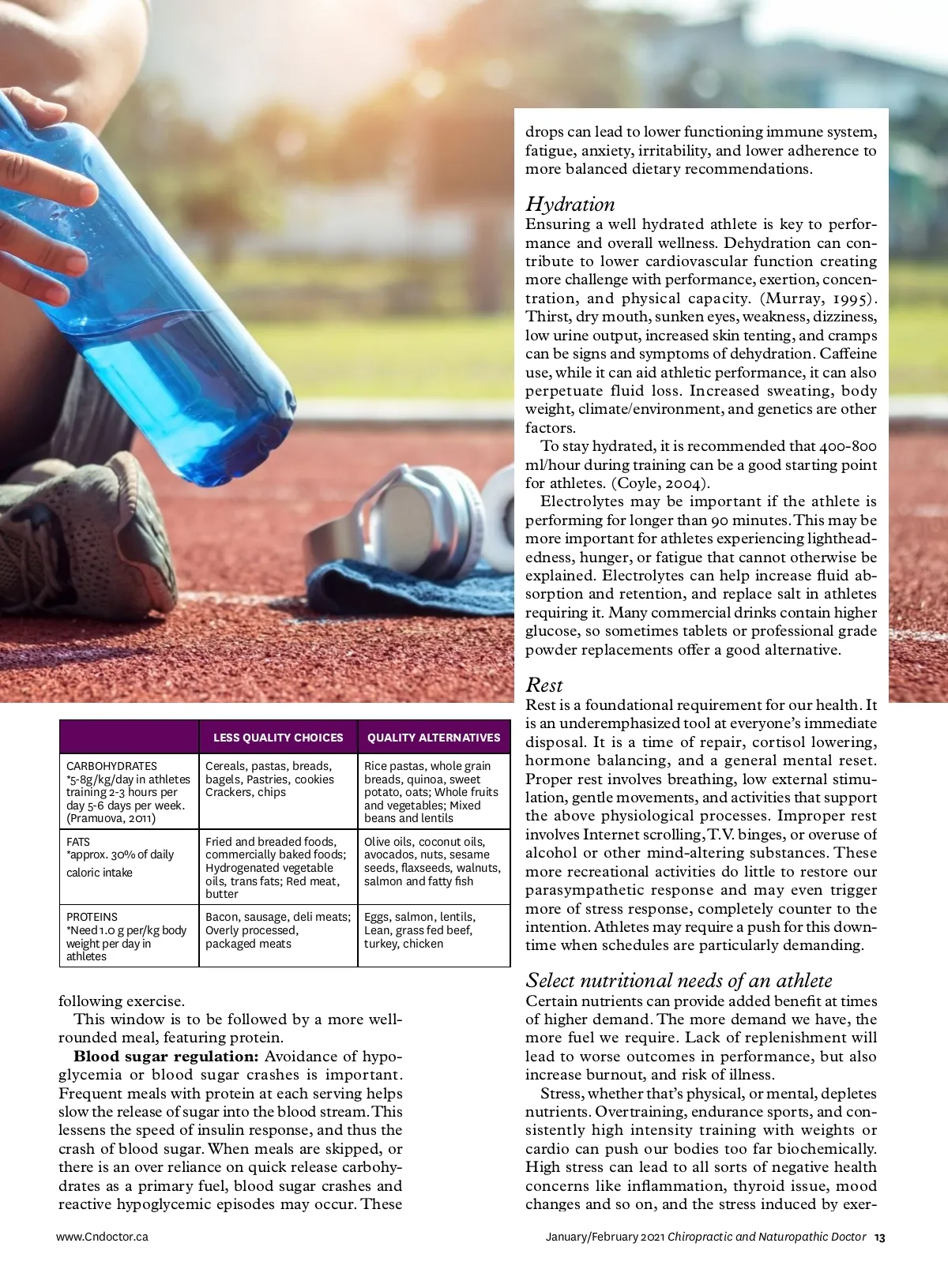
drops can lead to lower functioning immune system, fatigue, anxiety, irritability, and lower adherence to more balanced dietary recommendations. Hydration Ensuring a well hydrated athlete is key to perfor-mance and overall wellness. Dehydration can con-tribute to lower cardiovascular function creating more challenge with performance, exertion, concen-tration, and physical capacity. (Murray, 1995). Thirst, dry mouth, sunken eyes, weakness, dizziness, low urine output, increased skin tenting, and cramps can be signs and symptoms of dehydration. Caffeine use, while it can aid athletic performance, it can also perpetuate fluid loss. Increased sweating, body weight, climate/environment, and genetics are other factors. To stay hydrated, it is recommended that 400-800 ml/hour during training can be a good starting point for athletes. (Coyle, 2004). Electrolytes may be important if the athlete is performing for longer than 90 minutes. This may be more important for athletes experiencing lighthead-edness, hunger, or fatigue that cannot otherwise be explained. Electrolytes can help increase fluid ab-sorption and retention, and replace salt in athletes requiring it. Many commercial drinks contain higher glucose, so sometimes tablets or professional grade powder replacements offer a good alternative. Rest LESS QUALITY CHOICES CARBOHYDRATES *5-8g/kg/day in athletes training 2-3 hours per day 5-6 days per week. (Pramuova, 2011) FATS *approx. 30% of daily caloric intake PROTEINS *Need 1.0 g per/kg body weight per day in athletes Cereals, pastas, breads, bagels, Pastries, cookies Crackers, chips QUALITY ALTERNATIVES Rice pastas, whole grain breads, quinoa, sweet potato, oats; Whole fruits and vegetables; Mixed beans and lentils Olive oils, coconut oils, avocados, nuts, sesame seeds, flaxseeds, walnuts, salmon and fatty fish Eggs, salmon, lentils, Lean, grass fed beef, turkey, chicken Fried and breaded foods, commercially baked foods; Hydrogenated vegetable oils, trans fats; Red meat, butter Bacon, sausage, deli meats; Overly processed, packaged meats Rest is a foundational requirement for our health. It is an underemphasized tool at everyone’s immediate disposal. It is a time of repair, cortisol lowering, hormone balancing, and a general mental reset. Proper rest involves breathing, low external stimu-lation, gentle movements, and activities that support the above physiological processes. Improper rest involves Internet scrolling, T.V. binges, or overuse of alcohol or other mind-altering substances. These more recreational activities do little to restore our parasympathetic response and may even trigger more of stress response, completely counter to the intention. Athletes may require a push for this down-time when schedules are particularly demanding. following exercise. This window is to be followed by a more well-rounded meal, featuring protein. Blood sugar regulation: Avoidance of hypo-glycemia or blood sugar crashes is important. Frequent meals with protein at each serving helps slow the release of sugar into the blood stream. This lessens the speed of insulin response, and thus the crash of blood sugar. When meals are skipped, or there is an over reliance on quick release carbohy-drates as a primary fuel, blood sugar crashes and reactive hypoglycemic episodes may occur. These www.Cndoctor.ca Select nutritional needs of an athlete Certain nutrients can provide added benefit at times of higher demand. The more demand we have, the more fuel we require. Lack of replenishment will lead to worse outcomes in performance, but also increase burnout, and risk of illness. Stress, whether that’s physical, or mental, depletes nutrients. Overtraining, endurance sports, and con-sistently high intensity training with weights or cardio can push our bodies too far biochemically. High stress can lead to all sorts of negative health concerns like inflammation, thyroid issue, mood changes and so on, and the stress induced by exer-January/February 2021 Chiropractic and Naturopathic Doctor 13
Chiropractic + Naturopathic Doctor January-February 2021: Page 13