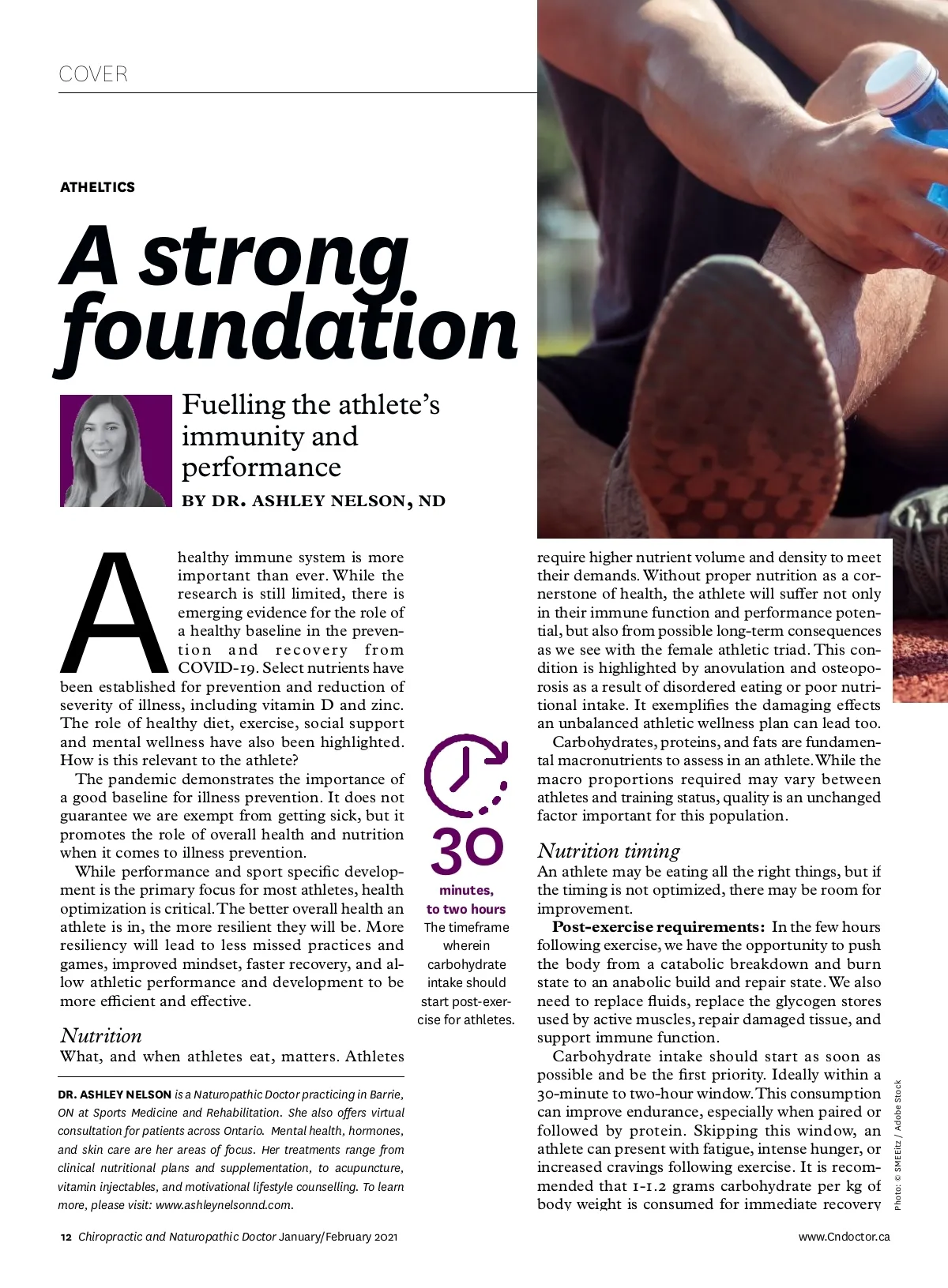
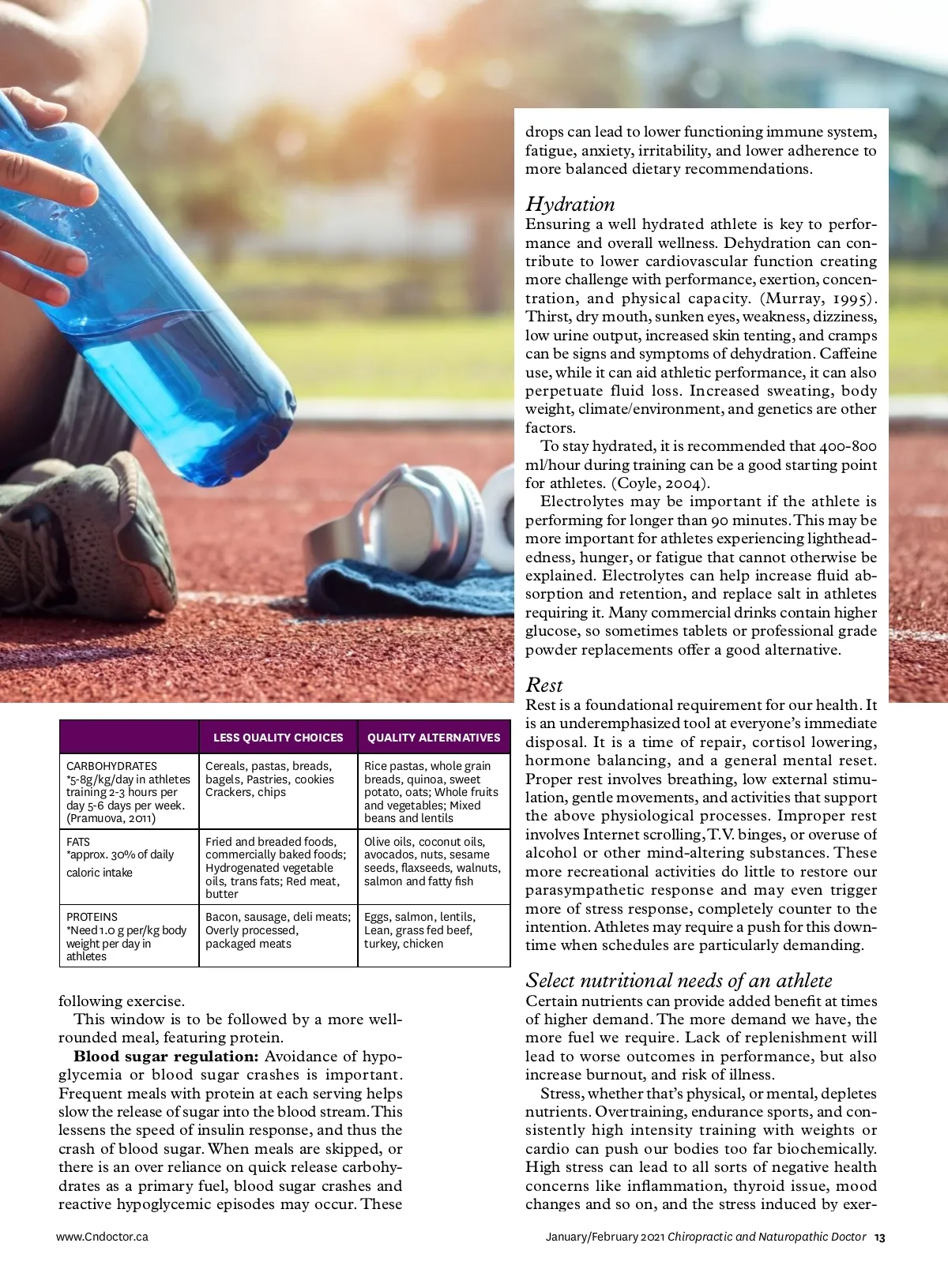
COVER ATHELTICS A strong foundation A Nutrition Fuelling the athlete’s immunity and performance by dr . ashley nelson , nd require higher nutrient volume and density to meet their demands. Without proper nutrition as a cor-nerstone of health, the athlete will suffer not only in their immune function and performance poten-tial, but also from possible long-term consequences as we see with the female athletic triad. This con-dition is highlighted by anovulation and osteopo-rosis as a result of disordered eating or poor nutri-tional intake. It exemplifies the damaging effects an unbalanced athletic wellness plan can lead too. Carbohydrates, proteins, and fats are fundamen-tal macronutrients to assess in an athlete. While the macro proportions required may vary between athletes and training status, quality is an unchanged factor important for this population. healthy immune system is more important than ever. While the research is still limited, there is emerging evidence for the role of a healthy baseline in the preven-tion and recovery from COVID-19. Select nutrients have been established for prevention and reduction of severity of illness, including vitamin D and zinc. The role of healthy diet, exercise, social support and mental wellness have also been highlighted. How is this relevant to the athlete? The pandemic demonstrates the importance of a good baseline for illness prevention. It does not guarantee we are exempt from getting sick, but it promotes the role of overall health and nutrition when it comes to illness prevention. While performance and sport specific develop-ment is the primary focus for most athletes, health optimization is critical. The better overall health an athlete is in, the more resilient they will be. More resiliency will lead to less missed practices and games, improved mindset, faster recovery, and al-low athletic performance and development to be more efficient and effective. What, and when athletes eat, matters. Athletes minutes, to two hours The timeframe wherein carbohydrate intake should start post-exer-cise for athletes. 30 Nutrition timing DR. ASHLEY NELSON is a Naturopathic Doctor practicing in Barrie, ON at Sports Medicine and Rehabilitation. She also offers virtual consultation for patients across Ontario. Mental health, hormones, and skin care are her areas of focus. Her treatments range from clinical nutritional plans and supplementation, to acupuncture, vitamin injectables, and motivational lifestyle counselling. To learn more, please visit: www.ashleynelsonnd.com. 12 Chiropractic and Naturopathic Doctor January/February 2021 An athlete may be eating all the right things, but if the timing is not optimized, there may be room for improvement. Post-exercise requirements: In the few hours following exercise, we have the opportunity to push the body from a catabolic breakdown and burn state to an anabolic build and repair state. We also need to replace fluids, replace the glycogen stores used by active muscles, repair damaged tissue, and support immune function. Carbohydrate intake should start as soon as possible and be the first priority. Ideally within a 30-minute to two-hour window. This consumption can improve endurance, especially when paired or followed by protein. Skipping this window, an athlete can present with fatigue, intense hunger, or increased cravings following exercise. It is recom-mended that 1-1.2 grams carbohydrate per kg of body weight is consumed for immediate recovery www.Cndoctor.ca Photo: © SMEEitz / Adobe Stock
Chiropractic + Naturopathic Doctor January-February 2021: Page 12