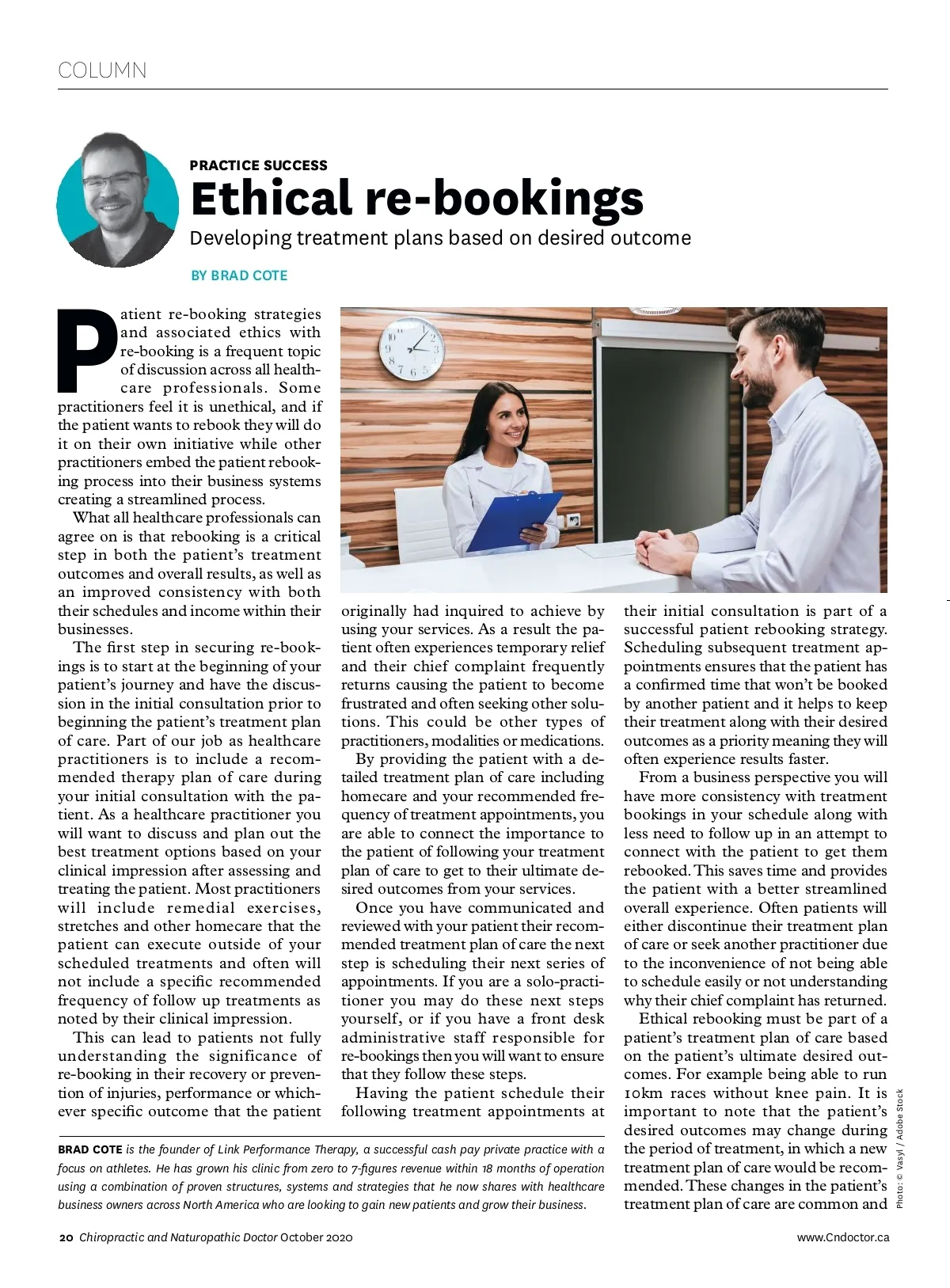
COLUMN PRACTICE SUCCESS Ethical re-bookings P Developing treatment plans based on desired outcome BY BRAD COTE BRAD COTE is the founder of Link Performance Therapy, a successful cash pay private practice with a focus on athletes. He has grown his clinic from zero to 7-figures revenue within 18 months of operation using a combination of proven structures, systems and strategies that he now shares with healthcare business owners across North America who are looking to gain new patients and grow their business. 20 Chiropractic and Naturopathic Doctor October 2020 www.Cndoctor.ca Photo: © Vasyl / Adobe Stock atient re-booking strategies and associated ethics with re-booking is a frequent topic of discussion across all health-care professionals. Some practitioners feel it is unethical, and if the patient wants to rebook they will do it on their own initiative while other practitioners embed the patient rebook-ing process into their business systems creating a streamlined process. What all healthcare professionals can agree on is that rebooking is a critical step in both the patient’s treatment outcomes and overall results, as well as an improved consistency with both their schedules and income within their businesses. The first step in securing re-book-ings is to start at the beginning of your patient’s journey and have the discus-sion in the initial consultation prior to beginning the patient’s treatment plan of care. Part of our job as healthcare practitioners is to include a recom-mended therapy plan of care during your initial consultation with the pa-tient. As a healthcare practitioner you will want to discuss and plan out the best treatment options based on your clinical impression after assessing and treating the patient. Most practitioners will include remedial exercises, stretches and other homecare that the patient can execute outside of your scheduled treatments and often will not include a specific recommended frequency of follow up treatments as noted by their clinical impression. This can lead to patients not fully understanding the significance of re-booking in their recovery or preven-tion of injuries, performance or which-ever specific outcome that the patient originally had inquired to achieve by using your services. As a result the pa-tient often experiences temporary relief and their chief complaint frequently returns causing the patient to become frustrated and often seeking other solu-tions. This could be other types of practitioners, modalities or medications. By providing the patient with a de-tailed treatment plan of care including homecare and your recommended fre-quency of treatment appointments, you are able to connect the importance to the patient of following your treatment plan of care to get to their ultimate de-sired outcomes from your services. Once you have communicated and reviewed with your patient their recom-mended treatment plan of care the next step is scheduling their next series of appointments. If you are a solo-practi-tioner you may do these next steps yourself, or if you have a front desk administrative staff responsible for re-bookings then you will want to ensure that they follow these steps. Having the patient schedule their following treatment appointments at their initial consultation is part of a successful patient rebooking strategy. Scheduling subsequent treatment ap-pointments ensures that the patient has a confirmed time that won’t be booked by another patient and it helps to keep their treatment along with their desired outcomes as a priority meaning they will often experience results faster. From a business perspective you will have more consistency with treatment bookings in your schedule along with less need to follow up in an attempt to connect with the patient to get them rebooked. This saves time and provides the patient with a better streamlined overall experience. Often patients will either discontinue their treatment plan of care or seek another practitioner due to the inconvenience of not being able to schedule easily or not understanding why their chief complaint has returned. Ethical rebooking must be part of a patient’s treatment plan of care based on the patient’s ultimate desired out-comes. For example being able to run 10km races without knee pain. It is important to note that the patient’s desired outcomes may change during the period of treatment, in which a new treatment plan of care would be recom-mended. These changes in the patient’s treatment plan of care are common and
Chiropractic + Naturopathic Doctor October 2020: Page 20