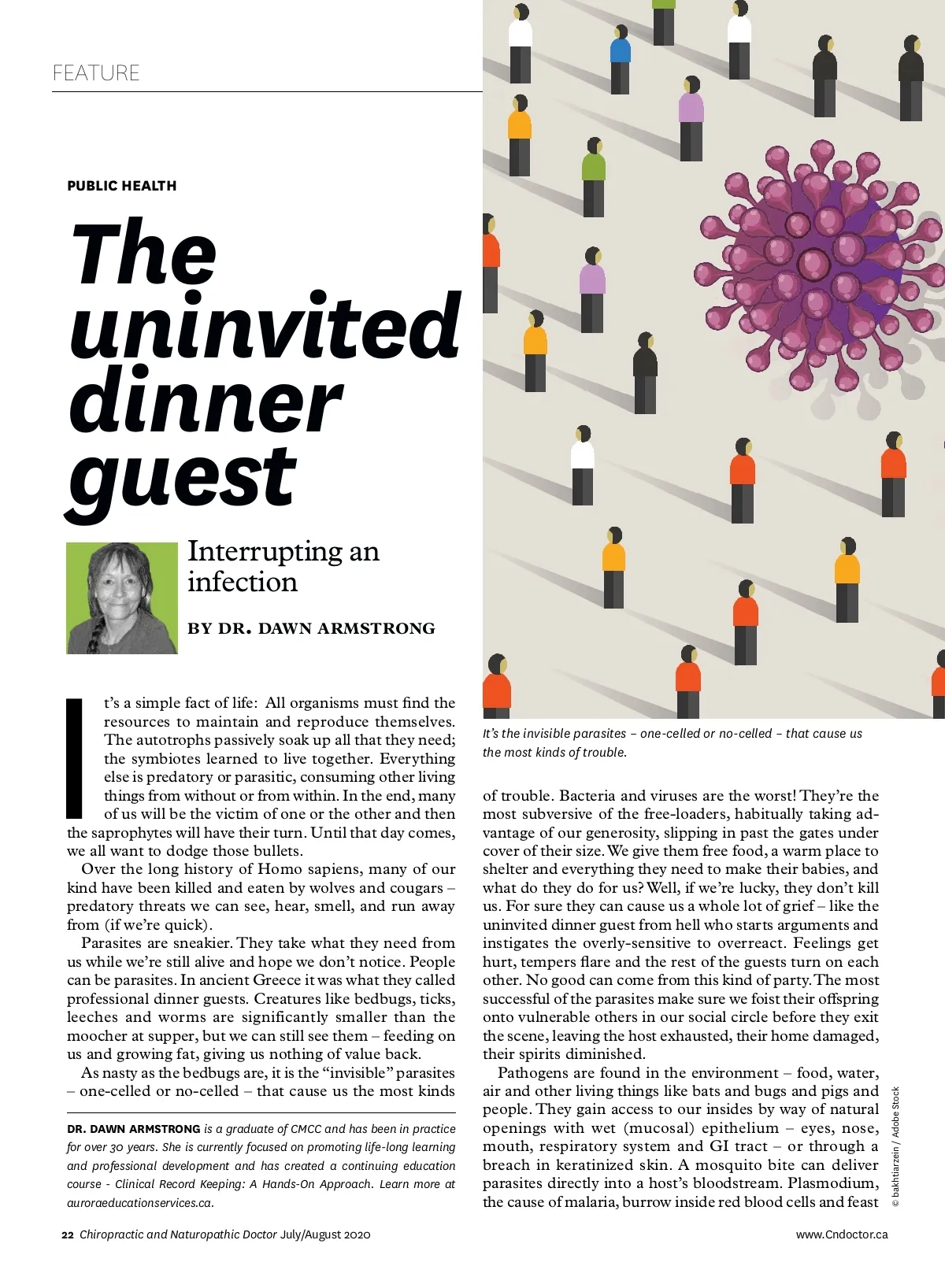
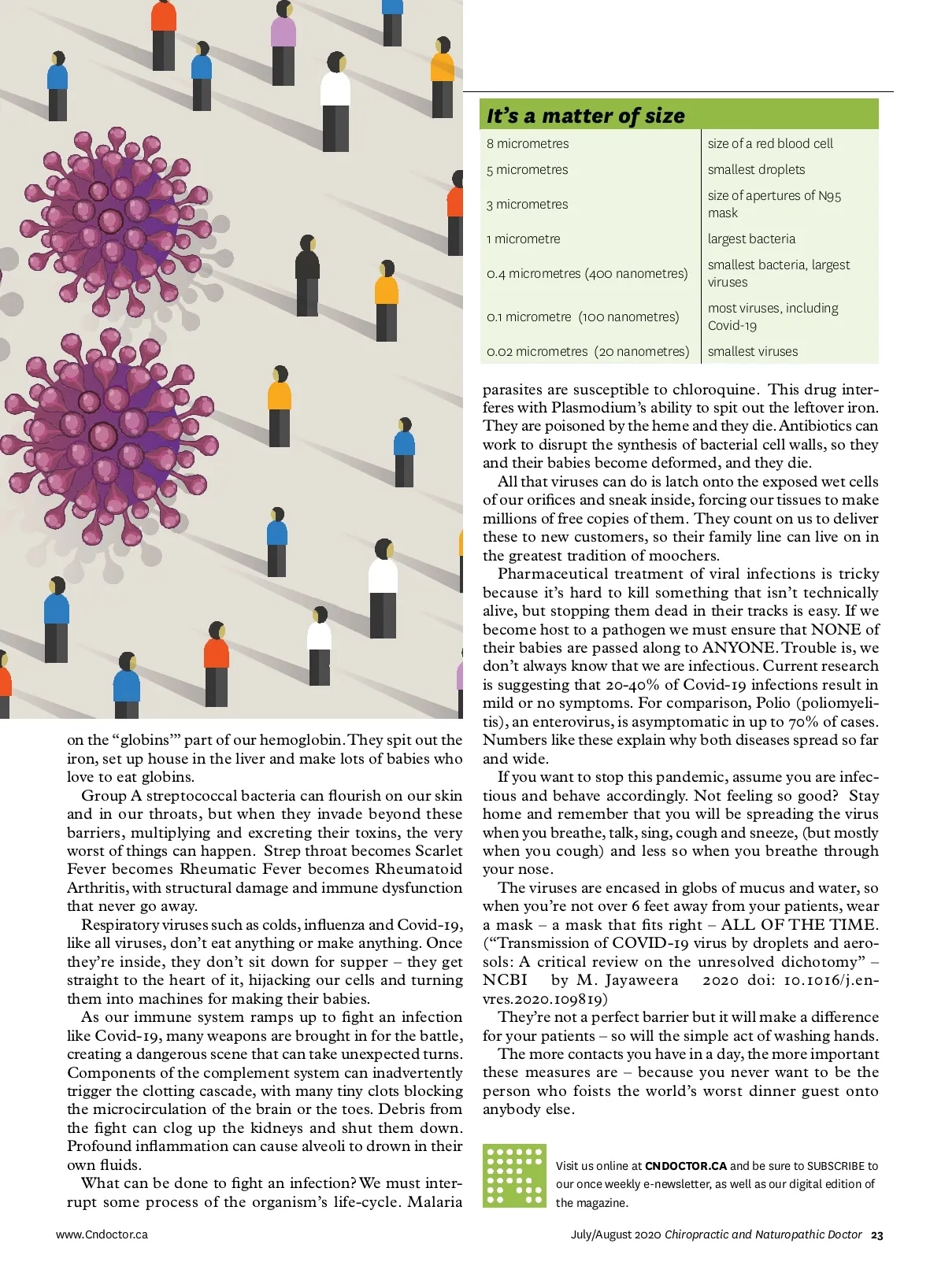
It’s a matter of size 8 micrometres 5 micrometres 3 micrometres 1 micrometre 0.4 micrometres (400 nanometres) 0.1 micrometre (100 nanometres) 0.02 micrometres (20 nanometres) size of a red blood cell smallest droplets size of apertures of N95 mask largest bacteria smallest bacteria, largest viruses most viruses, including Covid-19 smallest viruses on the “globins’” part of our hemoglobin. They spit out the iron, set up house in the liver and make lots of babies who love to eat globins. Group A streptococcal bacteria can flourish on our skin and in our throats, but when they invade beyond these barriers, multiplying and excreting their toxins, the very worst of things can happen. Strep throat becomes Scarlet Fever becomes Rheumatic Fever becomes Rheumatoid Arthritis, with structural damage and immune dysfunction that never go away. Respiratory viruses such as colds, influenza and Covid-19, like all viruses, don’t eat anything or make anything. Once they’re inside, they don’t sit down for supper – they get straight to the heart of it, hijacking our cells and turning them into machines for making their babies. As our immune system ramps up to fight an infection like Covid-19, many weapons are brought in for the battle, creating a dangerous scene that can take unexpected turns. Components of the complement system can inadvertently trigger the clotting cascade, with many tiny clots blocking the microcirculation of the brain or the toes. Debris from the fight can clog up the kidneys and shut them down. Profound inflammation can cause alveoli to drown in their own fluids. What can be done to fight an infection? We must inter-rupt some process of the organism’s life-cycle. Malaria www.Cndoctor.ca parasites are susceptible to chloroquine. This drug inter-feres with Plasmodium’s ability to spit out the leftover iron. They are poisoned by the heme and they die. Antibiotics can work to disrupt the synthesis of bacterial cell walls, so they and their babies become deformed, and they die. All that viruses can do is latch onto the exposed wet cells of our orifices and sneak inside, forcing our tissues to make millions of free copies of them. They count on us to deliver these to new customers, so their family line can live on in the greatest tradition of moochers. Pharmaceutical treatment of viral infections is tricky because it’s hard to kill something that isn’t technically alive, but stopping them dead in their tracks is easy. If we become host to a pathogen we must ensure that NONE of their babies are passed along to ANYONE. Trouble is, we don’t always know that we are infectious. Current research is suggesting that 20-40% of Covid-19 infections result in mild or no symptoms. For comparison, Polio (poliomyeli-tis), an enterovirus, is asymptomatic in up to 70% of cases. Numbers like these explain why both diseases spread so far and wide. If you want to stop this pandemic, assume you are infec-tious and behave accordingly. Not feeling so good? Stay home and remember that you will be spreading the virus when you breathe, talk, sing, cough and sneeze, (but mostly when you cough) and less so when you breathe through your nose. The viruses are encased in globs of mucus and water, so when you’re not over 6 feet away from your patients, wear a mask – a mask that fits right – ALL OF THE TIME. (“Transmission of COVID-19 virus by droplets and aero-sols: A critical review on the unresolved dichotomy” – NCBI by M. Jayaweera 2020 doi: 10.1016/j.en-vres.2020.109819) They’re not a perfect barrier but it will make a difference for your patients – so will the simple act of washing hands. The more contacts you have in a day, the more important these measures are – because you never want to be the person who foists the world’s worst dinner guest onto anybody else. Visit us online at CNDOCTOR.CA and be sure to SUBSCRIBE to our once weekly e-newsletter, as well as our digital edition of the magazine. July/August 2020 Chiropractic and Naturopathic Doctor 23
Chiropractic + Naturopathic Doctor July/August 2020: Page 23