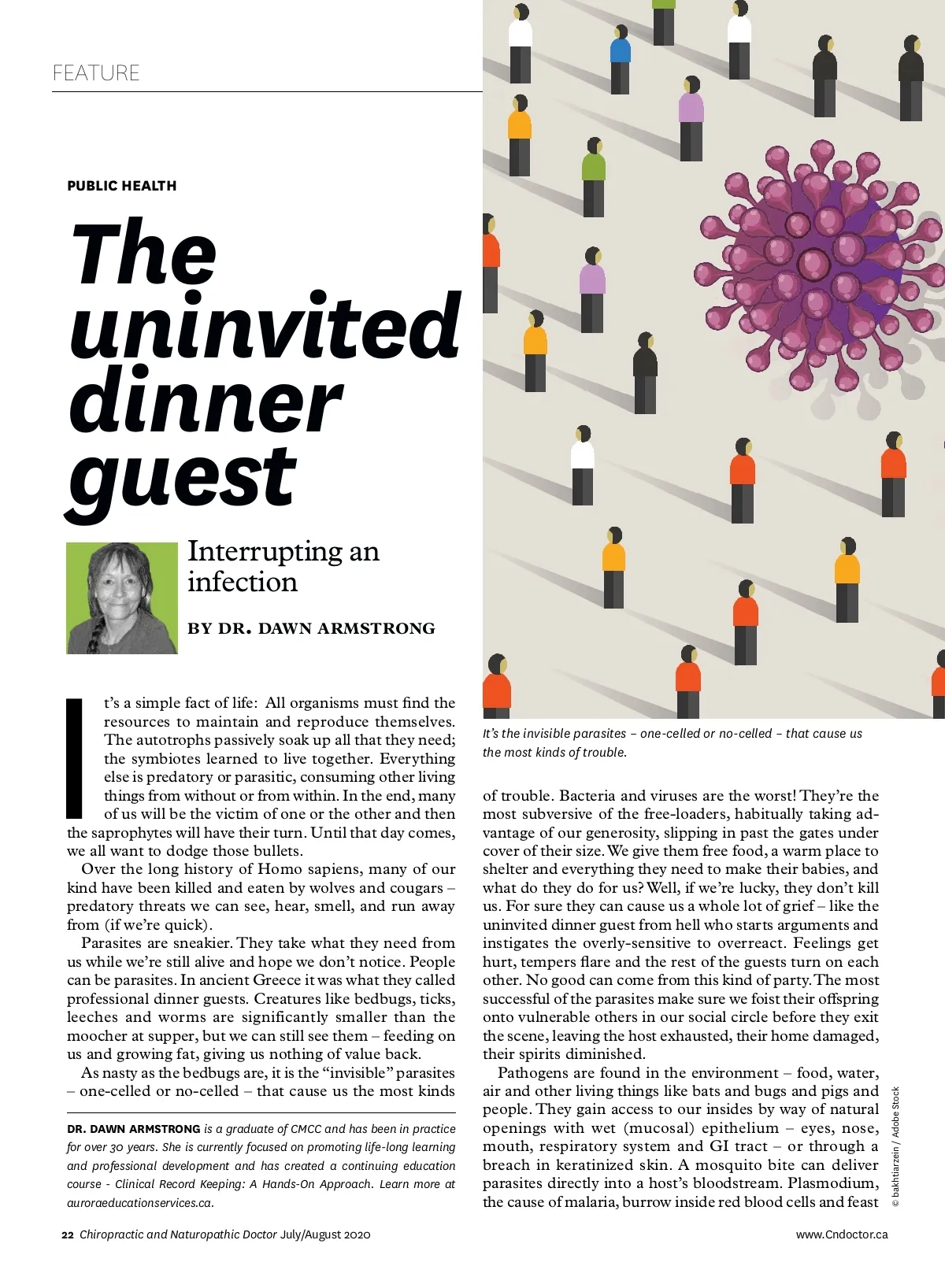
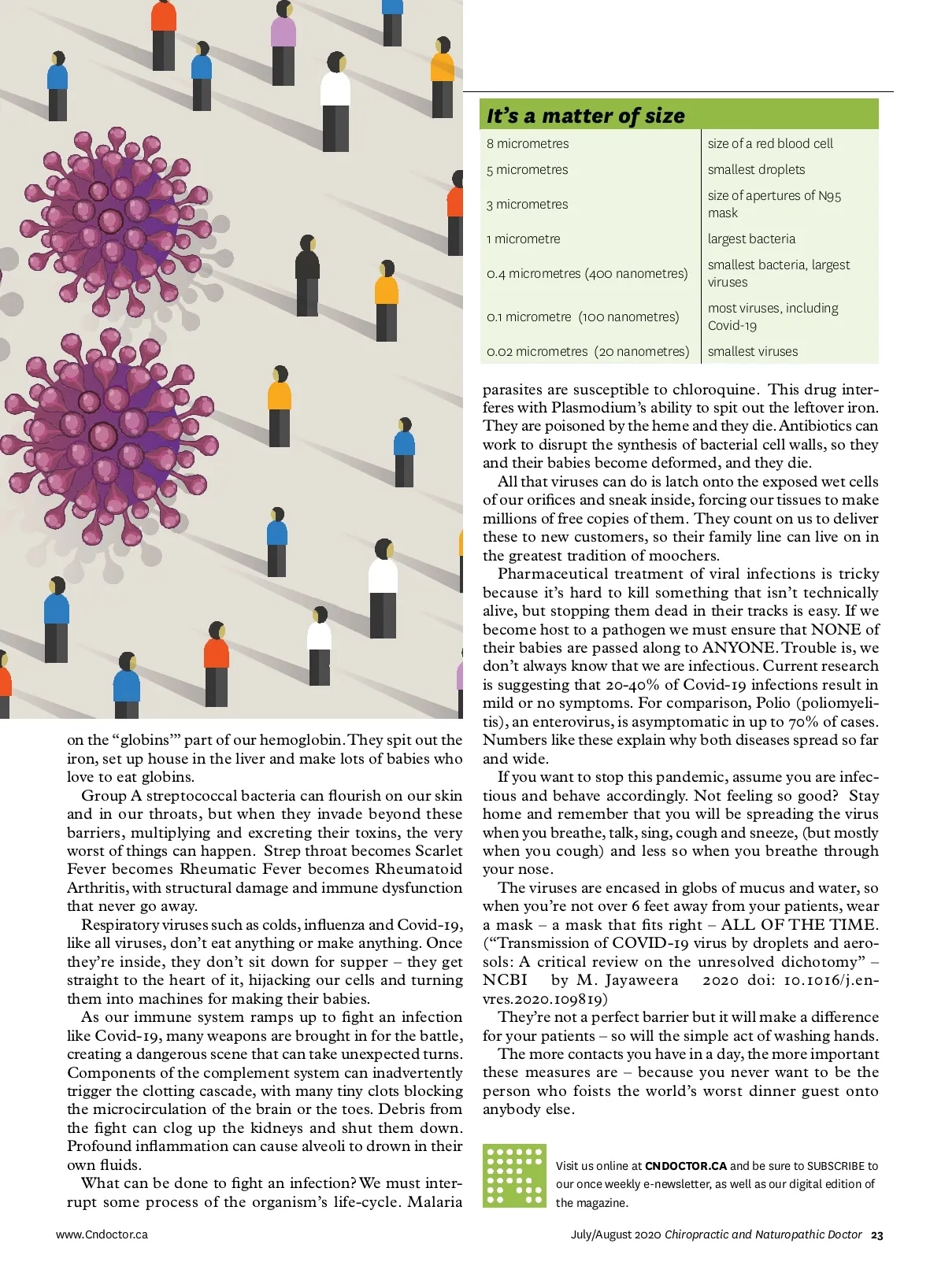
FEATURE PUBLIC HEALTH The uninvited dinner guest Interrupting an infection I by dr . dawn armstrong DR. DAWN ARMSTRONG is a graduate of CMCC and has been in practice for over 30 years. She is currently focused on promoting life-long learning and professional development and has created a continuing education course -Clinical Record Keeping: A Hands-On Approach. Learn more at auroraeducationservices.ca. 22 Chiropractic and Naturopathic Doctor July/August 2020 www.Cndoctor.ca © bakhtiarzein / Adobe Stock t’s a simple fact of life: All organisms must find the resources to maintain and reproduce themselves. The autotrophs passively soak up all that they need; the symbiotes learned to live together. Everything else is predatory or parasitic, consuming other living things from without or from within. In the end, many of us will be the victim of one or the other and then the saprophytes will have their turn. Until that day comes, we all want to dodge those bullets. Over the long history of Homo sapiens, many of our kind have been killed and eaten by wolves and cougars – predatory threats we can see, hear, smell, and run away from (if we’re quick). Parasites are sneakier. They take what they need from us while we’re still alive and hope we don’t notice. People can be parasites. In ancient Greece it was what they called professional dinner guests. Creatures like bedbugs, ticks, leeches and worms are significantly smaller than the moocher at supper, but we can still see them – feeding on us and growing fat, giving us nothing of value back. As nasty as the bedbugs are, it is the “invisible” parasites – one-celled or no-celled – that cause us the most kinds It’s the invisible parasites – one-celled or no-celled – that cause us the most kinds of trouble. of trouble. Bacteria and viruses are the worst! They’re the most subversive of the free-loaders, habitually taking ad-vantage of our generosity, slipping in past the gates under cover of their size. We give them free food, a warm place to shelter and everything they need to make their babies, and what do they do for us? Well, if we’re lucky, they don’t kill us. For sure they can cause us a whole lot of grief – like the uninvited dinner guest from hell who starts arguments and instigates the overly-sensitive to overreact. Feelings get hurt, tempers flare and the rest of the guests turn on each other. No good can come from this kind of party. The most successful of the parasites make sure we foist their offspring onto vulnerable others in our social circle before they exit the scene, leaving the host exhausted, their home damaged, their spirits diminished. Pathogens are found in the environment – food, water, air and other living things like bats and bugs and pigs and people. They gain access to our insides by way of natural openings with wet (mucosal) epithelium – eyes, nose, mouth, respiratory system and GI tract – or through a breach in keratinized skin. A mosquito bite can deliver parasites directly into a host’s bloodstream. Plasmodium, the cause of malaria, burrow inside red blood cells and feast
Chiropractic + Naturopathic Doctor July/August 2020: Page 22