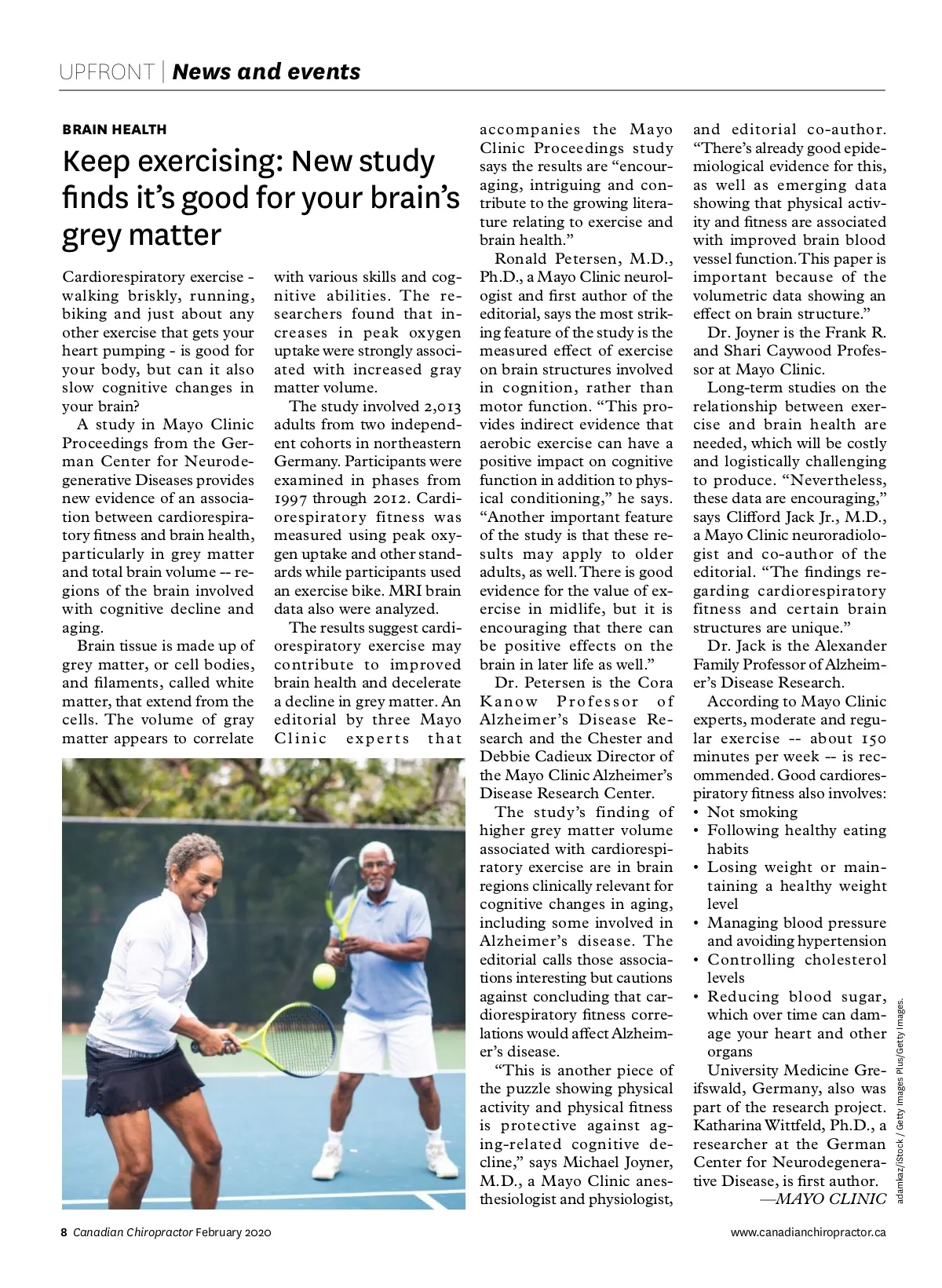
RESOURCE Canadian Medical Association Should you worry about the Journal lifts online paywall to Wuhan coronavirus? health care material A Q+ A OTTAWA—The Canadian Medical Association Journal is lifting a pay-wall that restricts access to much of its content in a bid to reach a broad-er audience and combat so-called fake news. Editor-in-chief Dr. Andreas Laupacis said all content on the weekly online edition is now free to the public, with previously published material available as of March 1. Laupacis said he hopes the move will open discussion to those be-yond the medical community and attract new voices to the journal, including those of patients. While research articles, editorials and news stories have been availa-ble for some time, Laupacis said much more has been locked behind a paywall introduced in January 2010. That includes short topical opinion pieces and longer scholarly analysis that could inform policy makers or help patients understand controversial positions. Previously, that other content was only made fully available after one year. In an era when misleading health information abounds online, Laupacis said providing credible, evidence-based material can be one step towards keeping the public abreast of current medical issues. “We’re not going to decrease the non-evidence-based information out there but at least we’re adding some more evidence-based infor-mation to the material that people have an opportunity to look at,” he said. “Members of the general public, you know, probably don’t know as much about how the health-care system works as is ideal. On the other hand, I probably don’t know as much about climate change as I should.” Laupacis said the journal’s rough-ly 700,000 monthly visits largely www.canadianchiropractor.ca PUBLIC HEALTH involve researchers, members of the Canadian Medical Association, and those in the health-care field here and abroad – but anyone could have paid to access the journal, which debuted online in 1995. Subscription fees ranged from about $80 for medical students to thousands of dollars for institutions with multiple users, among them universities and hospitals. Laupacis said the journal often tackles topics that resonate far be-yond the medical community. He pointed to a commentary published last month that examined an Ontario court decision that found there were circumstances in which a doctor could refuse CPR on a pa-tient if they believed it was futile, even if the family demanded it. “That’s a really important issue and I thought (it was) a very thoughtful analysis of that court decision and what that meant for physicians,” said Laupacis. The commentary in this week’s edition argues that conditional health guidelines may be warranted even when evidence is sparse or doubtful, noting that clinicians and patients may not have the timeto wait for more concrete data. Laupacis said he’s also in the process of restructuring the jour-nal’s eight-person, all-physician editorial advisory board to include a more diverse membership, which could include patients and manag-ers. That, too, could shape how the journal approaches some topics in the future, he said. The CMAJ launched in 1911, and will continue to offer a monthly print edition to CMA members. New content publishes online Monday mornings, 50 times a year. This report by The Canadian Press (Cassandra Szklarski in Toronto) was first published Jan. 14, 2020. Debra Chew is a former epidemic intelligence officer for the Centers for Disease Control, and an assistant professor of medicine at Rutgers New Jersey Medical School and medical director for infection prevention and control at University Hospi-tal in Newark, New Jersey. Here, she discusses what we know about the new in-fectious disease and who is most at risk: Q: What is the Wuhan coronavirus? A: This is a new virus that has not been previously identified in humans. It be-longs to a large family of vi-ruses called coronaviruses. These viruses can cause respiratory illnesses such as the common cold and more severe illnesses such as the severe acute respiratory syn-drome [SARS] or the Mid-dle East respiratory syn-drome [MERS]. Currently, a lot is un-known, but the CDC and the World Health Organiza-tion are actively investigating to learn more about this vi-rus, the way it spreads, and its severity of illness. Q: What do we know about how the virus spreads? A: It may have been trans-mitted to humans from an animal source. Some per-son-to-person spread has occurred by some who were in close contact to an in-fected patient and are being investigated. Q: What are the symp-toms and health risks? A: Common signs, such as fever, cough, shortness of breath, and breathing diffi-culties are like those found with other respiratory illnesses. In more severe cases, infection can cause pneumonia, severe acute respiratory syndrome, kid-ney failure, and even death. Illness appears to be more severe in those who have underlying medical condi-tions, a weakened immune system, the elderly, and the very young. Q: How is it treated? A: As with many viruses, there is no specific treat-ment, but many of the symp-toms can be treated and supportive care for infected persons can be highly effec-tive. Since this is a new virus, there is no vaccine, and it can take of number of years for a new vaccine to be de-veloped. Q: How can people pro-tect themselves, espe-cially if they are flying? A: Follow standard recom-mendations to reduce expo-sure to and spread of a range of infections. Wash hands often with soap and water for at least 20 seconds, using an alcohol-based hand sani-tizer if soap and water are not available, covering your mouth and nose with a tissue or your sleeve (not your hands) when coughing or sneezing and avoiding close contact, if possible, with anyone showing symptoms of a respiratory illness, such as coughing and sneezing. Source: Rutgers University February 2020 Canadian Chiropractor 9
Chiropractic + Naturopathic Doctor February 2020: Page 9