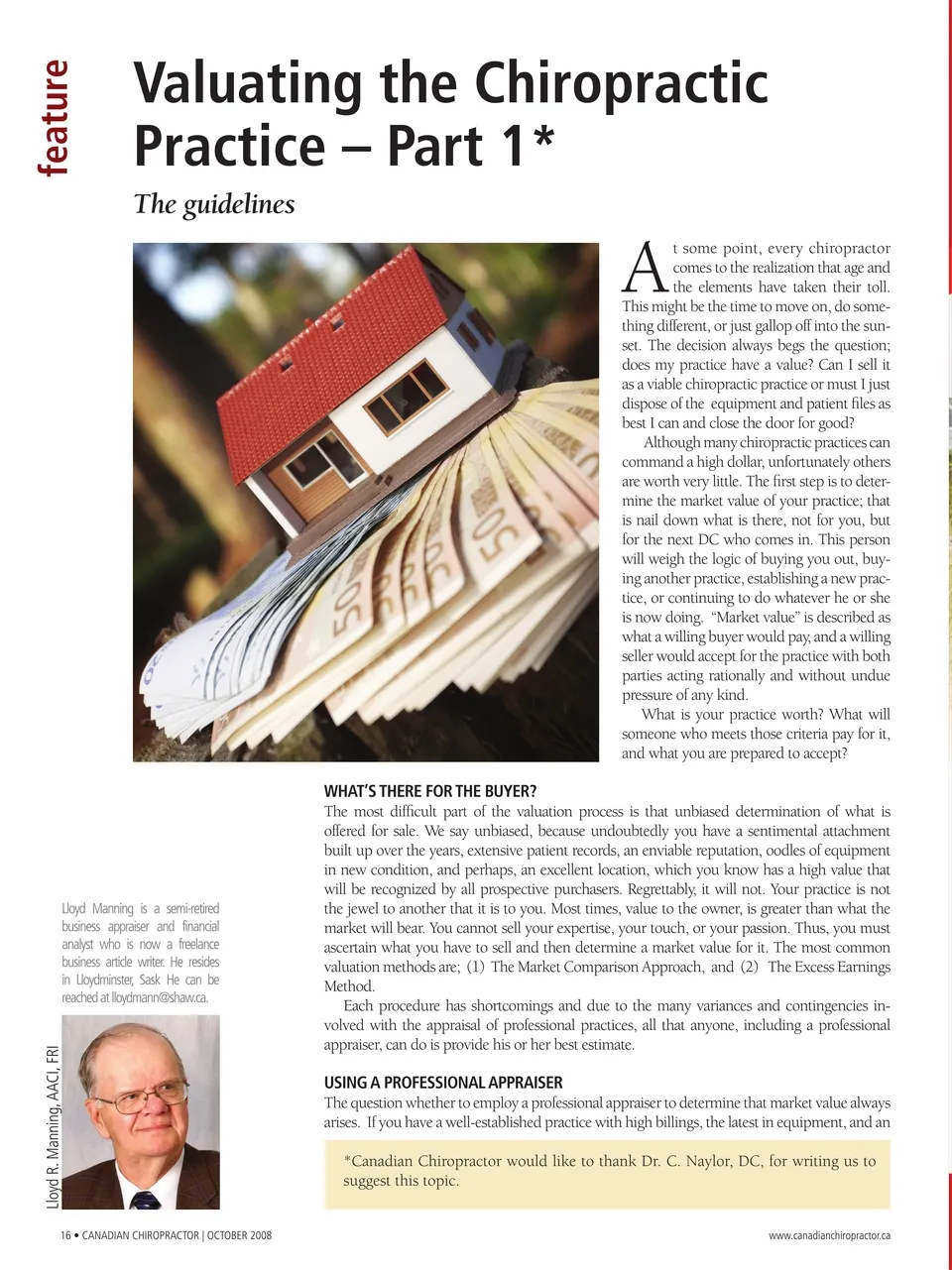
Valuating the Chiropractic Practice – Part 1* The guidelines A t some point, every chiropractor comes to the realization that age and the elements have taken their toll. This might be the time to move on, do some- thing different, or just gallop off into the sun- set. The decision always begs the question; does my practice have a value? Can I sell it as a viable chiropractic practice or must I just dispose of the equipment and patient files as best I can and close the door for good? Although many chiropractic practices can command a high dollar, unfortunately others are worth very little. The fi rst step is to deter- mine the market value of your practice; that is nail down what is there, not for you, but for the next DC who comes in. This person will weigh the logic of buying you out, buy- ing another practice, establishing a new prac- tice, or continuing to do whatever he or she is now doing. “Market value” is described as what a willing buyer would pay, and a willing seller would accept for the practice with both parties acting rationally and without undue pressure of any kind. What is your practice worth? What will someone who meets those criteria pay for it, and what you are prepared to accept? Lloyd Manning is a semi-retired business appraiser and financial analyst who is now a freelance business article writer. He resides in Lloydminster, Sask He can be reached at [email protected]. WHAT’S THERE FOR THE BUYER? The most diffi cult part of the valuation process is that unbiased determination of what is offered for sale. We say unbiased, because undoubtedly you have a sentimental attachment built up over the years, extensive patient records, an enviable reputation, oodles of equipment in new condition, and perhaps, an excellent location, which you know has a high value that will be recognized by all prospective purchasers. Regrettably, it will not. Your practice is not the jewel to another that it is to you. Most times, value to the owner, is greater than what the market will bear. You cannot sell your expertise, your touch, or your passion. Thus, you must ascertain what you have to sell and then determine a market value for it. The most common valuation methods are; (1) The Market Comparison Approach, and (2) The Excess Earnings Method. Each procedure has shortcomings and due to the many variances and contingencies in- volved with the appraisal of professional practices, all that anyone, including a professional appraiser, can do is provide his or her best estimate. USING A PROFESSIONAL APPRAISER The question whether to employ a professional appraiser to determine that market value always arises. If you have a well-established practice with high billings, the latest in equipment, and an *Canadian Chiropractor would like to thank Dr. C. Naylor, DC, for writing us to suggest this topic. 16 • CANADIAN CHIROPRACTOR | OCTOBER 2008 www.canadianchiropractor.ca Lloyd R. Manning, AACI, FRI feature
Chiropractic + Naturopathic Doctor October 08: Page 16