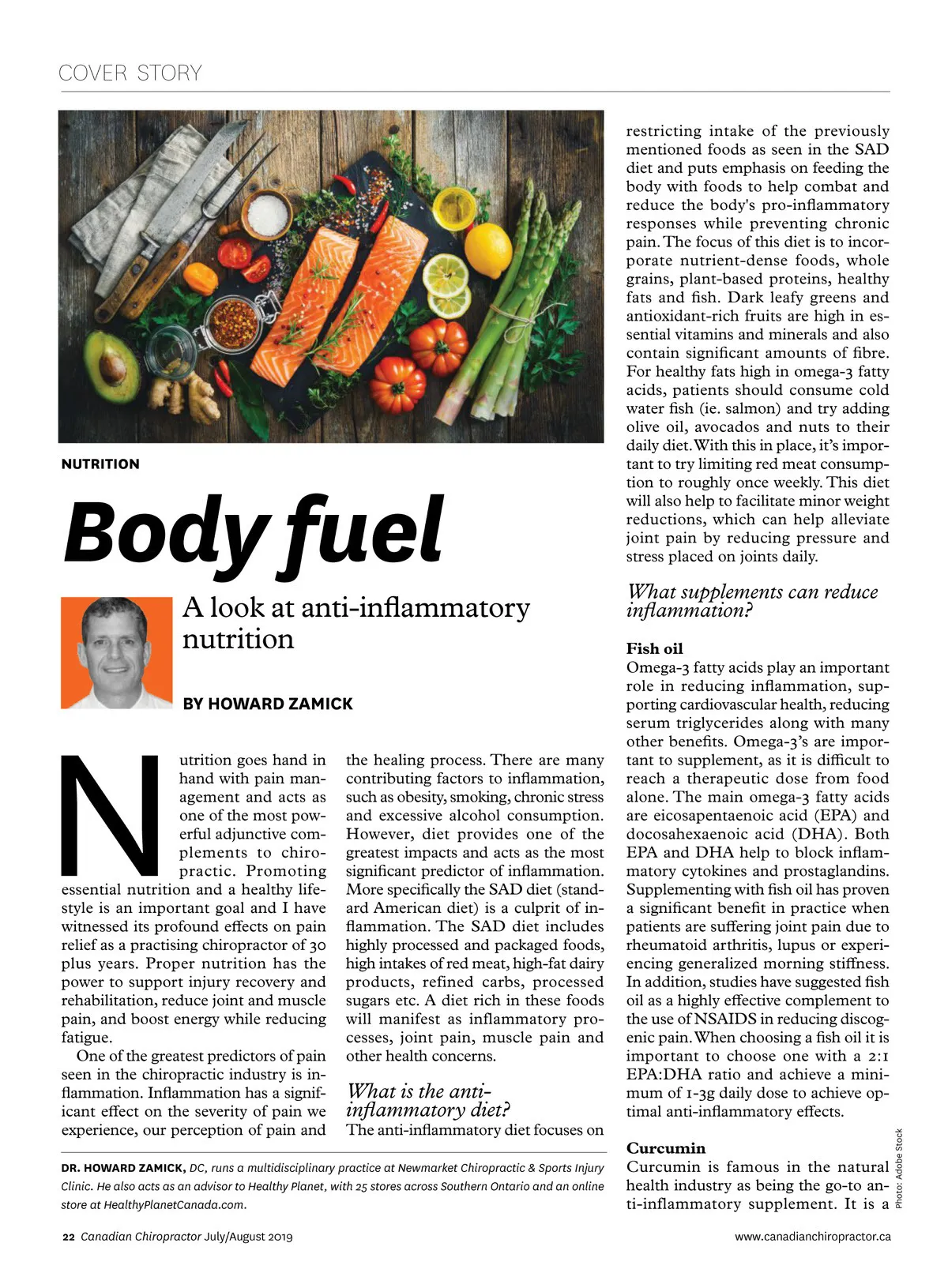
COVER STORY restricting intake of the previously mentioned foods as seen in the SAD diet and puts emphasis on feeding the body with foods to help combat and reduce the body's pro-inflammatory responses while preventing chronic pain. The focus of this diet is to incor-porate nutrient-dense foods, whole grains, plant-based proteins, healthy fats and fish. Dark leafy greens and antioxidant-rich fruits are high in es-sential vitamins and minerals and also contain significant amounts of fibre. For healthy fats high in omega-3 fatty acids, patients should consume cold water fish (ie. salmon) and try adding olive oil, avocados and nuts to their daily diet. With this in place, it’s impor-tant to try limiting red meat consump-tion to roughly once weekly. This diet will also help to facilitate minor weight reductions, which can help alleviate joint pain by reducing pressure and stress placed on joints daily. NUTRITION Body fuel A look at anti-inflammatory nutrition What supplements can reduce inflammation? Fish oil Omega-3 fatty acids play an important role in reducing inflammation, sup-porting cardiovascular health, reducing serum triglycerides along with many other benefits. Omega-3’s are impor-tant to supplement, as it is difficult to reach a therapeutic dose from food alone. The main omega-3 fatty acids are eicosapentaenoic acid (EPA) and docosahexaenoic acid (DHA). Both EPA and DHA help to block inflam-matory cytokines and prostaglandins. Supplementing with fish oil has proven a significant benefit in practice when patients are suffering joint pain due to rheumatoid arthritis, lupus or experi-encing generalized morning stiffness. In addition, studies have suggested fish oil as a highly effective complement to the use of NSAIDS in reducing discog-enic pain. When choosing a fish oil it is important to choose one with a 2:1 EPA:DHA ratio and achieve a mini-mum of 1-3g daily dose to achieve op-timal anti-inflammatory effects. Curcumin Curcumin is famous in the natural health industry as being the go-to an-ti-inflammatory supplement. It is a www.canadianchiropractor.ca Photo: Adobe Stock N BY HOWARD ZAMICK the healing process. There are many contributing factors to inflammation, such as obesity, smoking, chronic stress and excessive alcohol consumption. However, diet provides one of the greatest impacts and acts as the most significant predictor of inflammation. More specifically the SAD diet (stand-ard American diet) is a culprit of in-flammation. The SAD diet includes highly processed and packaged foods, high intakes of red meat, high-fat dairy products, refined carbs, processed sugars etc. A diet rich in these foods will manifest as inflammatory pro-cesses, joint pain, muscle pain and other health concerns. utrition goes hand in hand with pain man-agement and acts as one of the most pow-erful adjunctive com-plements to chiro-practic. Promoting essential nutrition and a healthy life-style is an important goal and I have witnessed its profound effects on pain relief as a practising chiropractor of 30 plus years. Proper nutrition has the power to support injury recovery and rehabilitation, reduce joint and muscle pain, and boost energy while reducing fatigue. One of the greatest predictors of pain seen in the chiropractic industry is in-flammation. Inflammation has a signif-icant effect on the severity of pain we experience, our perception of pain and What is the anti-inflammatory diet? The anti-inflammatory diet focuses on DR. HOWARD ZAMICK, DC, runs a multidisciplinary practice at Newmarket Chiropractic & Sports Injury Clinic. He also acts as an advisor to Healthy Planet, with 25 stores across Southern Ontario and an online store at HealthyPlanetCanada.com. 22 Canadian Chiropractor July/August 2019
Chiropractic + Naturopathic Doctor JulyAugust 2019: Page 22