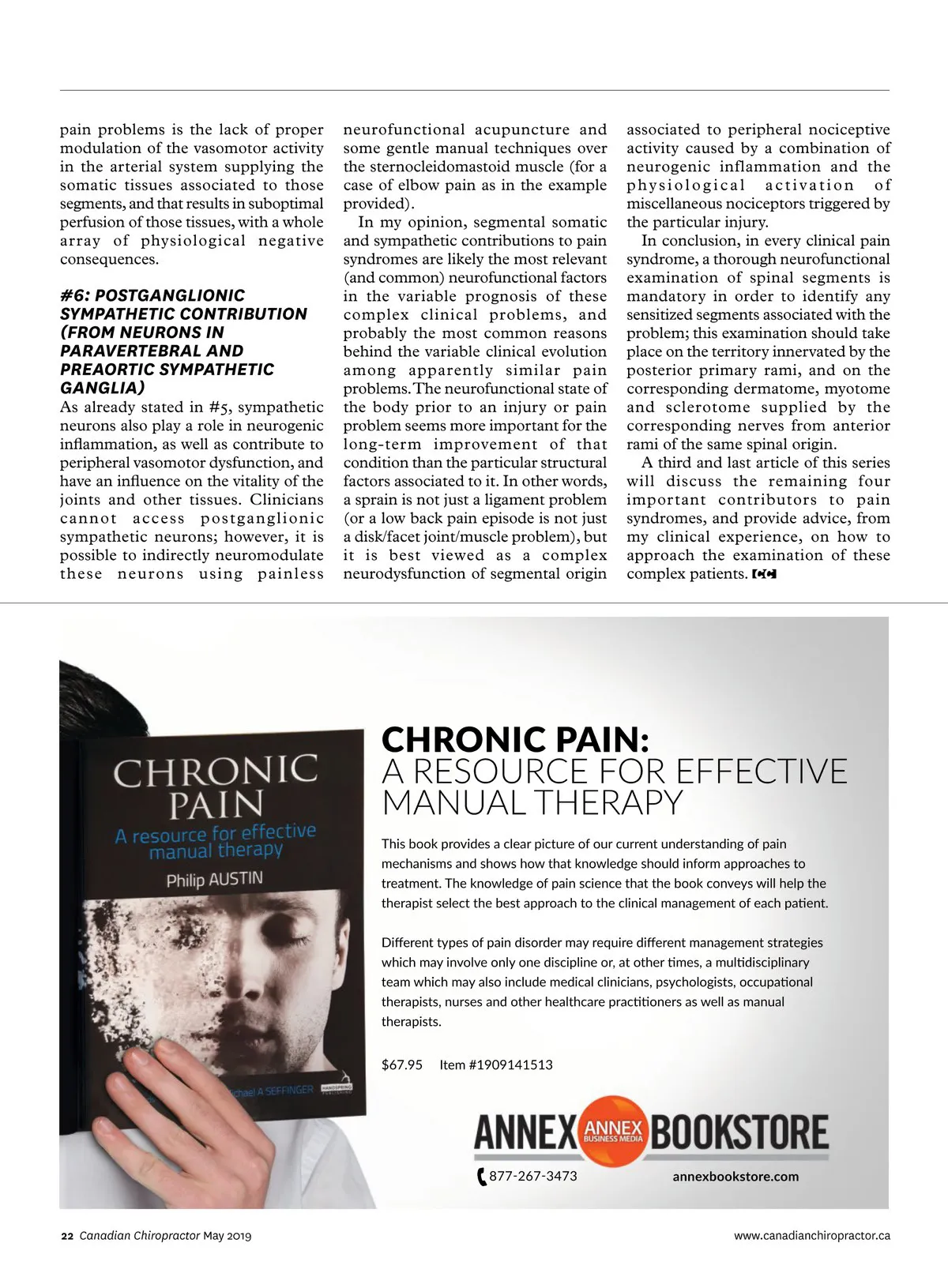
pain problems is the lack of proper modulation of the vasomotor activity in the arterial system supplying the somatic tissues associated to those segments, and that results in suboptimal perfusion of those tissues, with a whole array of physiological negative consequences. #6: POSTGANGLIONIC SYMPATHETIC CONTRIBUTION (FROM NEURONS IN PARAVERTEBRAL AND PREAORTIC SYMPATHETIC GANGLIA) As already stated in #5, sympathetic neurons also play a role in neurogenic inflammation, as well as contribute to peripheral vasomotor dysfunction, and have an influence on the vitality of the joints and other tissues. Clinicians cannot access postganglionic sympathetic neurons; however, it is possible to indirectly neuromodulate these neurons using painless neurofunctional acupuncture and some gentle manual techniques over the sternocleidomastoid muscle (for a case of elbow pain as in the example provided). In my opinion, segmental somatic and sympathetic contributions to pain syndromes are likely the most relevant (and common) neurofunctional factors in the variable prognosis of these complex clinical problems, and probably the most common reasons behind the variable clinical evolution among apparently similar pain problems. The neurofunctional state of the body prior to an injury or pain problem seems more important for the long-term improvement of that condition than the particular structural factors associated to it. In other words, a sprain is not just a ligament problem (or a low back pain episode is not just a disk/facet joint/muscle problem), but it is best viewed as a complex neurodysfunction of segmental origin associated to peripheral nociceptive activity caused by a combination of neurogenic inflammation and the physiological activation of miscellaneous nociceptors triggered by the particular injury. In conclusion, in every clinical pain syndrome, a thorough neurofunctional examination of spinal segments is mandatory in order to identify any sensitized segments associated with the problem; this examination should take place on the territory innervated by the posterior primary rami, and on the corresponding dermatome, myotome and sclerotome supplied by the corresponding nerves from anterior rami of the same spinal origin. A third and last article of this series will discuss the remaining four important contributors to pain syndromes, and provide advice, from my clinical experience, on how to approach the examination of these complex patients. CHRONIC PAIN: A RESOURCE FOR EFFECTIVE MANUAL THERAPY This book provides a clear picture of our current understanding of pain mechanisms and shows how that knowledge should inform approaches to treatment. The knowledge of pain science that the book conveys will help the therapist select the best approach to the clinical management of each patient. Different types of pain disorder may require different management strategies which may involve only one discipline or, at other times, a multidisciplinary team which may also include medical clinicians, psychologists, occupational therapists, nurses and other healthcare practitioners as well as manual therapists. $67.95 Item #1909141513 877-267-3473 annexbookstore.com 22 Canadian Chiropractor May 2019 CC_BOOKAD_MAY_BAS.indd 1 www.canadianchiropractor.ca 2019-04-04 4:22 PM
Chiropractic + Naturopathic Doctor May 2019: Page 22