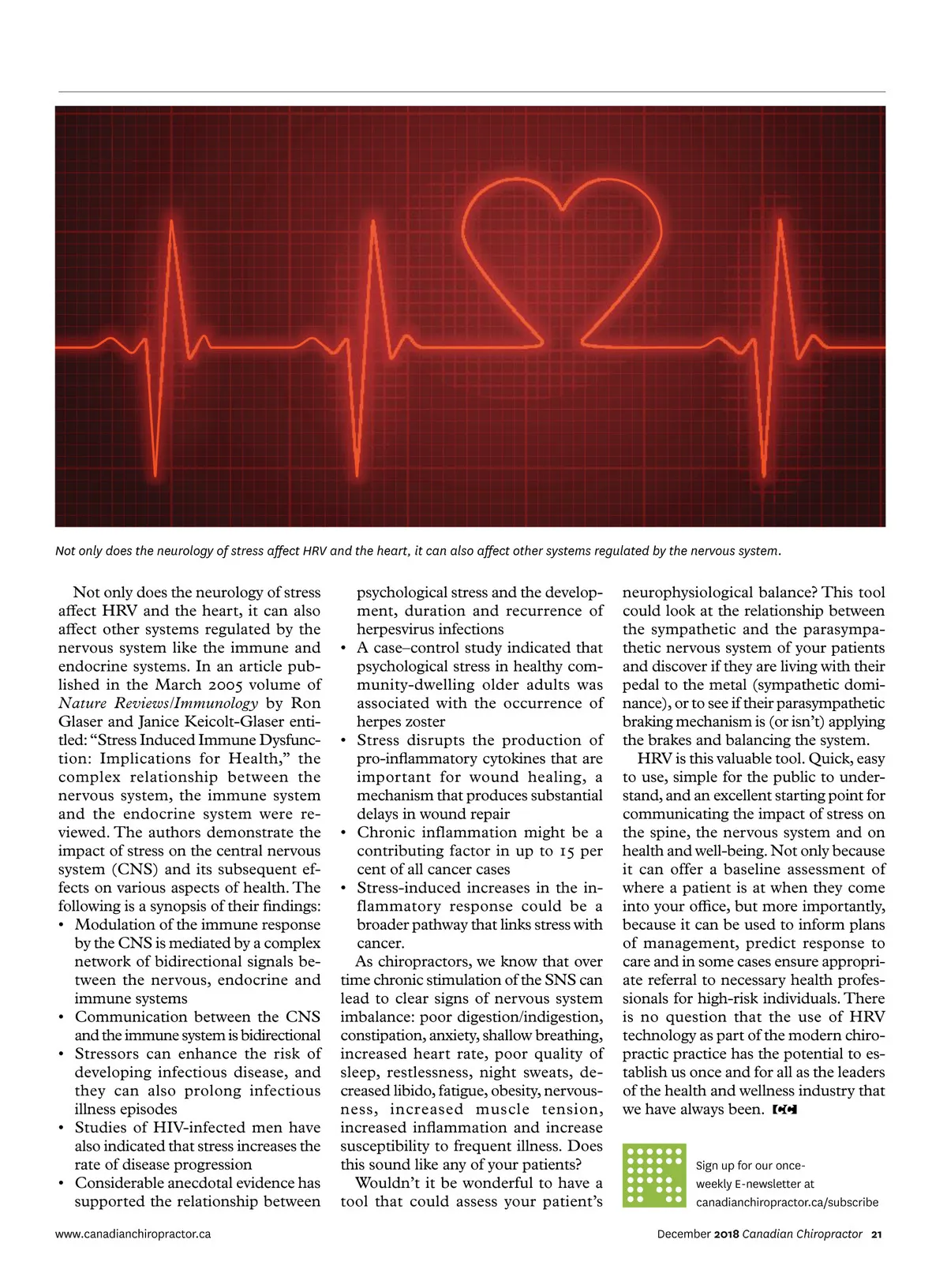
Not only does the neurology of stress affect HRV and the heart, it can also affect other systems regulated by the nervous system. Not only does the neurology of stress affect HRV and the heart, it can also affect other systems regulated by the nervous system like the immune and endocrine systems. In an article pub-lished in the March 2005 volume of Nature Reviews/Immunology by Ron Glaser and Janice Keicolt-Glaser enti-tled: “Stress Induced Immune Dysfunc-tion: Implications for Health,” the complex relationship between the nervous system, the immune system and the endocrine system were re-viewed. The authors demonstrate the impact of stress on the central nervous system (CNS) and its subsequent ef-fects on various aspects of health. The following is a synopsis of their findings: • Modulation of the immune response by the CNS is mediated by a complex network of bidirectional signals be-tween the nervous, endocrine and immune systems • Communication between the CNS and the immune system is bidirectional • Stressors can enhance the risk of developing infectious disease, and they can also prolong infectious illness episodes • Studies of HIV-infected men have also indicated that stress increases the rate of disease progression • Considerable anecdotal evidence has supported the relationship between www.canadianchiropractor.ca psychological stress and the develop-ment, duration and recurrence of herpesvirus infections • A case–control study indicated that psychological stress in healthy com-munity-dwelling older adults was associated with the occurrence of herpes zoster • Stress disrupts the production of pro-inflammatory cytokines that are important for wound healing, a mechanism that produces substantial delays in wound repair • Chronic inflammation might be a contributing factor in up to 15 per cent of all cancer cases • Stress-induced increases in the in-flammatory response could be a broader pathway that links stress with cancer. As chiropractors, we know that over time chronic stimulation of the SNS can lead to clear signs of nervous system imbalance: poor digestion/indigestion, constipation, anxiety, shallow breathing, increased heart rate, poor quality of sleep, restlessness, night sweats, de-creased libido, fatigue, obesity, nervous-ness, increased muscle tension, increased inflammation and increase susceptibility to frequent illness. Does this sound like any of your patients? Wouldn’t it be wonderful to have a tool that could assess your patient’s neurophysiological balance? This tool could look at the relationship between the sympathetic and the parasympa-thetic nervous system of your patients and discover if they are living with their pedal to the metal (sympathetic domi-nance), or to see if their parasympathetic braking mechanism is (or isn’t) applying the brakes and balancing the system. HRV is this valuable tool. Quick, easy to use, simple for the public to under-stand, and an excellent starting point for communicating the impact of stress on the spine, the nervous system and on health and well-being. Not only because it can offer a baseline assessment of where a patient is at when they come into your office, but more importantly, because it can be used to inform plans of management, predict response to care and in some cases ensure appropri-ate referral to necessary health profes-sionals for high-risk individuals. There is no question that the use of HRV technology as part of the modern chiro-practic practice has the potential to es-tablish us once and for all as the leaders of the health and wellness industry that we have always been. Sign up for our once-weekly E-newsletter at canadianchiropractor.ca/subscribe December 2018 Canadian Chiropractor 21
Chiropractic + Naturopathic Doctor December 2018: Page 21