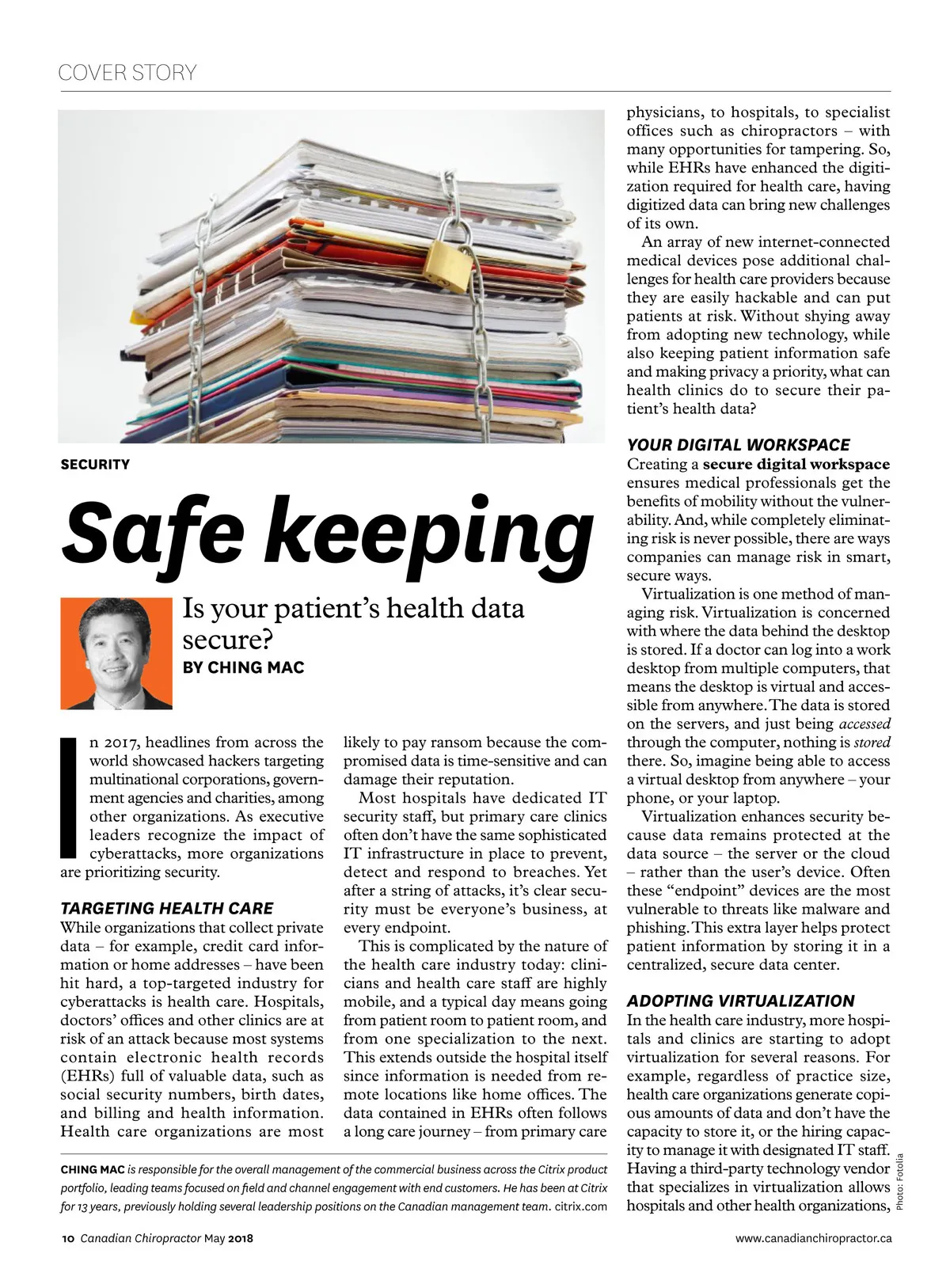
COVER STORY physicians, to hospitals, to specialist offices such as chiropractors – with many opportunities for tampering. So, while EHRs have enhanced the digiti-zation required for health care, having digitized data can bring new challenges of its own. An array of new internet-connected medical devices pose additional chal-lenges for health care providers because they are easily hackable and can put patients at risk. Without shying away from adopting new technology, while also keeping patient information safe and making privacy a priority, what can health clinics do to secure their pa-tient’s health data? SECURITY Safe keeping Is your patient’s health data secure? I BY CHING MAC n 2017, headlines from across the world showcased hackers targeting multinational corporations, govern-ment agencies and charities, among other organizations. As executive leaders recognize the impact of cyberattacks, more organizations are prioritizing security. TARGETING HEALTH CARE While organizations that collect private data – for example, credit card infor-mation or home addresses – have been hit hard, a top-targeted industry for cyberattacks is health care. Hospitals, doctors’ offices and other clinics are at risk of an attack because most systems contain electronic health records (EHRs) full of valuable data, such as social security numbers, birth dates, and billing and health information. Health care organizations are most likely to pay ransom because the com-promised data is time-sensitive and can damage their reputation. Most hospitals have dedicated IT security staff, but primary care clinics often don’t have the same sophisticated IT infrastructure in place to prevent, detect and respond to breaches. Yet after a string of attacks, it’s clear secu-rity must be everyone’s business, at every endpoint. This is complicated by the nature of the health care industry today: clini-cians and health care staff are highly mobile, and a typical day means going from patient room to patient room, and from one specialization to the next. This extends outside the hospital itself since information is needed from re-mote locations like home offices. The data contained in EHRs often follows a long care journey – from primary care Creating a secure digital workspace ensures medical professionals get the benefits of mobility without the vulner-ability. And, while completely eliminat-ing risk is never possible, there are ways companies can manage risk in smart, secure ways. Virtualization is one method of man-aging risk. Virtualization is concerned with where the data behind the desktop is stored. If a doctor can log into a work desktop from multiple computers, that means the desktop is virtual and acces-sible from anywhere. The data is stored on the servers, and just being accessed through the computer, nothing is stored there. So, imagine being able to access a virtual desktop from anywhere – your phone, or your laptop. Virtualization enhances security be-cause data remains protected at the data source – the server or the cloud – rather than the user’s device. Often these “endpoint” devices are the most vulnerable to threats like malware and phishing. This extra layer helps protect patient information by storing it in a centralized, secure data center. YOUR DIGITAL WORKSPACE ADOPTING VIRTUALIZATION CHING MAC is responsible for the overall management of the commercial business across the Citrix product portfolio, leading teams focused on field and channel engagement with end customers. He has been at Citrix for 13 years, previously holding several leadership positions on the Canadian management team. citrix.com 10 Canadian Chiropractor May 2018 In the health care industry, more hospi-tals and clinics are starting to adopt virtualization for several reasons. For example, regardless of practice size, health care organizations generate copi-ous amounts of data and don’t have the capacity to store it, or the hiring capac-ity to manage it with designated IT staff. Having a third-party technology vendor that specializes in virtualization allows hospitals and other health organizations, www.canadianchiropractor.ca Photo: Fotolia
Chiropractic + Naturopathic Doctor May 2018: Page 10