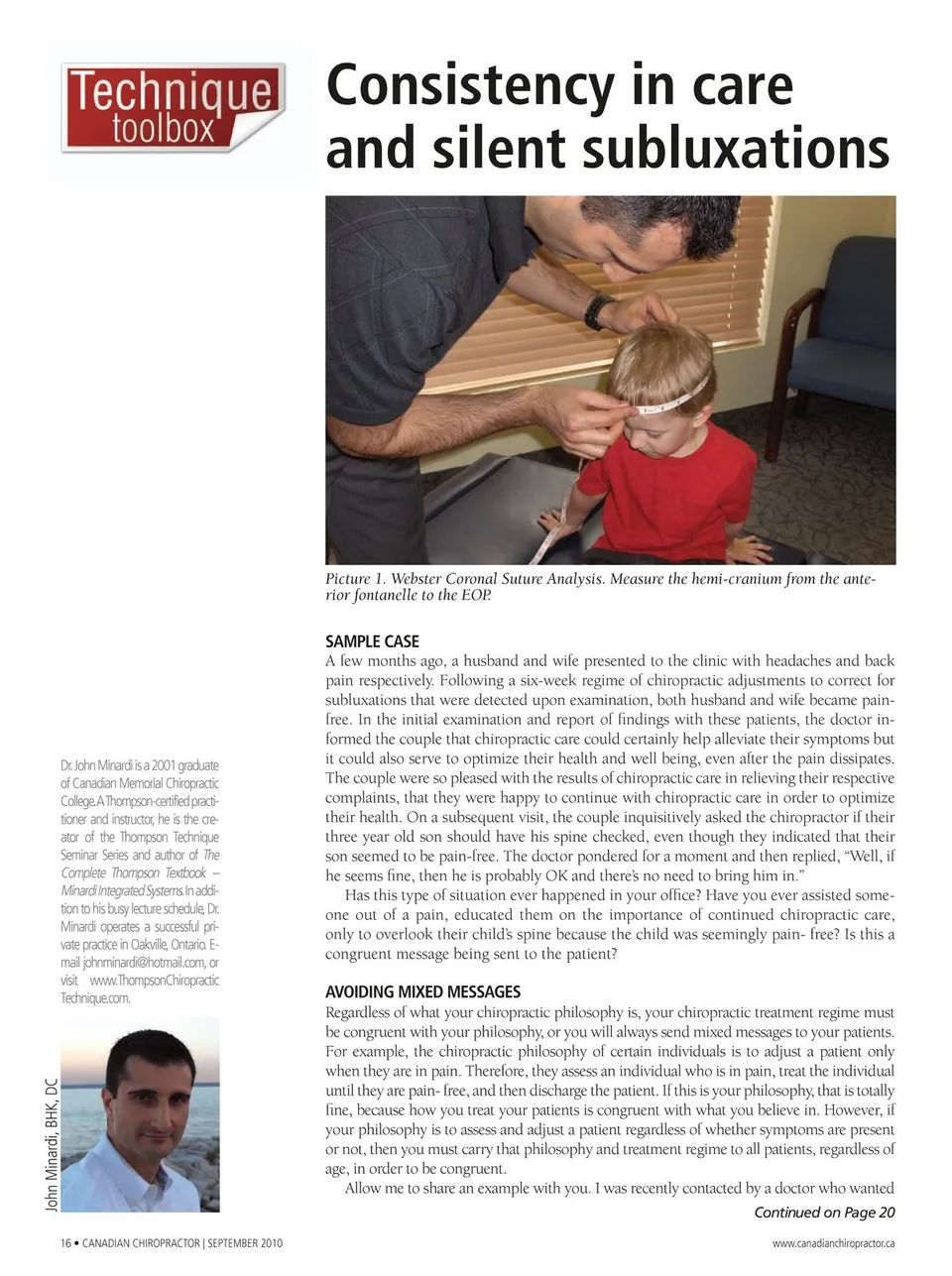
Consistency in care and silent subluxations Picture 1. Webster Coronal Suture Analysis. Measure the hemi-cranium from the ante-rior fontanelle to the EOP. Dr. John Minardi is a 2001 graduate of Canadian Memorial Chiropractic College. A Thompson-certified practi-tioner and instructor, he is the cre-ator of the Thompson Technique Seminar Series and author of The Complete Thompson Textbook – Minardi Integrated Systems. In addi-tion to his busy lecture schedule, Dr. Minardi operates a successful pri-vate practice in Oakville, Ontario. E-mail [email protected], or visit www.ThompsonChiropractic Technique.com. SAMPLE CASE A few months ago, a husband and wife presented to the clinic with headaches and back pain respectively. Following a six-week regime of chiropractic adjustments to correct for subluxations that were detected upon examination, both husband and wife became pain-free. In the initial examination and report of findings with these patients, the doctor in-formed the couple that chiropractic care could certainly help alleviate their symptoms but it could also serve to optimize their health and well being, even after the pain dissipates. The couple were so pleased with the results of chiropractic care in relieving their respective complaints, that they were happy to continue with chiropractic care in order to optimize their health. On a subsequent visit, the couple inquisitively asked the chiropractor if their three year old son should have his spine checked, even though they indicated that their son seemed to be pain-free. The doctor pondered for a moment and then replied, “Well, if he seems fine, then he is probably OK and there’s no need to bring him in.” Has this type of situation ever happened in your office? Have you ever assisted some-one out of a pain, educated them on the importance of continued chiropractic care, only to overlook their child’s spine because the child was seemingly pain-free? Is this a congruent message being sent to the patient? AVOIDING MIXED MESSAGES Regardless of what your chiropractic philosophy is, your chiropractic treatment regime must be congruent with your philosophy, or you will always send mixed messages to your patients. For example, the chiropractic philosophy of certain individuals is to adjust a patient only when they are in pain. Therefore, they assess an individual who is in pain, treat the individual until they are pain-free, and then discharge the patient. If this is your philosophy, that is totally fine, because how you treat your patients is congruent with what you believe in. However, if your philosophy is to assess and adjust a patient regardless of whether symptoms are present or not, then you must carry that philosophy and treatment regime to all patients, regardless of age, in order to be congruent. Allow me to share an example with you. I was recently contacted by a doctor who wanted 16 • CANADIAN CHIROPRACTOR | SEPTEMBER 2010 Continued on Page 20 www.canadianchiropractor.ca John Minardi, BHK, DC
Chiropractic + Naturopathic Doctor September 2010: Page 16