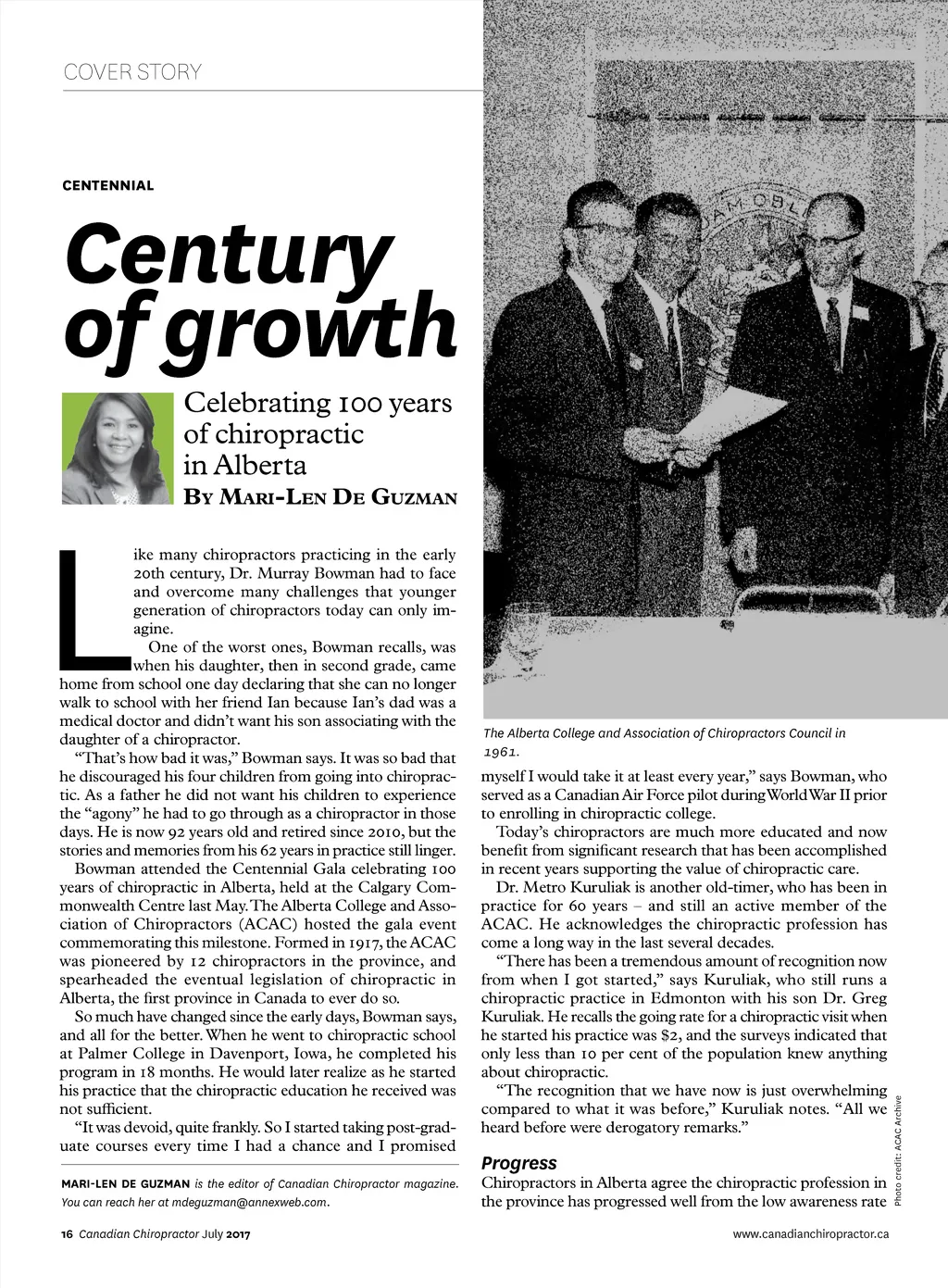
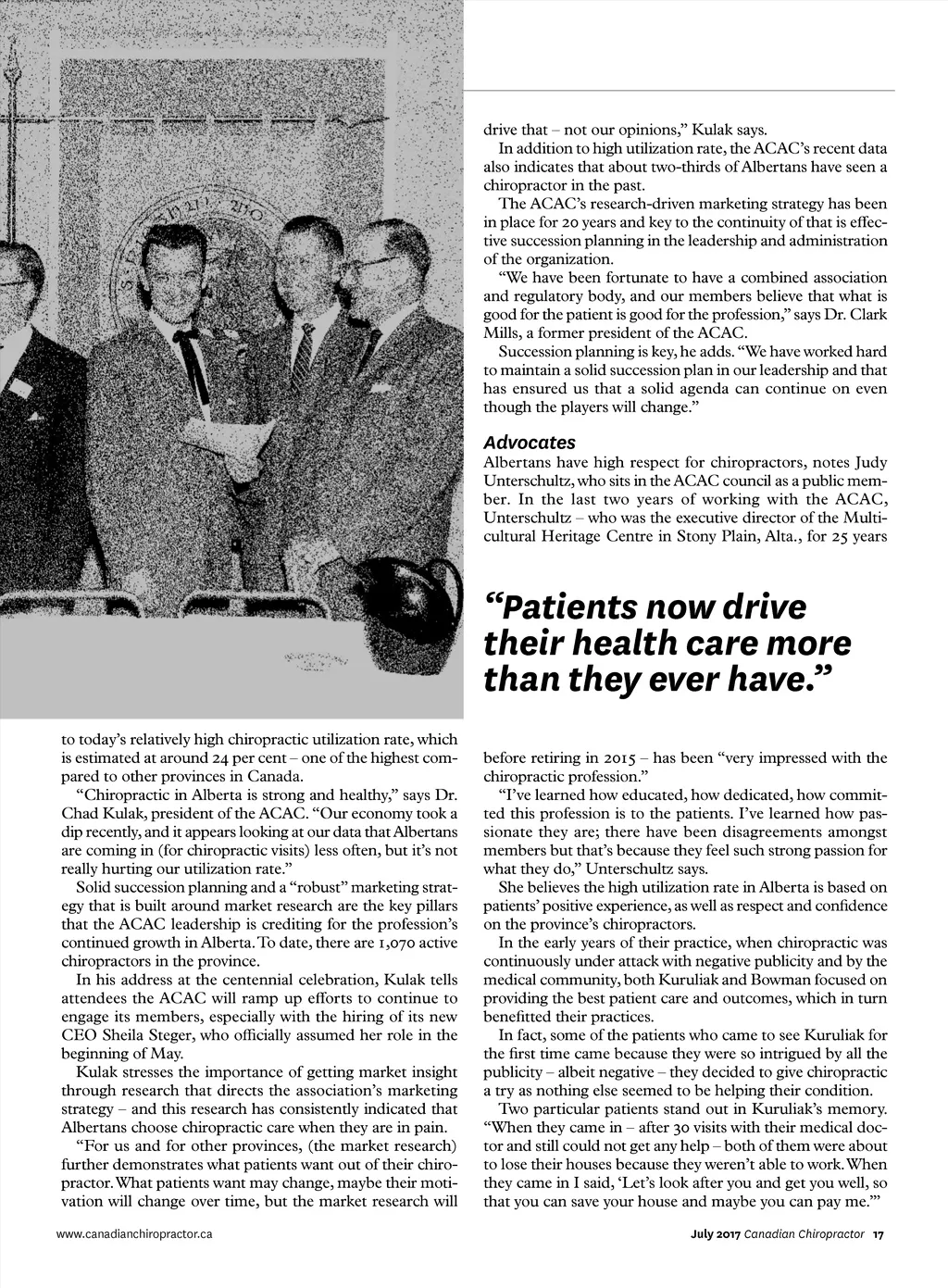
drive that – not our opinions,” Kulak says. In addition to high utilization rate, the ACAC’s recent data also indicates that about two-thirds of Albertans have seen a chiropractor in the past. The ACAC’s research-driven marketing strategy has been in place for 20 years and key to the continuity of that is effec-tive succession planning in the leadership and administration of the organization. “We have been fortunate to have a combined association and regulatory body, and our members believe that what is good for the patient is good for the profession,” says Dr. Clark Mills, a former president of the ACAC. Succession planning is key, he adds. “We have worked hard to maintain a solid succession plan in our leadership and that has ensured us that a solid agenda can continue on even though the players will change.” Advocates Albertans have high respect for chiropractors, notes Judy Unterschultz, who sits in the ACAC council as a public mem-ber. In the last two years of working with the ACAC, Unterschultz – who was the executive director of the Multi-cultural Heritage Centre in Stony Plain, Alta., for 25 years “Patients now drive their health care more than they ever have.” to today’s relatively high chiropractic utilization rate, which is estimated at around 24 per cent – one of the highest com-pared to other provinces in Canada. “Chiropractic in Alberta is strong and healthy,” says Dr. Chad Kulak, president of the ACAC. “Our economy took a dip recently, and it appears looking at our data that Albertans are coming in (for chiropractic visits) less often, but it’s not really hurting our utilization rate.” Solid succession planning and a “robust” marketing strat-egy that is built around market research are the key pillars that the ACAC leadership is crediting for the profession’s continued growth in Alberta. To date, there are 1,070 active chiropractors in the province. In his address at the centennial celebration, Kulak tells attendees the ACAC will ramp up efforts to continue to engage its members, especially with the hiring of its new CEO Sheila Steger, who officially assumed her role in the beginning of May. Kulak stresses the importance of getting market insight through research that directs the association’s marketing strategy – and this research has consistently indicated that Albertans choose chiropractic care when they are in pain. “For us and for other provinces, (the market research) further demonstrates what patients want out of their chiro-practor. What patients want may change, maybe their moti-vation will change over time, but the market research will www.canadianchiropractor.ca before retiring in 2015 – has been “very impressed with the chiropractic profession.” “I’ve learned how educated, how dedicated, how commit-ted this profession is to the patients. I’ve learned how pas-sionate they are; there have been disagreements amongst members but that’s because they feel such strong passion for what they do,” Unterschultz says. She believes the high utilization rate in Alberta is based on patients’ positive experience, as well as respect and confidence on the province’s chiropractors. In the early years of their practice, when chiropractic was continuously under attack with negative publicity and by the medical community, both Kuruliak and Bowman focused on providing the best patient care and outcomes, which in turn benefitted their practices. In fact, some of the patients who came to see Kuruliak for the first time came because they were so intrigued by all the publicity – albeit negative – they decided to give chiropractic a try as nothing else seemed to be helping their condition. Two particular patients stand out in Kuruliak’s memory. “When they came in – after 30 visits with their medical doc-tor and still could not get any help – both of them were about to lose their houses because they weren’t able to work. When they came in I said, ‘Let’s look after you and get you well, so that you can save your house and maybe you can pay me.’” July 2017 Canadian Chiropractor 17
Chiropractic + Naturopathic Doctor July 2017: Page 17