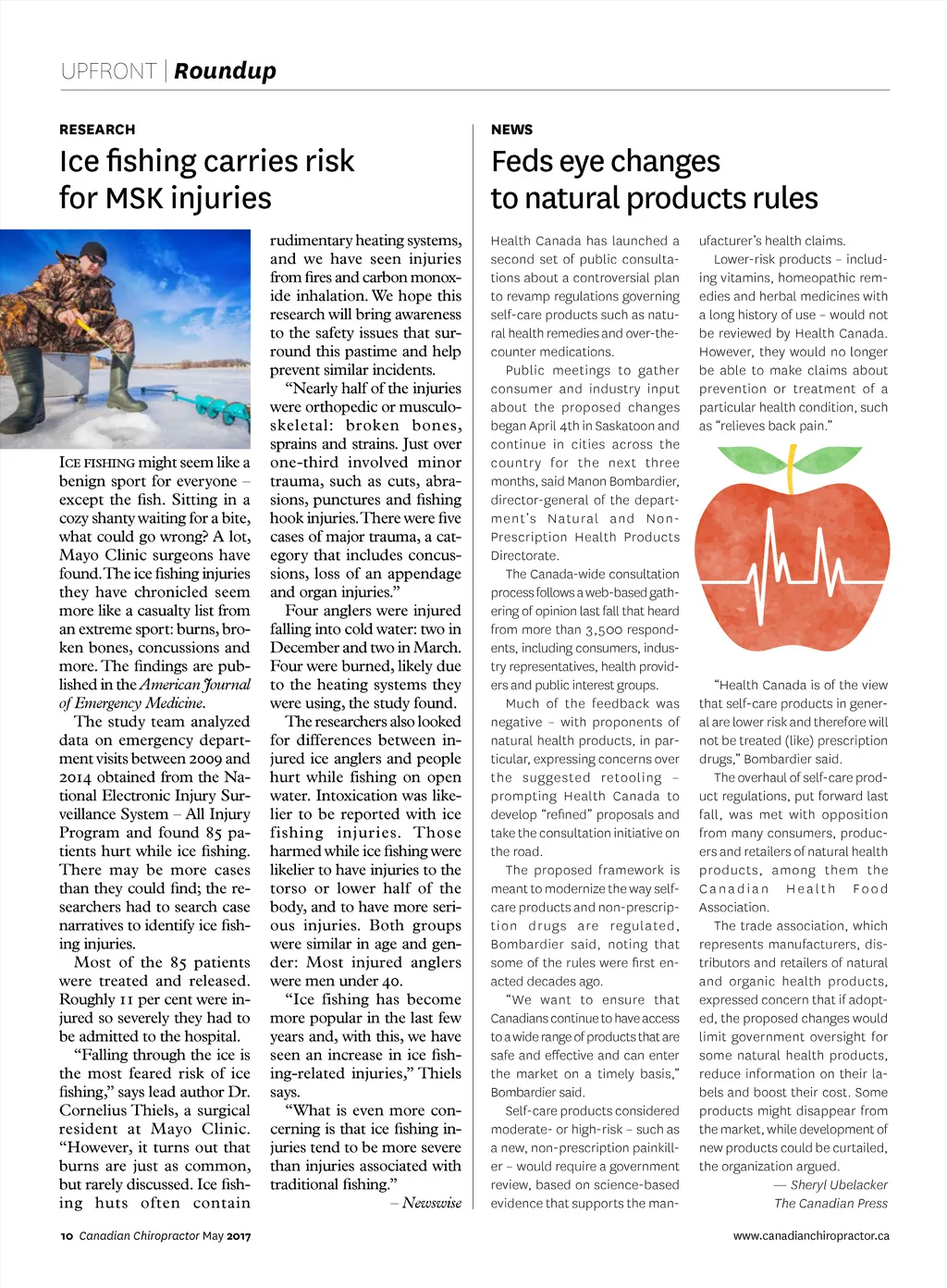
UPFRONT | Roundup RESEARCH Ice fishing carries risk for MSK injuries rudimentary heating systems, and we have seen injuries from fires and carbon monox-ide inhalation. We hope this research will bring awareness to the safety issues that sur-round this pastime and help prevent similar incidents. “Nearly half of the injuries were orthopedic or musculo-skeletal: broken bones, sprains and strains. Just over one-third involved minor trauma, such as cuts, abra-sions, punctures and fishing hook injuries. There were five cases of major trauma, a cat-egory that includes concus-sions, loss of an appendage and organ injuries.” Four anglers were injured falling into cold water: two in December and two in March. Four were burned, likely due to the heating systems they were using, the study found. The researchers also looked for differences between in-jured ice anglers and people hurt while fishing on open water. Intoxication was like-lier to be reported with ice fishing injuries. Those harmed while ice fishing were likelier to have injuries to the torso or lower half of the body, and to have more seri-ous injuries. Both groups were similar in age and gen-der: Most injured anglers were men under 40. “Ice fishing has become more popular in the last few years and, with this, we have seen an increase in ice fish-ing-related injuries,” Thiels says. “What is even more con-cerning is that ice fishing in-juries tend to be more severe than injuries associated with traditional fishing.” – Newswise NEWS Feds eye changes to natural products rules Health Canada has launched a second set of public consulta-tions about a controversial plan to revamp regulations governing self-care products such as natu-ral health remedies and over-the-counter medications. Public meetings to gather consumer and industry input about the proposed changes began April 4th in Saskatoon and continue in cities across the country for the next three months, said Manon Bombardier, director-general of the depart-ment’s Natural and Non-Prescription Health Products Directorate. The Canada-wide consultation process follows a web-based gath-ering of opinion last fall that heard from more than 3,500 respond-ents, including consumers, indus-try representatives, health provid-ers and public interest groups. Much of the feedback was negative – with proponents of natural health products, in par-ticular, expressing concerns over the suggested retooling – prompting Health Canada to develop “refined” proposals and take the consultation initiative on the road. The proposed framework is meant to modernize the way self-care products and non-prescrip-tion drugs are regulated, Bombardier said, noting that some of the rules were first en-acted decades ago. “We want to ensure that Canadians continue to have access to a wide range of products that are safe and effective and can enter the market on a timely basis,” Bombardier said. Self-care products considered moderate-or high-risk – such as a new, non-prescription painkill-er – would require a government review, based on science-based evidence that supports the man-ufacturer’s health claims. Lower-risk products – includ-ing vitamins, homeopathic rem-edies and herbal medicines with a long history of use – would not be reviewed by Health Canada. However, they would no longer be able to make claims about prevention or treatment of a particular health condition, such as “relieves back pain.” Ice fishing might seem like a benign sport for everyone – except the fish. Sitting in a cozy shanty waiting for a bite, what could go wrong? A lot, Mayo Clinic surgeons have found. The ice fishing injuries they have chronicled seem more like a casualty list from an extreme sport: burns, bro-ken bones, concussions and more. The findings are pub-lished in the American Journal of Emergency Medicine. The study team analyzed data on emergency depart-ment visits between 2009 and 2014 obtained from the Na-tional Electronic Injury Sur-veillance System – All Injury Program and found 85 pa-tients hurt while ice fishing. There may be more cases than they could find; the re-searchers had to search case narratives to identify ice fish-ing injuries. Most of the 85 patients were treated and released. Roughly 11 per cent were in-jured so severely they had to be admitted to the hospital. “Falling through the ice is the most feared risk of ice fishing,” says lead author Dr. Cornelius Thiels, a surgical resident at Mayo Clinic. “However, it turns out that burns are just as common, but rarely discussed. Ice fish-ing huts often contain 10 Canadian Chiropractor May 2017 “Health Canada is of the view that self-care products in gener-al are lower risk and therefore will not be treated (like) prescription drugs,” Bombardier said. The overhaul of self-care prod-uct regulations, put forward last fall, was met with opposition from many consumers, produc-ers and retailers of natural health products, among them the C ana dian He alth F ood Association. The trade association, which represents manufacturers, dis-tributors and retailers of natural and organic health products, expressed concern that if adopt-ed, the proposed changes would limit government oversight for some natural health products, reduce information on their la-bels and boost their cost. Some products might disappear from the market, while development of new products could be curtailed, the organization argued. — Sheryl Ubelacker The Canadian Press www.canadianchiropractor.ca
Chiropractic + Naturopathic Doctor May 2017: Page 10