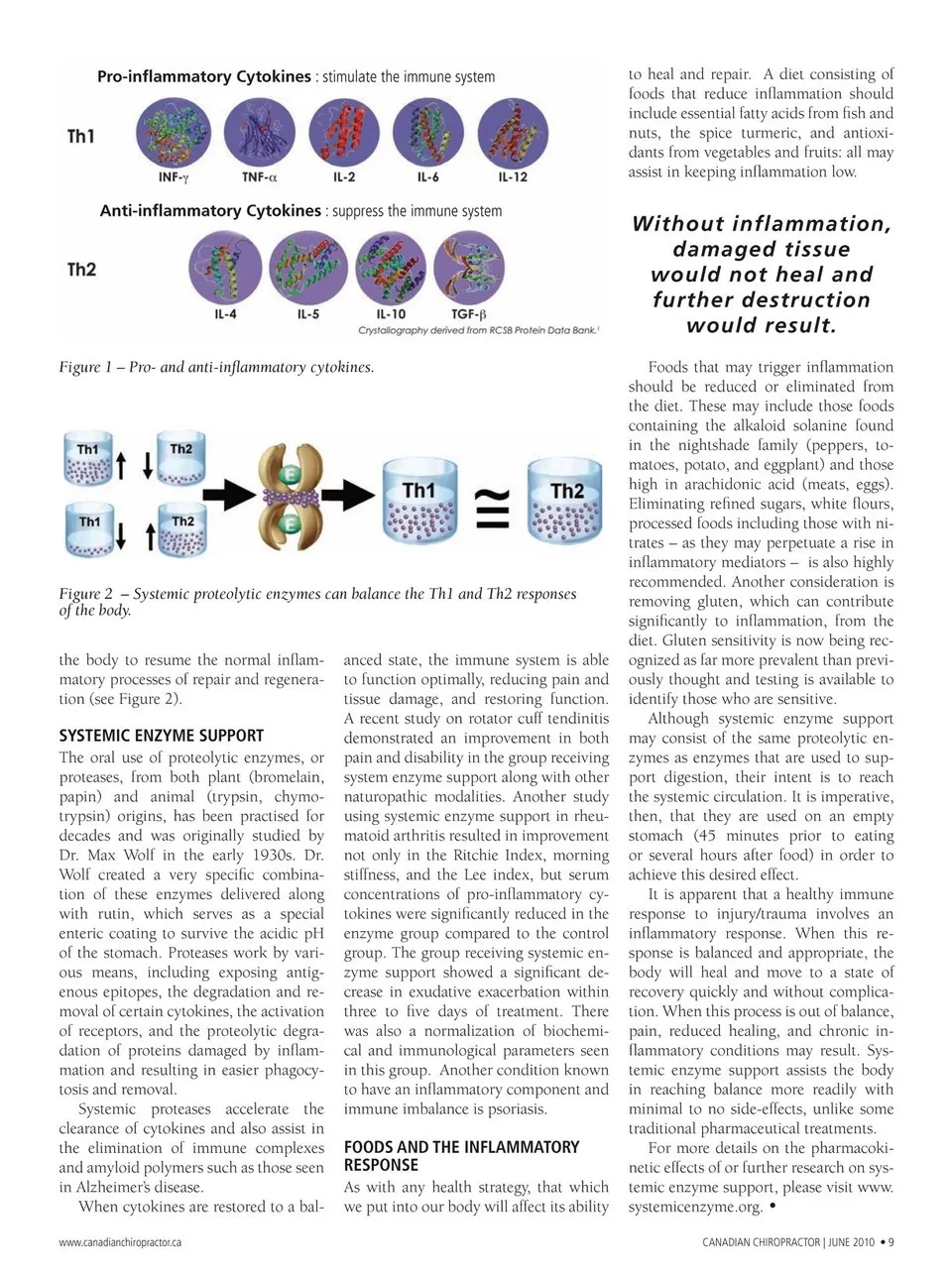
Pro-inflammatory Cytokines : stimulate the immune system to heal and repair. A diet consisting of foods that reduce inflammation should include essential fatty acids from fish and nuts, the spice turmeric, and antioxi- dants from vegetables and fruits: all may assist in keeping inflammation low. Anti-inflammatory Cytokines : suppress the immune system Without inflammation, damaged tissue would not heal and further destruction would result. Figure 1 – Pro- and anti-inflammatory cytokines. Figure 2 – Systemic proteolytic enzymes can balance the Th1 and Th2 responses of the body. the body to resume the normal inflam- matory processes of repair and regenera- tion (see Figure 2). SYSTEMIC ENZYME SUPPORT The oral use of proteolytic enzymes, or proteases, from both plant (bromelain, papin) and animal (trypsin, chymo- trypsin) origins, has been practised for decades and was originally studied by Dr. Max Wolf in the early 1930s. Dr. Wolf created a very specific combina- tion of these enzymes delivered along with rutin, which serves as a special enteric coating to survive the acidic pH of the stomach. Proteases work by vari- ous means, including exposing antig- enous epitopes, the degradation and re- moval of certain cytokines, the activation of receptors, and the proteolytic degra- dation of proteins damaged by inflam- mation and resulting in easier phagocy- tosis and removal. Systemic proteases accelerate the clearance of cytokines and also assist in the elimination of immune complexes and amyloid polymers such as those seen in Alzheimer’s disease. When cytokines are restored to a bal- www.canadianchiropractor.ca anced state, the immune system is able to function optimally, reducing pain and tissue damage, and restoring function. A recent study on rotator cuff tendinitis demonstrated an improvement in both pain and disability in the group receiving system enzyme support along with other naturopathic modalities. Another study using systemic enzyme support in rheu- matoid arthritis resulted in improvement not only in the Ritchie Index, morning stiffness, and the Lee index, but serum concentrations of pro-inflammatory cy- tokines were significantly reduced in the enzyme group compared to the control group. The group receiving systemic en- zyme support showed a significant de- crease in exudative exacerbation within three to five days of treatment. There was also a normalization of biochemi- cal and immunological parameters seen in this group. Another condition known to have an inflammatory component and immune imbalance is psoriasis. FOODS AND THE INFLAMMATORY RESPONSE As with any health strategy, that which we put into our body will affect its ability Foods that may trigger inflammation should be reduced or eliminated from the diet. These may include those foods containing the alkaloid solanine found in the nightshade family (peppers, to- matoes, potato, and eggplant) and those high in arachidonic acid (meats, eggs). Eliminating refined sugars, white flours, processed foods including those with ni- trates – as they may perpetuate a rise in inflammatory mediators – is also highly recommended. Another consideration is removing gluten, which can contribute significantly to inflammation, from the diet. Gluten sensitivity is now being rec- ognized as far more prevalent than previ- ously thought and testing is available to identify those who are sensitive. Although systemic enzyme support may consist of the same proteolytic en- zymes as enzymes that are used to sup- port digestion, their intent is to reach the systemic circulation. It is imperative, then, that they are used on an empty stomach (45 minutes prior to eating or several hours after food) in order to achieve this desired effect. It is apparent that a healthy immune response to injury/trauma involves an inflammatory response. When this re- sponse is balanced and appropriate, the body will heal and move to a state of recovery quickly and without complica- tion. When this process is out of balance, pain, reduced healing, and chronic in- flammatory conditions may result. Sys- temic enzyme support assists the body in reaching balance more readily with minimal to no side-effects, unlike some traditional pharmaceutical treatments. For more details on the pharmacoki- netic effects of or further research on sys- temic enzyme support, please visit www. systemicenzyme.org. • CANADIAN CHIROPRACTOR | JUNE 2010 • 9
Chiropractic + Naturopathic Doctor June 2010: Page 9