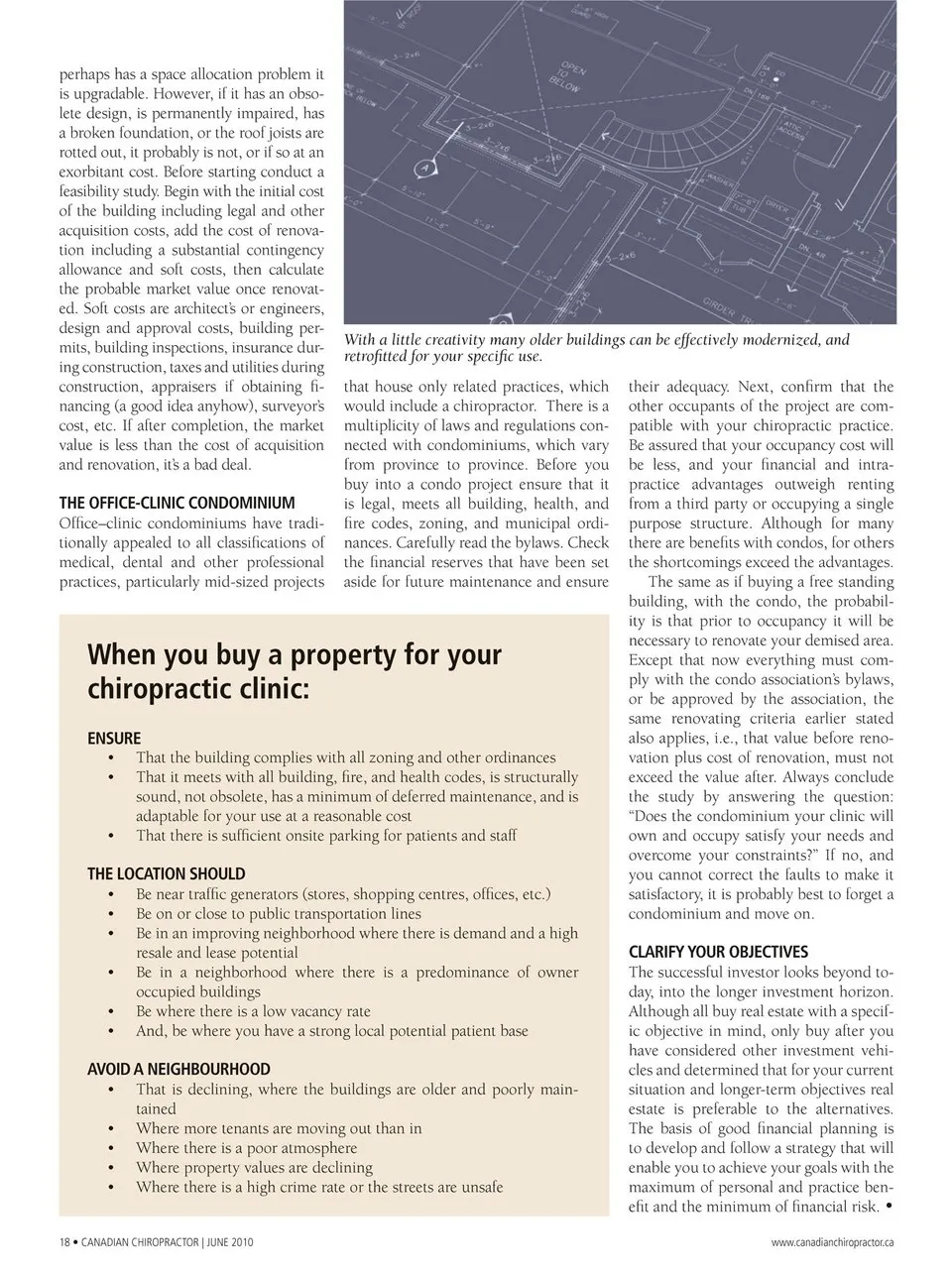
perhaps has a space allocation problem it is upgradable. However, if it has an obso- lete design, is permanently impaired, has a broken foundation, or the roof joists are rotted out, it probably is not, or if so at an exorbitant cost. Before starting conduct a feasibility study. Begin with the initial cost of the building including legal and other acquisition costs, add the cost of renova- tion including a substantial contingency allowance and soft costs, then calculate the probable market value once renovat- ed. Soft costs are architect’s or engineers, design and approval costs, building per- mits, building inspections, insurance dur- ing construction, taxes and utilities during construction, appraisers if obtaining fi- nancing (a good idea anyhow), surveyor’s cost, etc. If after completion, the market value is less than the cost of acquisition and renovation, it’s a bad deal. THE OFFICE-CLINIC CONDOMINIUM Office–clinic condominiums have tradi- tionally appealed to all classifications of medical, dental and other professional practices, particularly mid-sized projects With a little creativity many older buildings can be effectively modernized, and retrofitted for your specific use. that house only related practices, which would include a chiropractor. There is a multiplicity of laws and regulations con- nected with condominiums, which vary from province to province. Before you buy into a condo project ensure that it is legal, meets all building, health, and fire codes, zoning, and municipal ordi- nances. Carefully read the bylaws. Check the financial reserves that have been set aside for future maintenance and ensure When you buy a property for your chiropractic clinic: ENSURE • That the building complies with all zoning and other ordinances • That it meets with all building, fire, and health codes, is structurally sound, not obsolete, has a minimum of deferred maintenance, and is adaptable for your use at a reasonable cost • That there is sufficient onsite parking for patients and staff THE LOCATION SHOULD • Be near traffic generators (stores, shopping centres, offices, etc.) • Be on or close to public transportation lines • Be in an improving neighborhood where there is demand and a high resale and lease potential • Be in a neighborhood where there is a predominance of owner occupied buildings • Be where there is a low vacancy rate • And, be where you have a strong local potential patient base AVOID A NEIGHBOURHOOD • That is declining, where the buildings are older and poorly main- tained • Where more tenants are moving out than in • Where there is a poor atmosphere • Where property values are declining • Where there is a high crime rate or the streets are unsafe 18 • CANADIAN CHIROPRACTOR | JUNE 2010 their adequacy. Next, confirm that the other occupants of the project are com- patible with your chiropractic practice. Be assured that your occupancy cost will be less, and your financial and intra- practice advantages outweigh renting from a third party or occupying a single purpose structure. Although for many there are benefits with condos, for others the shortcomings exceed the advantages. The same as if buying a free standing building, with the condo, the probabil- ity is that prior to occupancy it will be necessary to renovate your demised area. Except that now everything must com- ply with the condo association’s bylaws, or be approved by the association, the same renovating criteria earlier stated also applies, i.e., that value before reno- vation plus cost of renovation, must not exceed the value after. Always conclude the study by answering the question: “Does the condominium your clinic will own and occupy satisfy your needs and overcome your constraints?” If no, and you cannot correct the faults to make it satisfactory, it is probably best to forget a condominium and move on. CLARIFY YOUR OBJECTIVES The successful investor looks beyond to- day, into the longer investment horizon. Although all buy real estate with a specif- ic objective in mind, only buy after you have considered other investment vehi- cles and determined that for your current situation and longer-term objectives real estate is preferable to the alternatives. The basis of good financial planning is to develop and follow a strategy that will enable you to achieve your goals with the maximum of personal and practice ben- efit and the minimum of financial risk. • www.canadianchiropractor.ca
Chiropractic + Naturopathic Doctor June 2010: Page 18