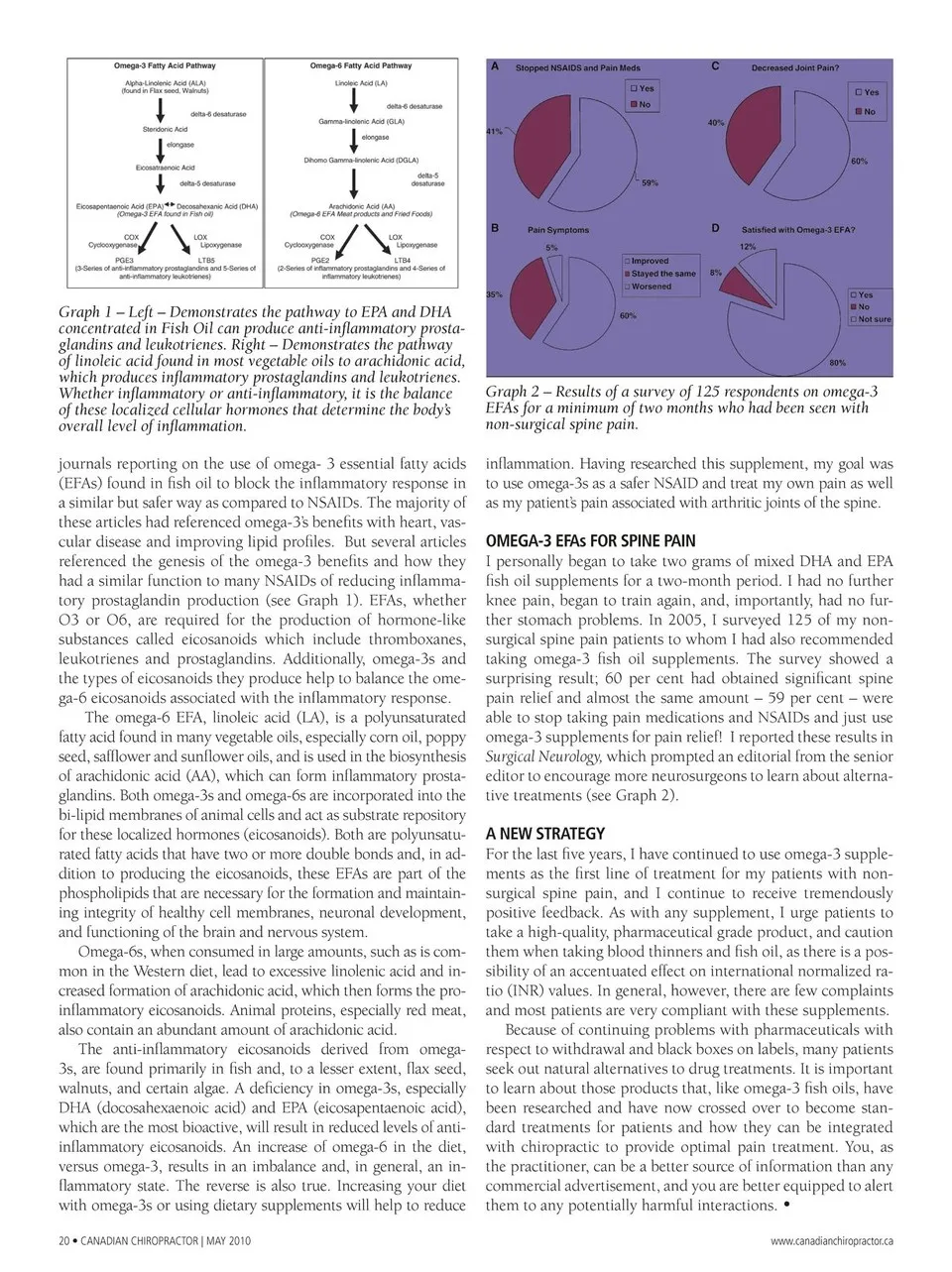
Graph 1 – Left – Demonstrates the pathway to EPA and DHA concentrated in Fish Oil can produce anti-inflammatory prosta- glandins and leukotrienes. Right – Demonstrates the pathway of linoleic acid found in most vegetable oils to arachidonic acid, which produces inflammatory prostaglandins and leukotrienes. Whether inflammatory or anti-inflammatory, it is the balance of these localized cellular hormones that determine the body’s overall level of inflammation. journals reporting on the use of omega- 3 essential fatty acids (EFAs) found in fish oil to block the inflammatory response in a similar but safer way as compared to NSAIDs. The majority of these articles had referenced omega-3’s benefits with heart, vas- cular disease and improving lipid profiles. But several articles referenced the genesis of the omega-3 benefits and how they had a similar function to many NSAIDs of reducing inflamma- tory prostaglandin production (see Graph 1). EFAs, whether O3 or O6, are required for the production of hormone-like substances called eicosanoids which include thromboxanes, leukotrienes and prostaglandins. Additionally, omega-3s and the types of eicosanoids they produce help to balance the ome- ga-6 eicosanoids associated with the inflammatory response. The omega-6 EFA, linoleic acid (LA), is a polyunsaturated fatty acid found in many vegetable oils, especially corn oil, poppy seed, safflower and sunflower oils, and is used in the biosynthesis of arachidonic acid (AA), which can form inflammatory prosta- glandins. Both omega-3s and omega-6s are incorporated into the bi-lipid membranes of animal cells and act as substrate repository for these localized hormones (eicosanoids). Both are polyunsatu- rated fatty acids that have two or more double bonds and, in ad- dition to producing the eicosanoids, these EFAs are part of the phospholipids that are necessary for the formation and maintain- ing integrity of healthy cell membranes, neuronal development, and functioning of the brain and nervous system. Omega-6s, when consumed in large amounts, such as is com- mon in the Western diet, lead to excessive linolenic acid and in- creased formation of arachidonic acid, which then forms the pro- inflammatory eicosanoids. Animal proteins, especially red meat, also contain an abundant amount of arachidonic acid. The anti-inflammatory eicosanoids derived from omega- 3s, are found primarily in fish and, to a lesser extent, flax seed, walnuts, and certain algae. A deficiency in omega-3s, especially DHA (docosahexaenoic acid) and EPA (eicosapentaenoic acid), which are the most bioactive, will result in reduced levels of anti- inflammatory eicosanoids. An increase of omega-6 in the diet, versus omega-3, results in an imbalance and, in general, an in- flammatory state. The reverse is also true. Increasing your diet with omega-3s or using dietary supplements will help to reduce 20 • CANADIAN CHIROPRACTOR | MAY 2010 Graph 2 – Results of a survey of 125 respondents on omega-3 EFAs for a minimum of two months who had been seen with non-surgical spine pain. inflammation. Having researched this supplement, my goal was to use omega-3s as a safer NSAID and treat my own pain as well as my patient’s pain associated with arthritic joints of the spine. OMEGA-3 EFAs FOR SPINE PAIN I personally began to take two grams of mixed DHA and EPA fish oil supplements for a two-month period. I had no further knee pain, began to train again, and, importantly, had no fur- ther stomach problems. In 2005, I surveyed 125 of my non- surgical spine pain patients to whom I had also recommended taking omega-3 fish oil supplements. The survey showed a surprising result; 60 per cent had obtained significant spine pain relief and almost the same amount – 59 per cent – were able to stop taking pain medications and NSAIDs and just use omega-3 supplements for pain relief! I reported these results in Surgical Neurology, which prompted an editorial from the senior editor to encourage more neurosurgeons to learn about alterna- tive treatments (see Graph 2). A NEW STRATEGY For the last five years, I have continued to use omega-3 supple- ments as the first line of treatment for my patients with non- surgical spine pain, and I continue to receive tremendously positive feedback. As with any supplement, I urge patients to take a high-quality, pharmaceutical grade product, and caution them when taking blood thinners and fish oil, as there is a pos- sibility of an accentuated effect on international normalized ra- tio (INR) values. In general, however, there are few complaints and most patients are very compliant with these supplements. Because of continuing problems with pharmaceuticals with respect to withdrawal and black boxes on labels, many patients seek out natural alternatives to drug treatments. It is important to learn about those products that, like omega-3 fish oils, have been researched and have now crossed over to become stan- dard treatments for patients and how they can be integrated with chiropractic to provide optimal pain treatment. You, as the practitioner, can be a better source of information than any commercial advertisement, and you are better equipped to alert them to any potentially harmful interactions. • www.canadianchiropractor.ca
Chiropractic + Naturopathic Doctor May 2010: Page 20