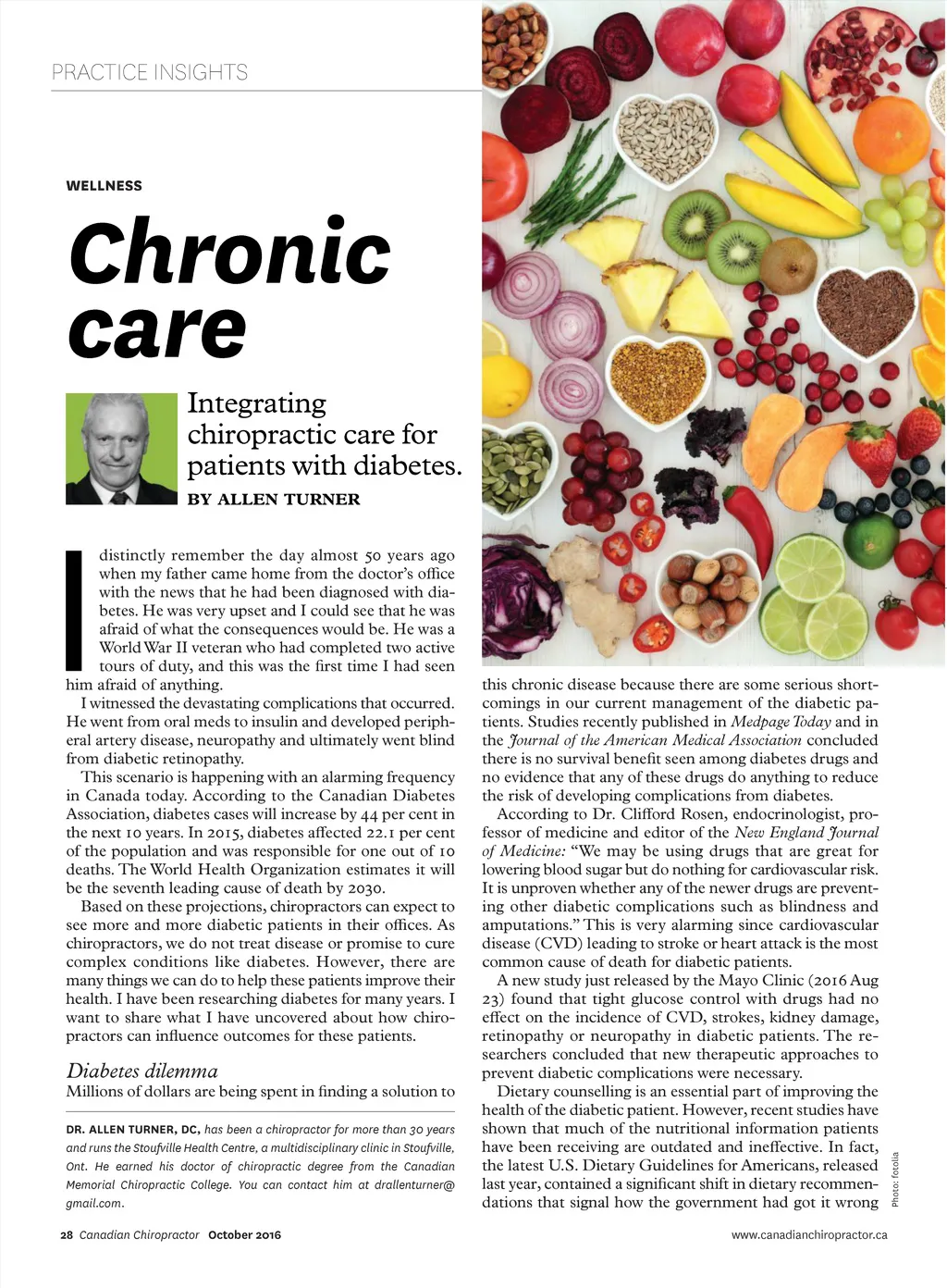
PRACTICE INSIGHTS WELLNESS Chronic care Integrating chiropractic care for patients with diabetes. BY ALLEN TURNER I distinctly remember the day almost 50 years ago when my father came home from the doctor’s office with the news that he had been diagnosed with dia-betes. He was very upset and I could see that he was afraid of what the consequences would be. He was a World War II veteran who had completed two active tours of duty, and this was the first time I had seen him afraid of anything. I witnessed the devastating complications that occurred. He went from oral meds to insulin and developed periph-eral artery disease, neuropathy and ultimately went blind from diabetic retinopathy. This scenario is happening with an alarming frequency in Canada today. According to the Canadian Diabetes Association, diabetes cases will increase by 44 per cent in the next 10 years. In 2015, diabetes affected 22.1 per cent of the population and was responsible for one out of 10 deaths. The World Health Organization estimates it will be the seventh leading cause of death by 2030. Based on these projections, chiropractors can expect to see more and more diabetic patients in their offices. As chiropractors, we do not treat disease or promise to cure complex conditions like diabetes. However, there are many things we can do to help these patients improve their health. I have been researching diabetes for many years. I want to share what I have uncovered about how chiro-practors can influence outcomes for these patients. Diabetes dilemma Millions of dollars are being spent in finding a solution to DR. ALLEN TURNER, DC, has been a chiropractor for more than 30 years and runs the Stoufville Health Centre, a multidisciplinary clinic in Stoufville, Ont. He earned his doctor of chiropractic degree from the Canadian Memorial Chiropractic College. You can contact him at drallenturner@ gmail.com. 28 Canadian Chiropractor October 2016 this chronic disease because there are some serious short-comings in our current management of the diabetic pa-tients. Studies recently published in Medpage Today and in the Journal of the American Medical Association concluded there is no survival benefit seen among diabetes drugs and no evidence that any of these drugs do anything to reduce the risk of developing complications from diabetes. According to Dr. Clifford Rosen, endocrinologist, pro-fessor of medicine and editor of the New England Journal of Medicine: “We may be using drugs that are great for lowering blood sugar but do nothing for cardiovascular risk. It is unproven whether any of the newer drugs are prevent-ing other diabetic complications such as blindness and amputations.” This is very alarming since cardiovascular disease (CVD) leading to stroke or heart attack is the most common cause of death for diabetic patients. A new study just released by the Mayo Clinic (2016 Aug 23) found that tight glucose control with drugs had no effect on the incidence of CVD, strokes, kidney damage, retinopathy or neuropathy in diabetic patients. The re-searchers concluded that new therapeutic approaches to prevent diabetic complications were necessary. Dietary counselling is an essential part of improving the health of the diabetic patient. However, recent studies have shown that much of the nutritional information patients have been receiving are outdated and ineffective. In fact, the latest U.S. Dietary Guidelines for Americans, released last year, contained a significant shift in dietary recommen-dations that signal how the government had got it wrong www.canadianchiropractor.ca Photo: fotolia
Chiropractic + Naturopathic Doctor October 2016: Page 28