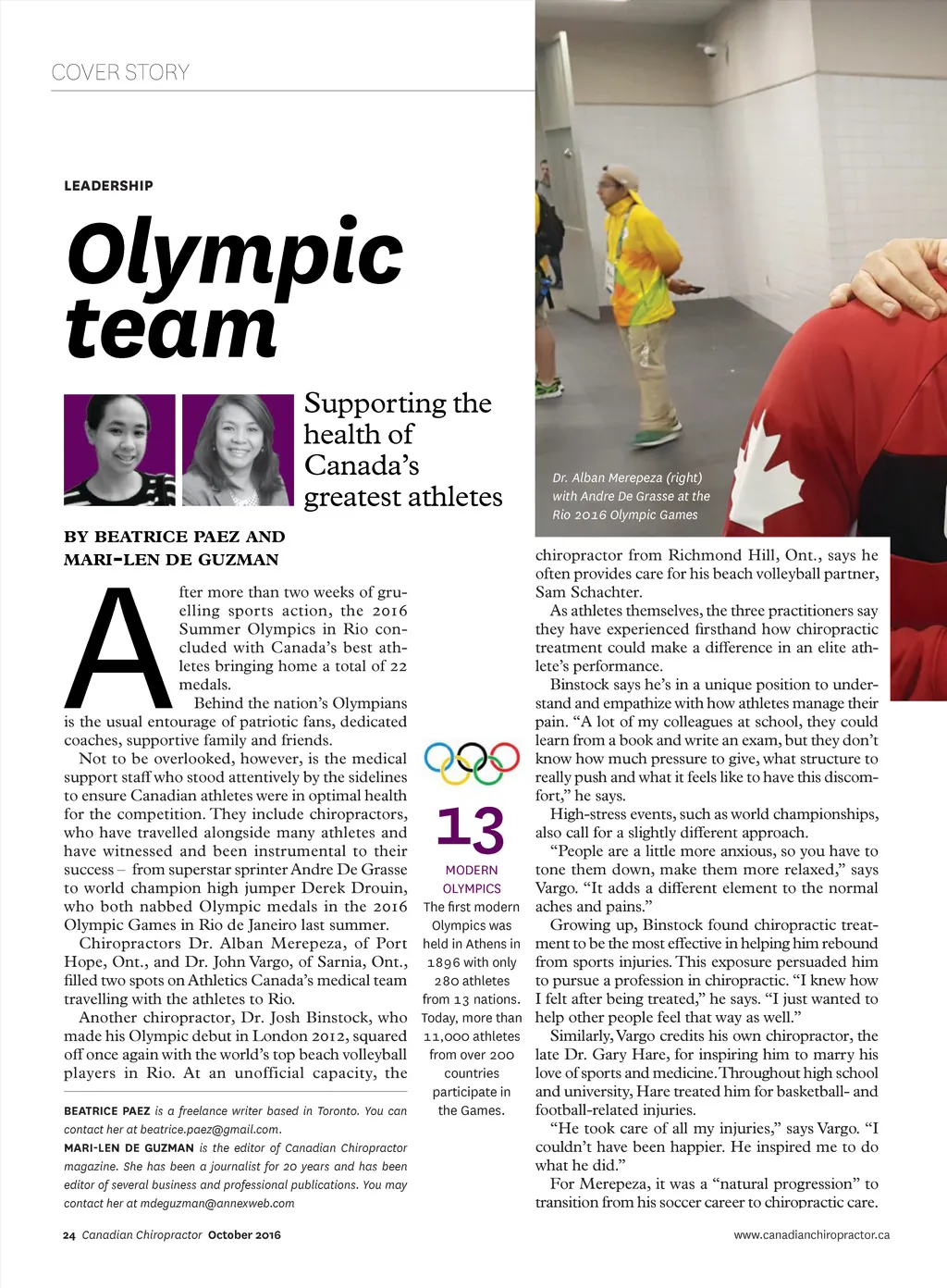
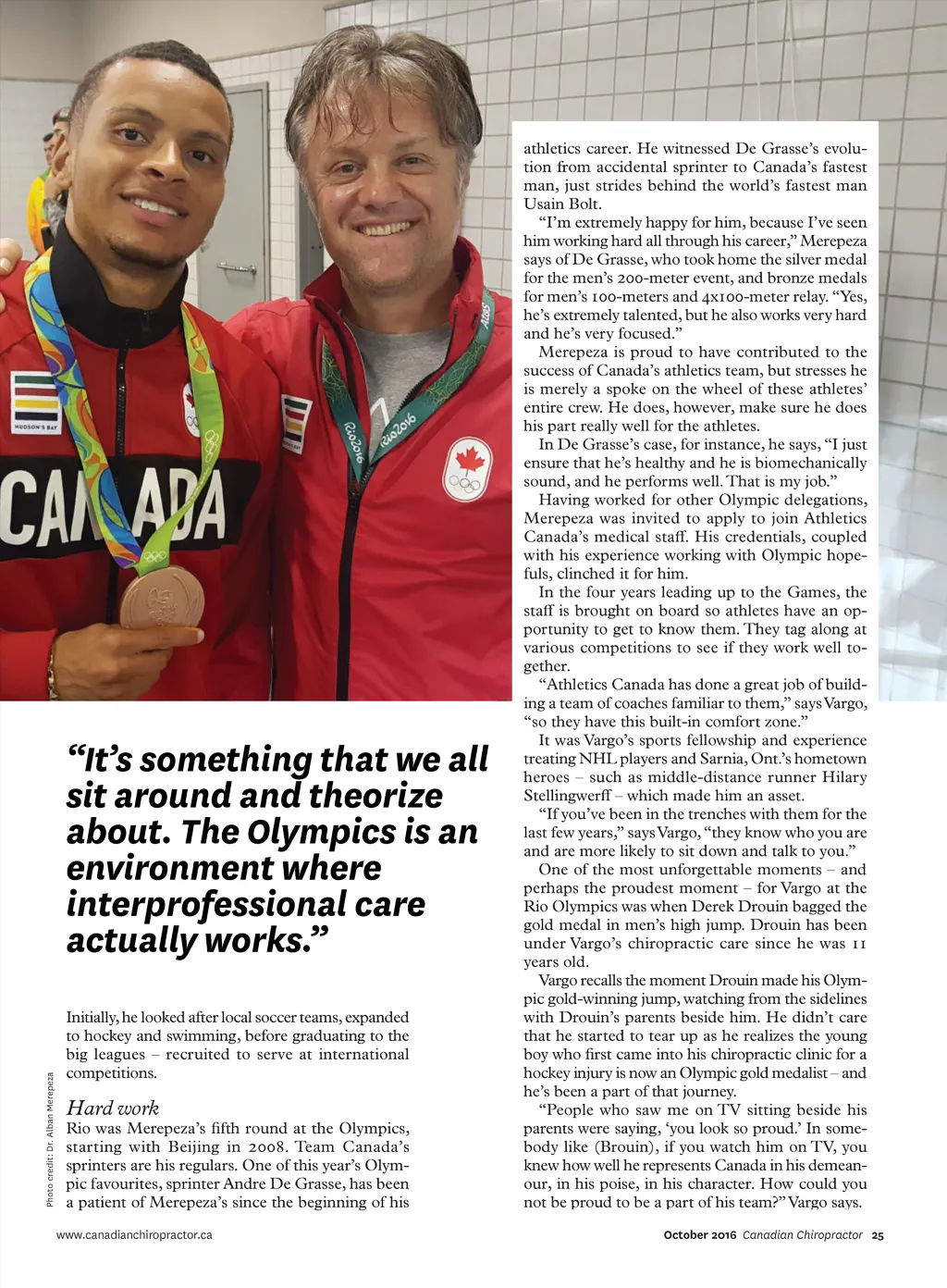
COVER STORY LEADERSHIP Olympic team Supporting the health of Canada’s greatest athletes Dr. Alban Merepeza (right) with Andre De Grasse at the Rio 2016 Olympic Games A BY BEATRICE PAEZ AND MARI -LEN DE GUZMAN fter more than two weeks of gru-elling sports action, the 2016 Summer Olympics in Rio con-cluded with Canada’s best ath-letes bringing home a total of 22 medals. Behind the nation’s Olympians is the usual entourage of patriotic fans, dedicated coaches, supportive family and friends. Not to be overlooked, however, is the medical support staff who stood attentively by the sidelines to ensure Canadian athletes were in optimal health for the competition. They include chiropractors, who have travelled alongside many athletes and have witnessed and been instrumental to their success – from superstar sprinter Andre De Grasse to world champion high jumper Derek Drouin, who both nabbed Olympic medals in the 2016 Olympic Games in Rio de Janeiro last summer. Chiropractors Dr. Alban Merepeza, of Port Hope, Ont., and Dr. John Vargo, of Sarnia, Ont., filled two spots on Athletics Canada’s medical team travelling with the athletes to Rio. Another chiropractor, Dr. Josh Binstock, who made his Olympic debut in London 2012, squared off once again with the world’s top beach volleyball players in Rio. At an unofficial capacity, the 13 MODERN OLYMPICS The first modern Olympics was held in Athens in 1896 with only 280 athletes from 13 nations. Today, more than 11,000 athletes from over 200 countries participate in BEATRICE PAEZ is a freelance writer based in Toronto. You can the Games. contact her at [email protected]. MARI-LEN DE GUZMAN is the editor of Canadian Chiropractor magazine. She has been a journalist for 20 years and has been editor of several business and professional publications. You may contact her at [email protected] 24 Canadian Chiropractor October 2016 chiropractor from Richmond Hill, Ont., says he often provides care for his beach volleyball partner, Sam Schachter. As athletes themselves, the three practitioners say they have experienced firsthand how chiropractic treatment could make a difference in an elite ath-lete’s performance. Binstock says he’s in a unique position to under-stand and empathize with how athletes manage their pain. “A lot of my colleagues at school, they could learn from a book and write an exam, but they don’t know how much pressure to give, what structure to really push and what it feels like to have this discom-fort,” he says. High-stress events, such as world championships, also call for a slightly different approach. “People are a little more anxious, so you have to tone them down, make them more relaxed,” says Vargo. “It adds a different element to the normal aches and pains.” Growing up, Binstock found chiropractic treat-ment to be the most effective in helping him rebound from sports injuries. This exposure persuaded him to pursue a profession in chiropractic. “I knew how I felt after being treated,” he says. “I just wanted to help other people feel that way as well.” Similarly, Vargo credits his own chiropractor, the late Dr. Gary Hare, for inspiring him to marry his love of sports and medicine. Throughout high school and university, Hare treated him for basketball-and football-related injuries. “He took care of all my injuries,” says Vargo. “I couldn’t have been happier. He inspired me to do what he did.” For Merepeza, it was a “natural progression” to transition from his soccer career to chiropractic care. www.canadianchiropractor.ca
Chiropractic + Naturopathic Doctor October 2016: Page 24