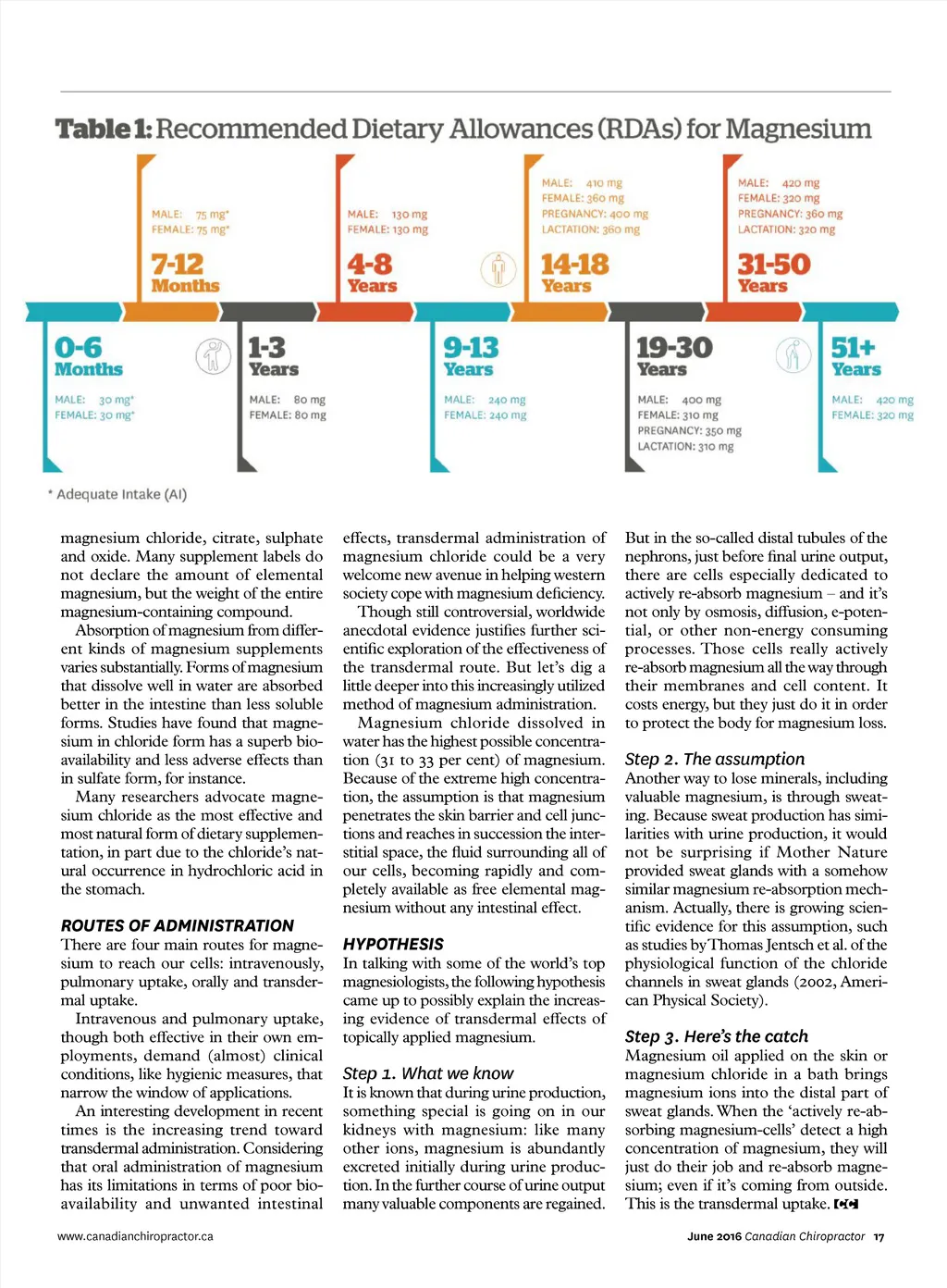
EXPERT INSIGHT NUTRITION MINERAL MATTERS M Addressing magnesium deficiency in patient population and exploring more effective means of administration BY RICHARD DANEL Organization estimated that 75 per cent of adults consume a diet deficient in magnesium. In western society, restoring and maintaining a healthy magnesium balance is virtually impossible without supplementation. Even if one limits foods to those that are relatively rich in magnesium, there’s another crucial factor: the magnesium/ calcium ratio (Mg/Ca). While there is still discussion about the ideal ratio, varying from 2Mg/1Ca to 4Mg/1Ca, the current Mg/Ca ratio in our diet is 1Mg/5Ca on average, which is too high a ratio for calcium. Unfortunately, the magnesium-rich ingredients we’d like to be picky about will also elevate the calcium intake and hence not improve our magnesium bal-ance as we want. According to recent research, milk and other dairy products may contain too much calcium, which has been linked to problems with bone formation in chil-dren, fractures in adults and even higher mortality. Recent publications also show the correlation between consumption of red meat and processed meat on one hand, and the increased risk of colorectal can-cer on the other hand. Magnesium defi-ciency also increases the risk of colorectal cancer. Further research must bring clarity on the role of magnesium in our dairy-and meat-rich diet. Magnesium is one of seven nutrients placed on the U.S. Department of Health’s list of nutrients of concern, published as part of its Dietary Guide-lines for Americans. To explore which form of magnesium supplementation is ideal, we need to distinguish three things: recommended intakes; magnesium com-pounds; and routes of administration. agnesium is consid-ered one of the three essentials of life, to-gether with water and oxygen. It is the most important mineral for our body, required by more than 327 known enzymatic pro-cesses. It regulates everything from basic metabolism, hormones and sleep to healthy blood pressure and bone forma-tion. A healthy magnesium balance helps prevent conditions like cardiovascular disease and stroke, type 2 diabetes, oste-oporosis, certain cancers and migraine headaches, and alleviates existing prob-lems like muscle cramps and aches, restless legs, insomnia and anxiety. Probably more than 70 per cent of western society is deficient in this mineral – even those who eat lots of green vege-tables, grains, nuts, beans and other magnesium-rich foods. This is because since the introduction of modern agri-culture, soils got depleted of magnesium, so vegetables aren’t getting enough any-more. Modern food processing also causes significant loss of magnesium. In addition, our modern, stressful lifestyle demands higher magnesium in-take – like the extra gas your car needs in a high-speed chase. RECOMMENDED INTAKES HEALTHY BALANCE A 2009 report from the World Health Intake recommendations for magnesium and other nutrients are provided in the Dietary Reference Intakes (DRIs) devel-oped by the U.S. Food and Nutrition Board (FNB) at the Institute of Medi-cine, National Academies (formerly, National Academy of Sciences). DRI is the general term for a set of reference values used to plan and assess nutrient intakes of healthy people. These values, which vary by age and sex, include: • Recommended dietary allowance (RDA) – the average daily level of in-take sufficient to meet the nutrient requirements of nearly all (97 to 98 per cent) healthy individuals. • Adequate intake (AI) – established when evidence is insufficient to de-velop a RDA and is set at a level as-sumed to ensure nutritional adequacy. • Estimated average requirement (EAR) – average daily level of intake estimated to meet the requirements of 50 per cent of healthy individuals. • Tolerable upper intake level (UL) – maximum daily intake unlikely to cause adverse health effects. DR. RICHARD DANEL, MD, is chairman of Magnesium Health Institute, with offices in Vancouver and The Netherlands. The Magenesium Health Institute studies the improvement of magnesium balance and the role magnesium plays in healthy ageing. Contact him via his website: www.magnesiumhealthinstitute. com or visit imagnesium.com for more information. 16 Canadian Chiropractor June 2016 MAGNESIUM COMPOUNDS Magnesium supplements are available in a variety of compounds, including www.canadianchiropractor.ca
Chiropractic + Naturopathic Doctor June 2016: Page 16