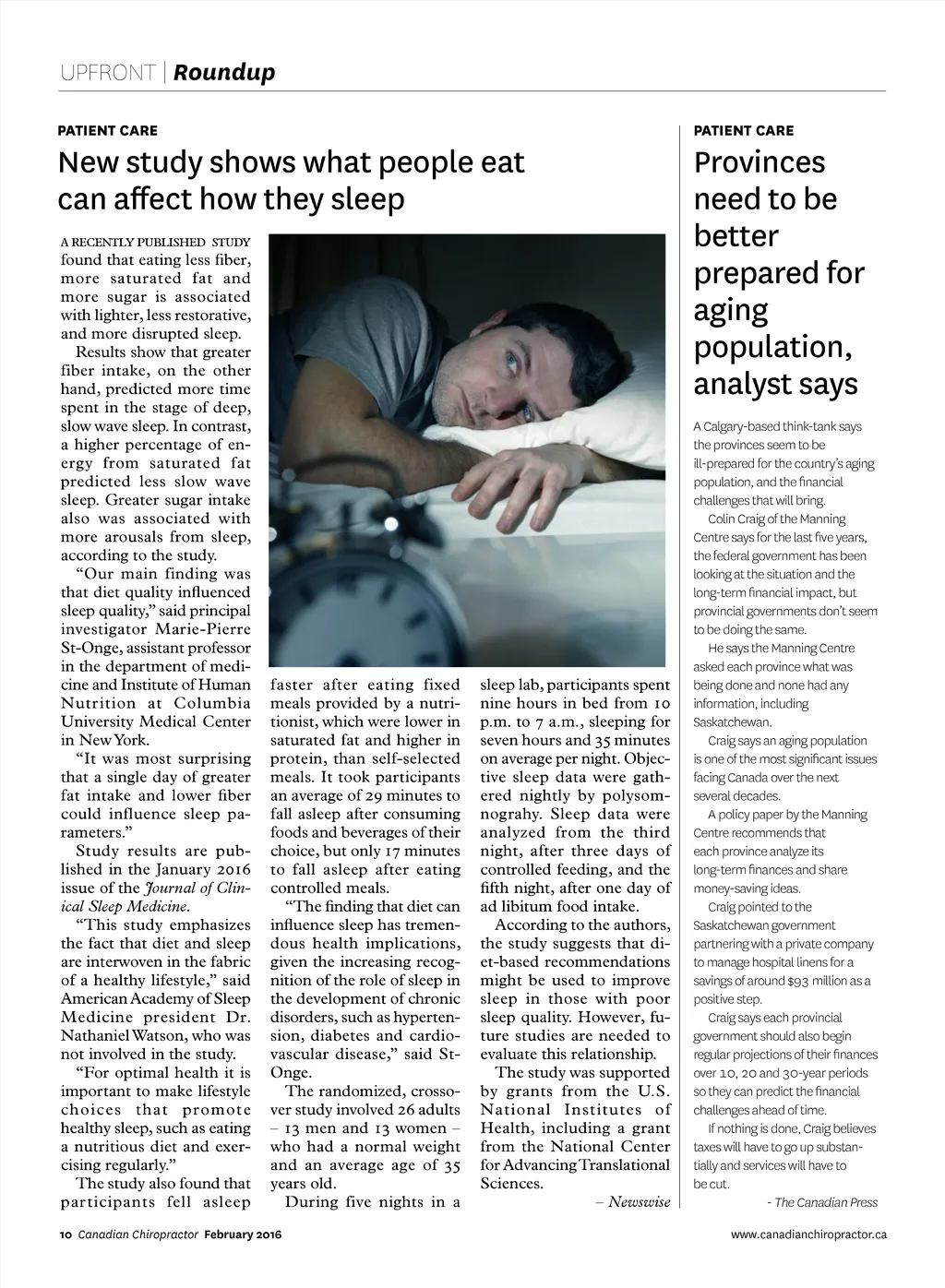
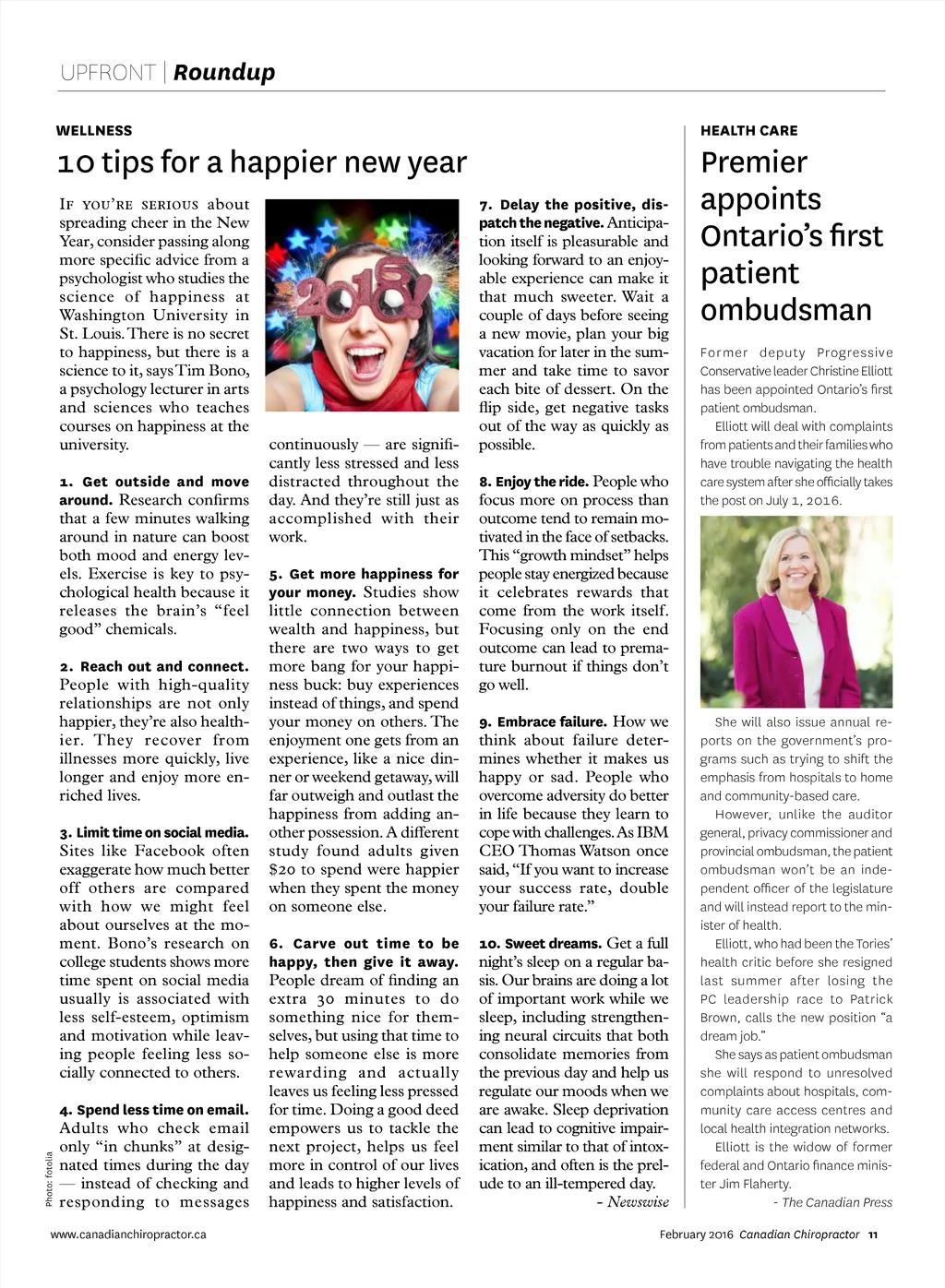
UPFRONT | Roundup WELLNESS 10 tips for a happier new year If you’re serious about spreading cheer in the New Year, consider passing along more specific advice from a psychologist who studies the science of happiness at Washington University in St. Louis. There is no secret to happiness, but there is a science to it, says Tim Bono, a psychology lecturer in arts and sciences who teaches courses on happiness at the university. 1. Get outside and move around. Research confirms that a few minutes walking around in nature can boost both mood and energy lev-els. Exercise is key to psy-chological health because it releases the brain’s “feel good” chemicals. 2. Reach out and connect. People with high-quality relationships are not only happier, they’re also health-ier. They recover from illnesses more quickly, live longer and enjoy more en-riched lives. 3. Limit time on social media. Sites like Facebook often exaggerate how much better off others are compared with how we might feel about ourselves at the mo-ment. Bono’s research on college students shows more time spent on social media usually is associated with less self-esteem, optimism and motivation while leav-ing people feeling less so-cially connected to others. 4. Spend less time on email. Adults who check email only “in chunks” at desig-nated times during the day — instead of checking and responding to messages 7. Delay the positive, dis-patch the negative. Anticipa-tion itself is pleasurable and looking forward to an enjoy-able experience can make it that much sweeter. Wait a couple of days before seeing a new movie, plan your big vacation for later in the sum-mer and take time to savor each bite of dessert. On the flip side, get negative tasks out of the way as quickly as possible. 8. Enjoy the ride. People who focus more on process than outcome tend to remain mo-tivated in the face of setbacks. This “growth mindset” helps people stay energized because it celebrates rewards that come from the work itself. Focusing only on the end outcome can lead to prema-ture burnout if things don’t go well. 9. Embrace failure. How we think about failure deter-mines whether it makes us happy or sad. People who overcome adversity do better in life because they learn to cope with challenges. As IBM CEO Thomas Watson once said, “If you want to increase your success rate, double your failure rate.” 10. Sweet dreams. Get a full night’s sleep on a regular ba-sis. Our brains are doing a lot of important work while we sleep, including strengthen-ing neural circuits that both consolidate memories from the previous day and help us regulate our moods when we are awake. Sleep deprivation can lead to cognitive impair-ment similar to that of intox-ication, and often is the prel-ude to an ill-tempered day. -Newswise Premier appoints Ontario’s first patient ombudsman Former deputy Progressive Conservative leader Christine Elliott has been appointed Ontario’s first patient ombudsman. Elliott will deal with complaints from patients and their families who have trouble navigating the health care system after she officially takes the post on July 1, 2016. HEALTH CARE continuously — are signifi-cantly less stressed and less distracted throughout the day. And they’re still just as accomplished with their work. 5. Get more happiness for your money. Studies show little connection between wealth and happiness, but there are two ways to get more bang for your happi-ness buck: buy experiences instead of things, and spend your money on others. The enjoyment one gets from an experience, like a nice din-ner or weekend getaway, will far outweigh and outlast the happiness from adding an-other possession. A different study found adults given $20 to spend were happier when they spent the money on someone else. 6. Carve out time to be happy, then give it away. People dream of finding an extra 30 minutes to do something nice for them-selves, but using that time to help someone else is more rewarding and actually leaves us feeling less pressed for time. Doing a good deed empowers us to tackle the next project, helps us feel more in control of our lives and leads to higher levels of happiness and satisfaction. She will also issue annual re-ports on the government’s pro-grams such as trying to shift the emphasis from hospitals to home and community-based care. However, unlike the auditor general, privacy commissioner and provincial ombudsman, the patient ombudsman won’t be an inde-pendent officer of the legislature and will instead report to the min-ister of health. Elliott, who had been the Tories’ health critic before she resigned last summer after losing the PC leadership race to Patrick Brown, calls the new position “a dream job.” She says as patient ombudsman she will respond to unresolved complaints about hospitals, com-munity care access centres and local health integration networks. Elliott is the widow of former federal and Ontario finance minis-ter Jim Flaherty. -The Canadian Press Photo: fotolia www.canadianchiropractor.ca February 2016 Canadian Chiropractor 11
Chiropractic + Naturopathic Doctor February 2016: Page 11