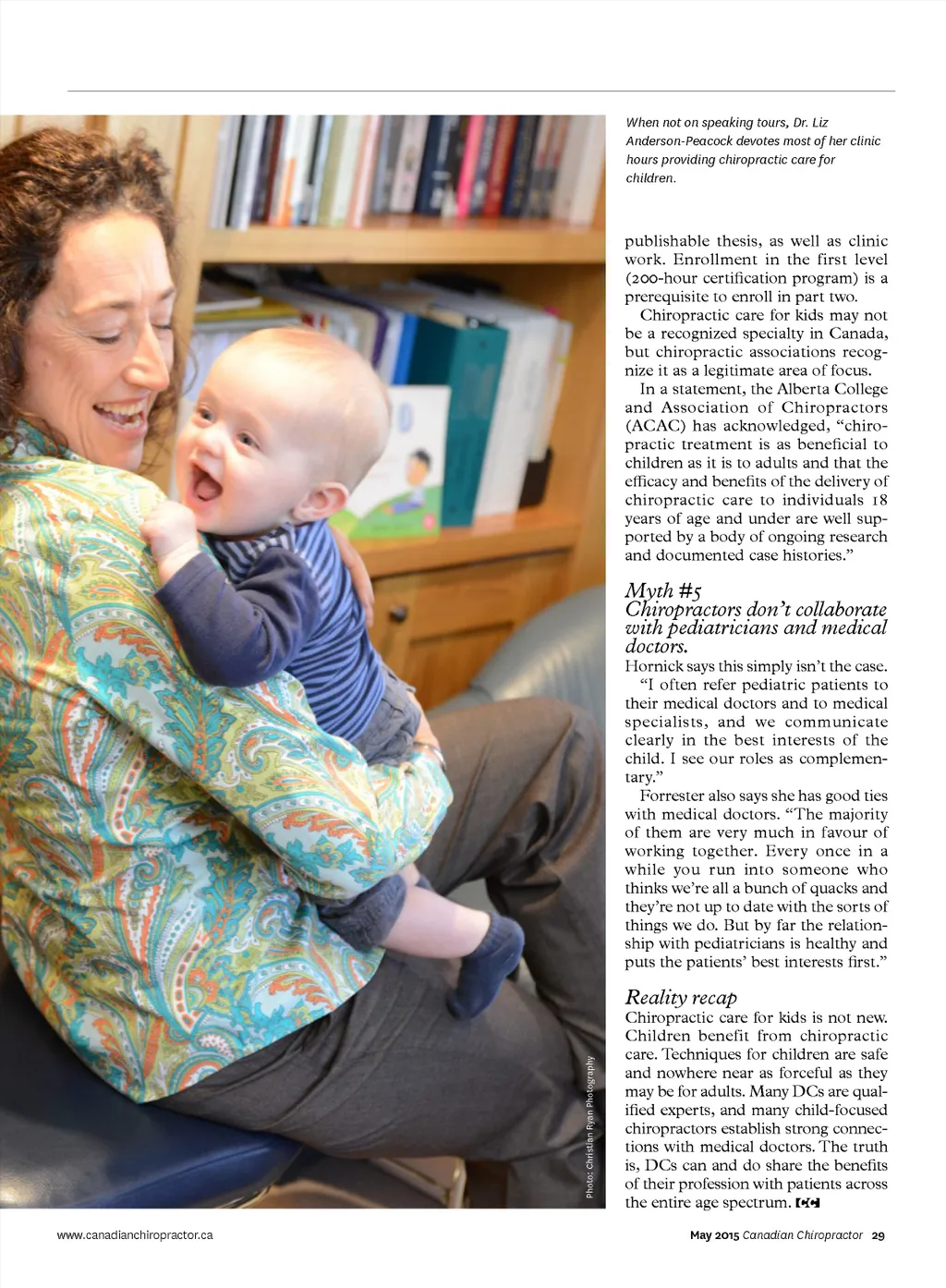
When not on speaking tours, Dr. Liz Anderson-Peacock devotes most of her clinic hours providing chiropractic care for children. publishable thesis, as well as clinic work. Enrollment in the first level (200-hour certification program) is a prerequisite to enroll in part two. Chiropractic care for kids may not be a recognized specialty in Canada, but chiropractic associations recog-nize it as a legitimate area of focus. In a statement, the Alberta College and Association of Chiropractors (ACAC) has acknowledged, “chiro-practic treatment is as beneficial to children as it is to adults and that the efficacy and benefits of the delivery of chiropractic care to individuals 18 years of age and under are well sup-ported by a body of ongoing research and documented case histories.” Myth #5 Chiropractors don’t collaborate with pediatricians and medical doctors. Hornick says this simply isn’t the case. “I often refer pediatric patients to their medical doctors and to medical specialists, and we communicate clearly in the best interests of the child. I see our roles as complemen-tary.” Forrester also says she has good ties with medical doctors. “The majority of them are very much in favour of working together. Every once in a while you run into someone who thinks we’re all a bunch of quacks and they’re not up to date with the sorts of things we do. But by far the relation-ship with pediatricians is healthy and puts the patients’ best interests first.” Reality recap Photo: Christian Ryan Photography Chiropractic care for kids is not new. Children benefit from chiropractic care. Techniques for children are safe and nowhere near as forceful as they may be for adults. Many DCs are qual-ified experts, and many child-focused chiropractors establish strong connec-tions with medical doctors. The truth is, DCs can and do share the benefits of their profession with patients across the entire age spectrum. May 2015 Canadian Chiropractor 29 www.canadianchiropractor.ca
Chiropractic + Naturopathic Doctor May 2015: Page 29