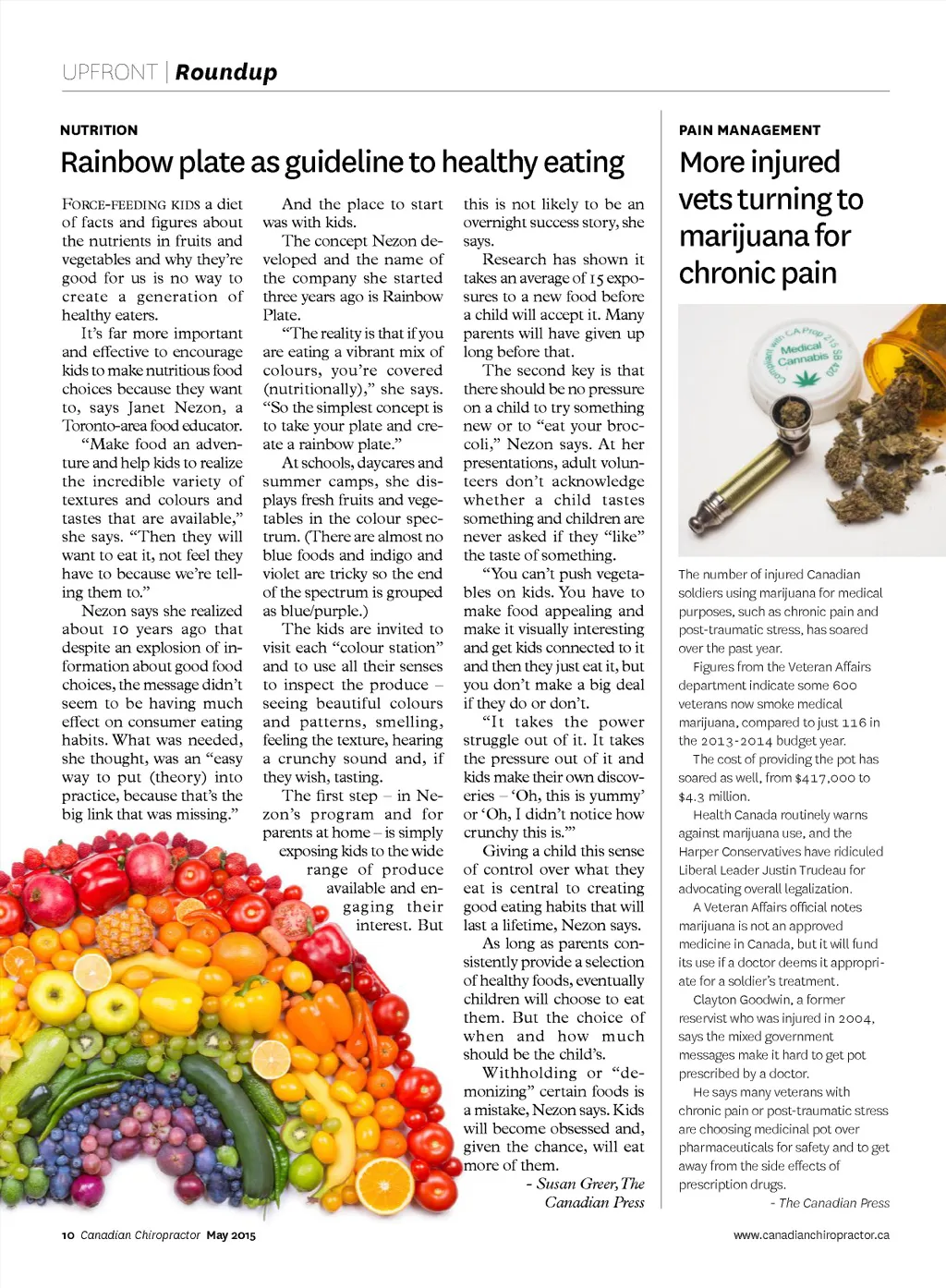
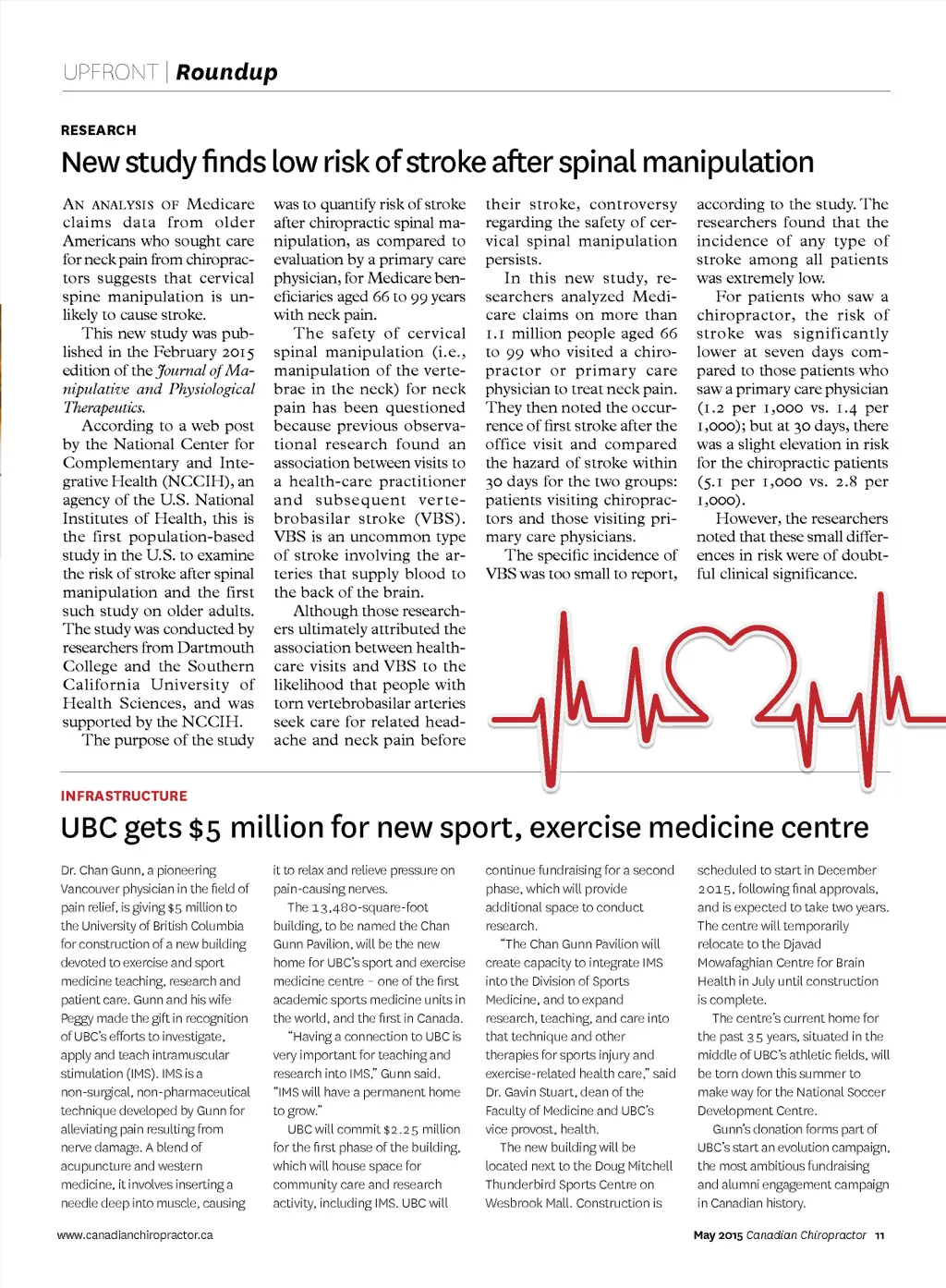
UPFRONT | Roundup NUTRITION Rainbow plate as guideline to healthy eating Force-feeding kids a diet of facts and figures about the nutrients in fruits and vegetables and why they’re good for us is no way to create a generation of healthy eaters. It’s far more important and effective to encourage kids to make nutritious food choices because they want to, says Janet Nezon, a Toronto-area food educator. “Make food an adven-ture and help kids to realize the incredible variety of textures and colours and tastes that are available,” she says. “Then they will want to eat it, not feel they have to because we’re tell-ing them to.” Nezon says she realized about 10 years ago that despite an explosion of in-formation about good food choices, the message didn’t seem to be having much effect on consumer eating habits. What was needed, she thought, was an “easy way to put (theory) into practice, because that’s the big link that was missing.” And the place to start was with kids. The concept Nezon de-veloped and the name of the company she started three years ago is Rainbow Plate. “The reality is that if you are eating a vibrant mix of colours, you’re covered (nutritionally),” she says. “So the simplest concept is to take your plate and cre-ate a rainbow plate.” At schools, daycares and summer camps, she dis-plays fresh fruits and vege-tables in the colour spec-trum. (There are almost no blue foods and indigo and violet are tricky so the end of the spectrum is grouped as blue/purple.) The kids are invited to visit each “colour station” and to use all their senses to inspect the produce – seeing beautiful colours and patterns, smelling, feeling the texture, hearing a crunchy sound and, if they wish, tasting. The first step – in Ne-zon’s program and for parents at home – is simply exposing kids to the wide range of produce available and en-gaging their interest. But this is not likely to be an overnight success story, she says. Research has shown it takes an average of 15 expo-sures to a new food before a child will accept it. Many parents will have given up long before that. The second key is that there should be no pressure on a child to try something new or to “eat your broc-coli,” Nezon says. At her presentations, adult volun-teers don’t acknowledge whether a child tastes something and children are never asked if they “like” the taste of something. “You can’t push vegeta-bles on kids. You have to make food appealing and make it visually interesting and get kids connected to it and then they just eat it, but you don’t make a big deal if they do or don’t. “It takes the power struggle out of it. It takes the pressure out of it and kids make their own discov-eries – ‘Oh, this is yummy’ or ‘Oh, I didn’t notice how crunchy this is.’” Giving a child this sense of control over what they eat is central to creating good eating habits that will last a lifetime, Nezon says. As long as parents con-sistently provide a selection of healthy foods, eventually children will choose to eat them. But the choice of when and how much should be the child’s. Withholding or “de-monizing” certain foods is a mistake, Nezon says. Kids will become obsessed and, given the chance, will eat more of them. -Susan Greer, The Canadian Press PAIN MANAGEMENT More injured vets turning to marijuana for chronic pain The number of injured Canadian soldiers using marijuana for medical purposes, such as chronic pain and post-traumatic stress, has soared over the past year. Figures from the Veteran Affairs department indicate some 600 veterans now smoke medical marijuana, compared to just 116 in the 2013-2014 budget year. The cost of providing the pot has soared as well, from $417,000 to $4.3 million. Health Canada routinely warns against marijuana use, and the Harper Conservatives have ridiculed Liberal Leader Justin Trudeau for advocating overall legalization. A Veteran Affairs official notes marijuana is not an approved medicine in Canada, but it will fund its use if a doctor deems it appropri-ate for a soldier’s treatment. Clayton Goodwin, a former reservist who was injured in 2004, says the mixed government messages make it hard to get pot prescribed by a doctor. He says many veterans with chronic pain or post-traumatic stress are choosing medicinal pot over pharmaceuticals for safety and to get away from the side effects of prescription drugs. -The Canadian Press www.canadianchiropractor.ca 10 Canadian Chiropractor May 2015
Chiropractic + Naturopathic Doctor May 2015: Page 10