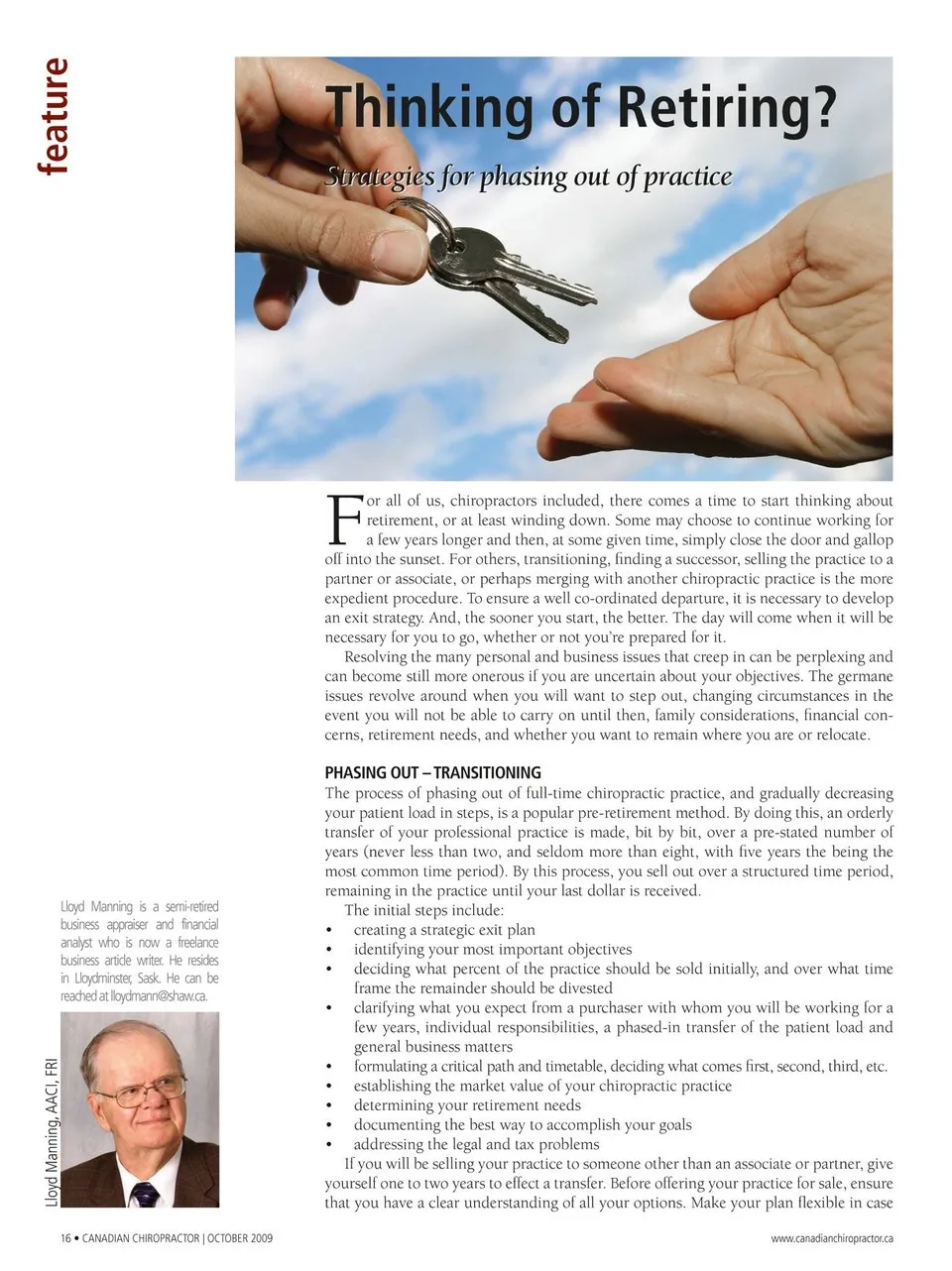
Thinking of Retiring? Strategies for phasing out of practice F or all of us, chiropractors included, there comes a time to start thinking about retirement, or at least winding down. Some may choose to continue working for a few years longer and then, at some given time, simply close the door and gallop off into the sunset. For others, transitioning, fi nding a successor, selling the practice to a partner or associate, or perhaps merging with another chiropractic practice is the more expedient procedure. To ensure a well co-ordinated departure, it is necessary to develop an exit strategy. And, the sooner you start, the better. The day will come when it will be necessary for you to go, whether or not you’re prepared for it. Resolving the many personal and business issues that creep in can be perplexing and can become still more onerous if you are uncertain about your objectives. The germane issues revolve around when you will want to step out, changing circumstances in the event you will not be able to carry on until then, family considerations, financial con- cerns, retirement needs, and whether you want to remain where you are or relocate. Lloyd Manning is a semi-retired business appraiser and financial analyst who is now a freelance business article writer. He resides in Lloydminster, Sask. He can be reached at [email protected]. PHASING OUT – TRANSITIONING The process of phasing out of full-time chiropractic practice, and gradually decreasing your patient load in steps, is a popular pre-retirement method. By doing this, an orderly transfer of your professional practice is made, bit by bit, over a pre-stated number of years (never less than two, and seldom more than eight, with fi ve years the being the most common time period). By this process, you sell out over a structured time period, remaining in the practice until your last dollar is received. The initial steps include: creating a strategic exit plan • • • • • • • • • identifying your most important objectives deciding what percent of the practice should be sold initially, and over what time frame the remainder should be divested clarifying what you expect from a purchaser with whom you will be working for a few years, individual responsibilities, a phased-in transfer of the patient load and general business matters formulating a critical path and timetable, deciding what comes fi rst, second, third, etc. establishing the market value of your chiropractic practice determining your retirement needs documenting the best way to accomplish your goals addressing the legal and tax problems If you will be selling your practice to someone other than an associate or partner, give yourself one to two years to effect a transfer. Before offering your practice for sale, ensure that you have a clear understanding of all your options. Make your plan flexible in case 16 • CANADIAN CHIROPRACTOR | OCTOBER 2009 www.canadianchiropractor.ca Lloyd Manning, AACI, FRI feature
Chiropractic + Naturopathic Doctor October 2009: Page 16