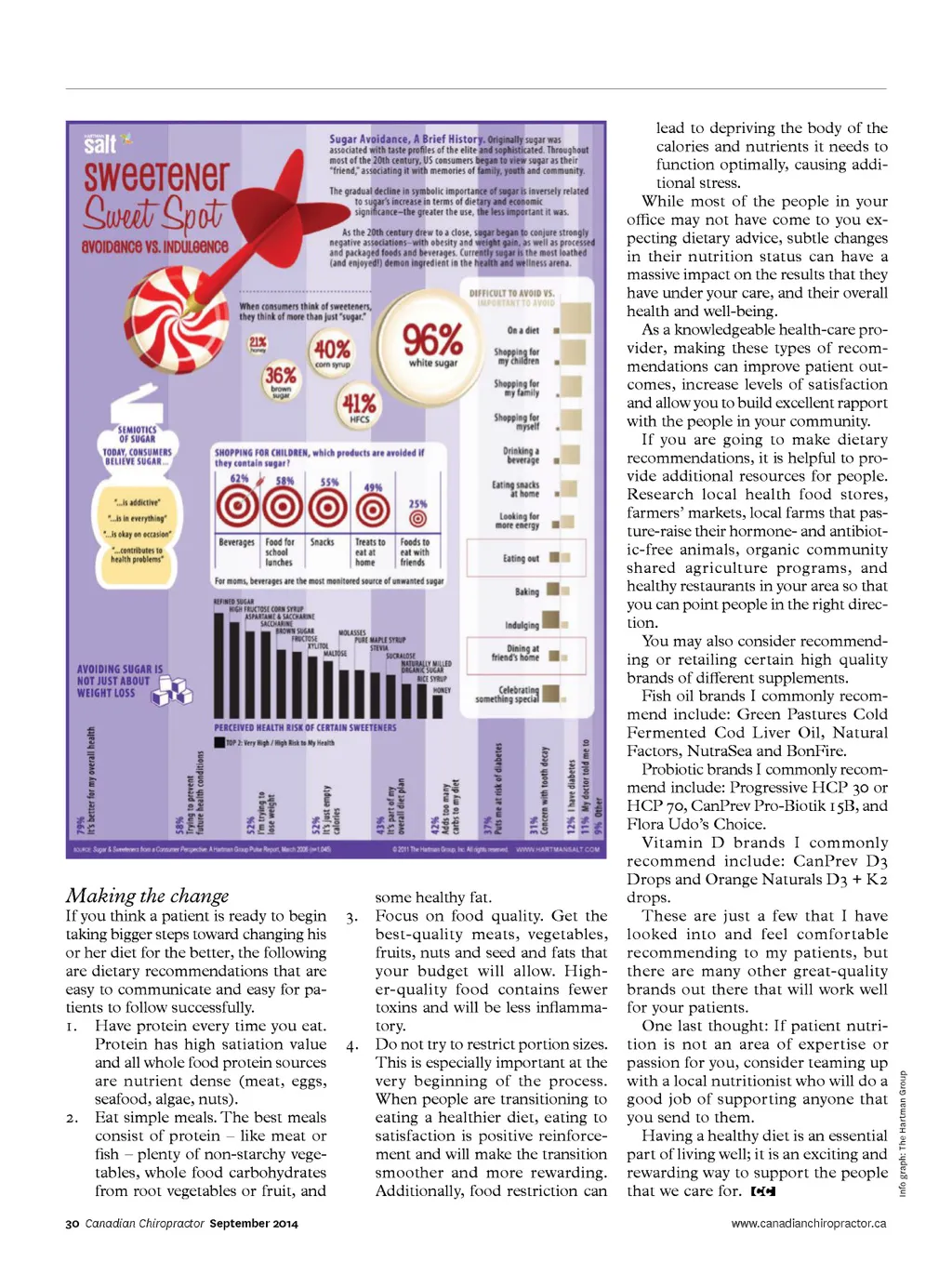
If you think a patient is ready to begin taking bigger steps toward changing his or her diet for the better, the following are dietary recommendations that are easy to communicate and easy for pa-tients to follow successfully. 1. Have protein every time you eat. Protein has high satiation value and all whole food protein sources are nutrient dense (meat, eggs, seafood, algae, nuts). 2. Eat simple meals. The best meals consist of protein – like meat or fish – plenty of non-starchy vege-tables, whole food carbohydrates from root vegetables or fruit, and 30 Canadian Chiropractor September 2014 Making the change 3. 4. some healthy fat. Focus on food quality. Get the best-quality meats, vegetables, fruits, nuts and seed and fats that your budget will allow. High-er-quality food contains fewer toxins and will be less inflamma-tory. Do not try to restrict portion sizes. This is especially important at the very beginning of the process. When people are transitioning to eating a healthier diet, eating to satisfaction is positive reinforce-ment and will make the transition smoother and more rewarding. Additionally, food restriction can lead to depriving the body of the calories and nutrients it needs to function optimally, causing addi-tional stress. While most of the people in your office may not have come to you ex-pecting dietary advice, subtle changes in their nutrition status can have a massive impact on the results that they have under your care, and their overall health and well-being. As a knowledgeable health-care pro-vider, making these types of recom-mendations can improve patient out-comes, increase levels of satisfaction and allow you to build excellent rapport with the people in your community. If you are going to make dietary recommendations, it is helpful to pro-vide additional resources for people. Research local health food stores, farmers’ markets, local farms that pas-ture-raise their hormone-and antibiot-ic-free animals, organic community shared agriculture programs, and healthy restaurants in your area so that you can point people in the right direc-tion. You may also consider recommend-ing or retailing certain high quality brands of different supplements. Fish oil brands I commonly recom-mend include: Green Pastures Cold Fermented Cod Liver Oil, Natural Factors, NutraSea and BonFire. Probiotic brands I commonly recom-mend include: Progressive HCP 30 or HCP 70, CanPrev Pro-Biotik 15B, and Flora Udo’s Choice. Vitamin D brands I commonly recommend include: CanPrev D3 Drops and Orange Naturals D3 + K2 drops. These are just a few that I have looked into and feel comfortable recommending to my patients, but there are many other great-quality brands out there that will work well for your patients. One last thought: If patient nutri-tion is not an area of expertise or passion for you, consider teaming up with a local nutritionist who will do a good job of supporting anyone that you send to them. Having a healthy diet is an essential part of living well; it is an exciting and rewarding way to support the people that we care for. www.canadianchiropractor.ca Info graph: The Hartman Group
Chiropractic + Naturopathic Doctor September 2014: Page 30