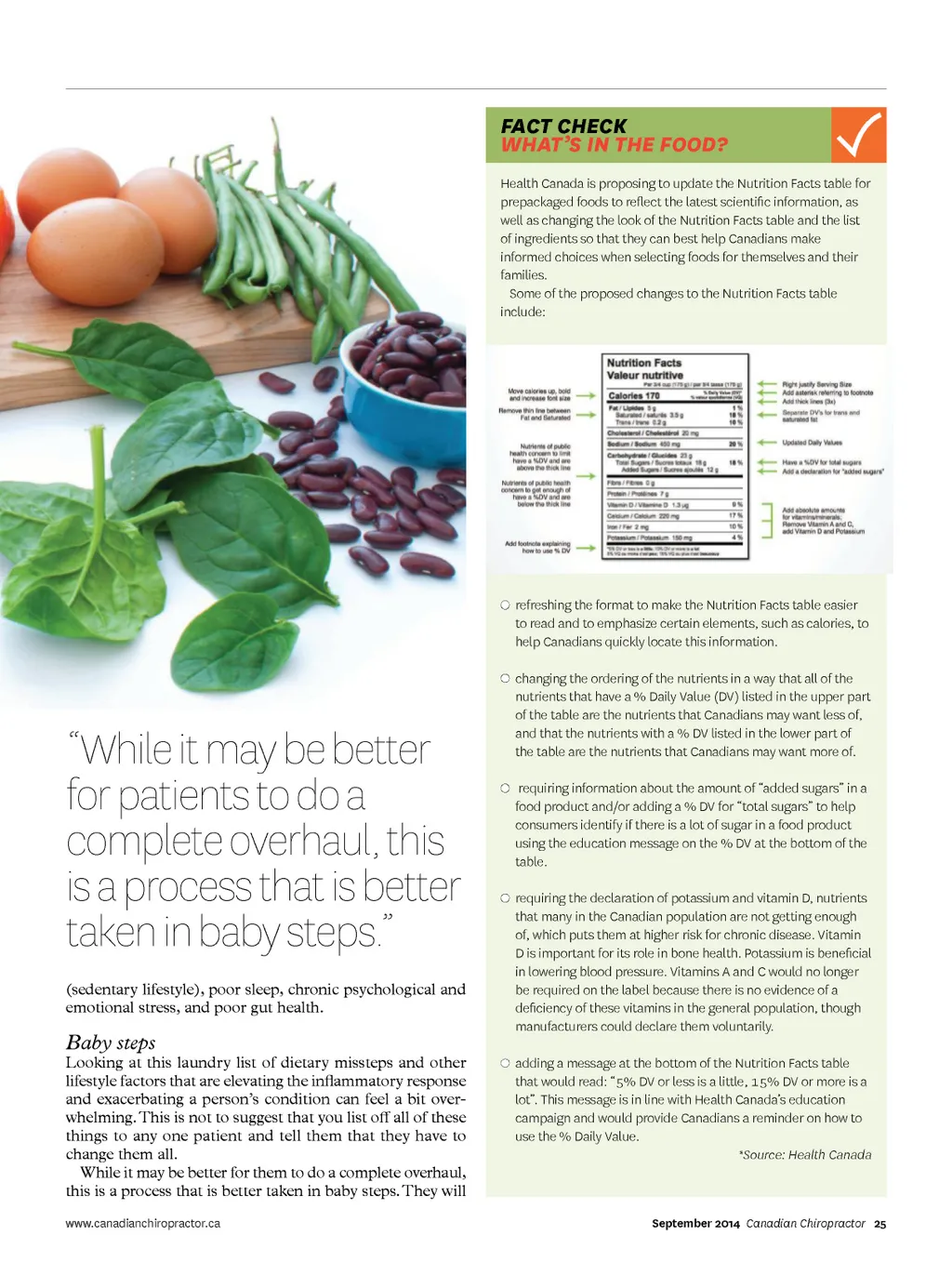
FACT CHECK WHAT’S IN THE FOOD? Health Canada is proposing to update the Nutrition Facts table for prepackaged foods to reflect the latest scientific information, as well as changing the look of the Nutrition Facts table and the list of ingredients so that they can best help Canadians make informed choices when selecting foods for themselves and their families. Some of the proposed changes to the Nutrition Facts table include: refreshing the format to make the Nutrition Facts table easier to read and to emphasize certain elements, such as calories, to help Canadians quickly locate this information. changing the ordering of the nutrients in a way that all of the nutrients that have a % Daily Value (DV) listed in the upper part of the table are the nutrients that Canadians may want less of, and that the nutrients with a % DV listed in the lower part of the table are the nutrients that Canadians may want more of. requiring information about the amount of “added sugars” in a food product and/or adding a % DV for “total sugars” to help consumers identify if there is a lot of sugar in a food product using the education message on the % DV at the bottom of the table. requiring the declaration of potassium and vitamin D, nutrients that many in the Canadian population are not getting enough of, which puts them at higher risk for chronic disease. Vitamin D is important for its role in bone health. Potassium is beneficial in lowering blood pressure. Vitamins A and C would no longer be required on the label because there is no evidence of a deficiency of these vitamins in the general population, though manufacturers could declare them voluntarily. adding a message at the bottom of the Nutrition Facts table that would read: “5% DV or less is a little, 15% DV or more is a lot”. This message is in line with Health Canada’s education campaign and would provide Canadians a reminder on how to use the % Daily Value. *Source: Health Canada “While it may be better for patients to do a complete overhaul, this is a process that is better taken in baby steps.” (sedentary lifestyle), poor sleep, chronic psychological and emotional stress, and poor gut health. Baby steps Looking at this laundry list of dietary missteps and other lifestyle factors that are elevating the inflammatory response and exacerbating a person’s condition can feel a bit over-whelming. This is not to suggest that you list off all of these things to any one patient and tell them that they have to change them all. While it may be better for them to do a complete overhaul, this is a process that is better taken in baby steps. They will www.canadianchiropractor.ca September 2014 Canadian Chiropractor 25
Chiropractic + Naturopathic Doctor September 2014: Page 25