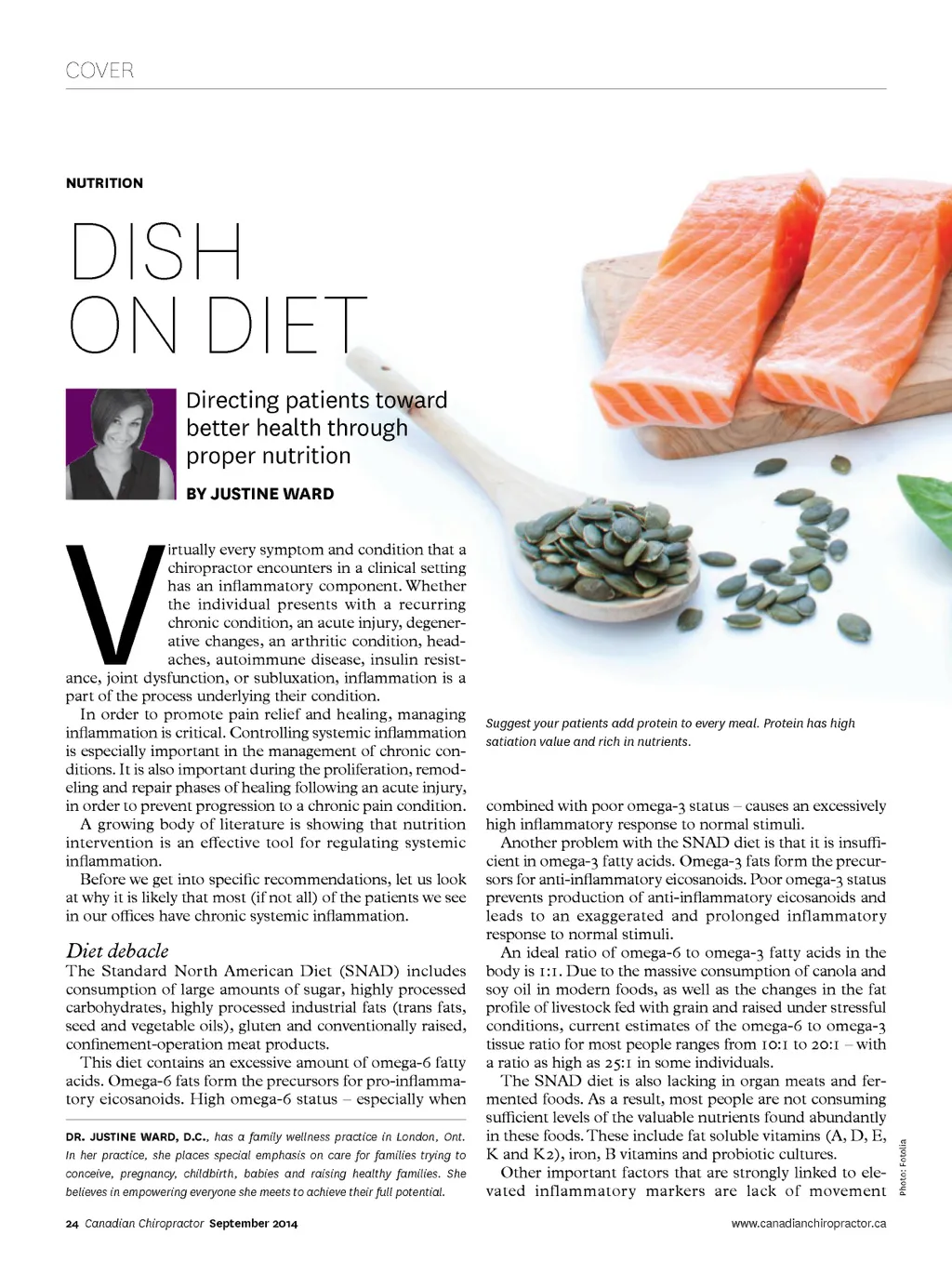
COVER NUTRITION DISH ON DIET Directing patients toward better health through proper nutrition V BY JUSTINE WARD i rtually every symptom and condition that a chiropractor encounters in a clinical setting has an inflammatory component. Whether the individual presents with a recurring chronic condition, an acute injury, degener-ative changes, an arthritic condition, head-aches, autoimmune disease, insulin resist-ance, joint dysfunction, or subluxation, inflammation is a part of the process underlying their condition. In order to promote pain relief and healing, managing inflammation is critical. Controlling systemic inflammation is especially important in the management of chronic con-ditions. It is also important during the proliferation, remod-eling and repair phases of healing following an acute injury, in order to prevent progression to a chronic pain condition. A growing body of literature is showing that nutrition intervention is an effective tool for regulating systemic inflammation. Before we get into specific recommendations, let us look at why it is likely that most (if not all) of the patients we see in our offices have chronic systemic inflammation. Suggest your patients add protein to every meal. Protein has high satiation value and rich in nutrients. Diet debacle The Standard North American Diet (SNAD) includes consumption of large amounts of sugar, highly processed carbohydrates, highly processed industrial fats (trans fats, seed and vegetable oils), gluten and conventionally raised, confinement-operation meat products. This diet contains an excessive amount of omega-6 fatty acids. Omega-6 fats form the precursors for pro-inflamma-tory eicosanoids. High omega-6 status – especially when DR. JUSTINE WARD, D.C. , has a family wellness practice in London, Ont. In her practice, she places special emphasis on care for families trying to conceive, pregnancy, childbirth, babies and raising healthy families. She believes in empowering everyone she meets to achieve their full potential. 24 Canadian Chiropractor September 2014 combined with poor omega-3 status – causes an excessively high inflammatory response to normal stimuli. Another problem with the SNAD diet is that it is insuffi-cient in omega-3 fatty acids. Omega-3 fats form the precur-sors for anti-inflammatory eicosanoids. Poor omega-3 status prevents production of anti-inflammatory eicosanoids and leads to an exaggerated and prolonged inflammatory response to normal stimuli. An ideal ratio of omega-6 to omega-3 fatty acids in the body is 1:1. Due to the massive consumption of canola and soy oil in modern foods, as well as the changes in the fat profile of livestock fed with grain and raised under stressful conditions, current estimates of the omega-6 to omega-3 tissue ratio for most people ranges from 10:1 to 20:1 – with a ratio as high as 25:1 in some individuals. The SNAD diet is also lacking in organ meats and fer-mented foods. As a result, most people are not consuming sufficient levels of the valuable nutrients found abundantly in these foods. These include fat soluble vitamins (A, D, E, K and K2), iron, B vitamins and probiotic cultures. Other important factors that are strongly linked to ele-vated inflammatory markers are lack of movement www.canadianchiropractor.ca Photo: Fotolia
Chiropractic + Naturopathic Doctor September 2014: Page 24