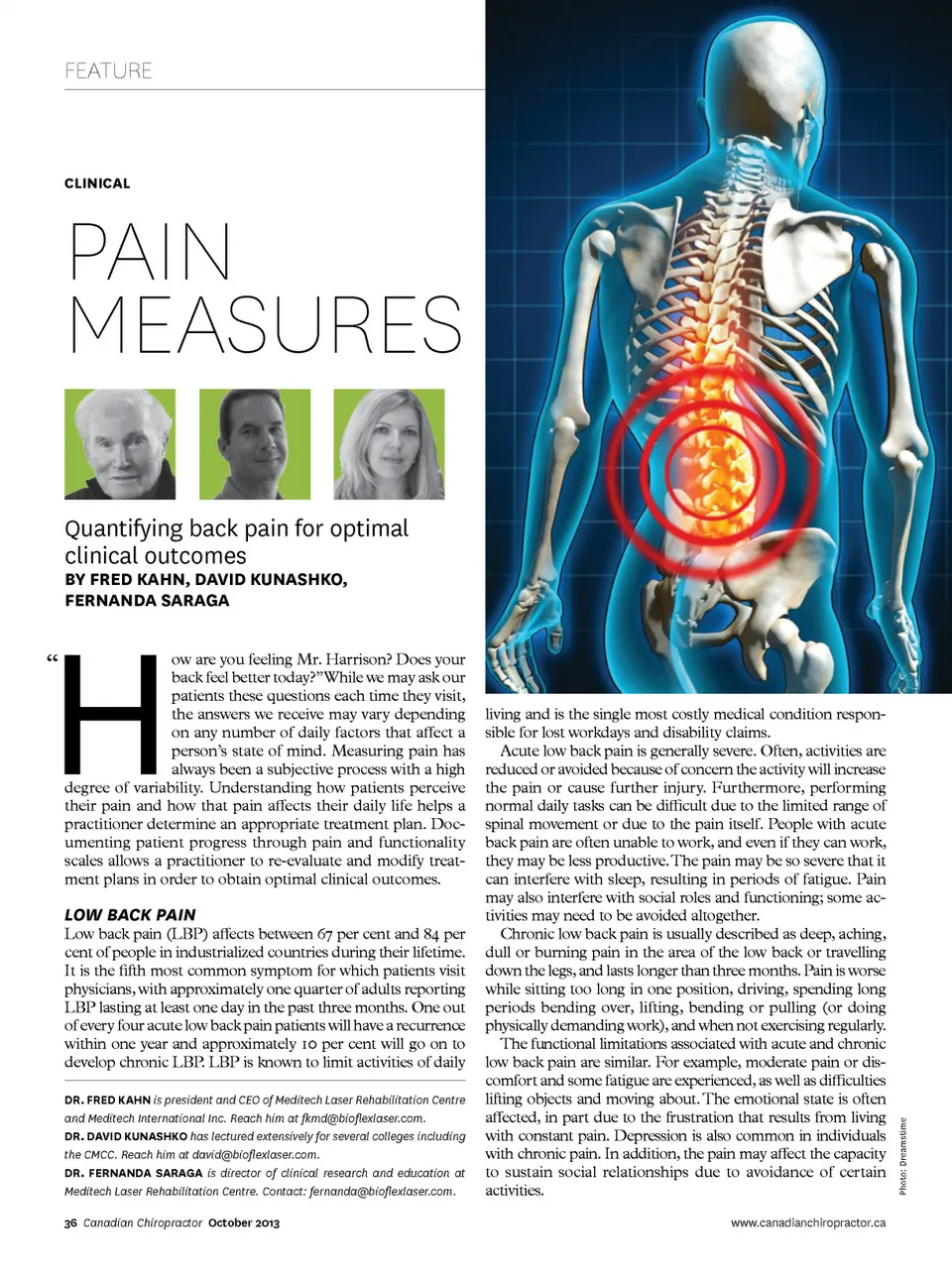
FEATURE CLINICAL PAIN MEASURES Quantifying back pain for optimal clinical outcomes “ H by Fred KAhn, dAvid KunAShKO, FernAndA SArAgA ow are you feeling Mr. Harrison? Does your back feel better today?” While we may ask our patients these questions each time they visit, the answers we receive may vary depending on any number of daily factors that affect a person’s state of mind. Measuring pain has always been a subjective process with a high degree of variability. Understanding how patients perceive their pain and how that pain affects their daily life helps a practitioner determine an appropriate treatment plan. Doc-umenting patient progress through pain and functionality scales allows a practitioner to re-evaluate and modify treat-ment plans in order to obtain optimal clinical outcomes. low BaCk paiN Low back pain (LBP) affects between 67 per cent and 84 per cent of people in industrialized countries during their lifetime. It is the fifth most common symptom for which patients visit physicians, with approximately one quarter of adults reporting LBP lasting at least one day in the past three months. One out of every four acute low back pain patients will have a recurrence within one year and approximately 10 per cent will go on to develop chronic LBP. LBP is known to limit activities of daily dr. Fred KAhn is president and CEO of Meditech Laser Rehabilitation Centre and Meditech International Inc. Reach him at [email protected]. dr. dAvid KunAShKO has lectured extensively for several colleges including the CMCC. Reach him at [email protected]. dr. FernAndA SArAgA is director of clinical research and education at Meditech Laser Rehabilitation Centre. Contact: [email protected]. 36 Canadian Chiropractor October 2013 living and is the single most costly medical condition respon-sible for lost workdays and disability claims. Acute low back pain is generally severe. Often, activities are reduced or avoided because of concern the activity will increase the pain or cause further injury. Furthermore, performing normal daily tasks can be difficult due to the limited range of spinal movement or due to the pain itself. People with acute back pain are often unable to work, and even if they can work, they may be less productive. The pain may be so severe that it can interfere with sleep, resulting in periods of fatigue. Pain may also interfere with social roles and functioning; some ac-tivities may need to be avoided altogether. Chronic low back pain is usually described as deep, aching, dull or burning pain in the area of the low back or travelling down the legs, and lasts longer than three months. Pain is worse while sitting too long in one position, driving, spending long periods bending over, lifting, bending or pulling (or doing physically demanding work), and when not exercising regularly. The functional limitations associated with acute and chronic low back pain are similar. For example, moderate pain or dis-comfort and some fatigue are experienced, as well as difficulties lifting objects and moving about. The emotional state is often affected, in part due to the frustration that results from living with constant pain. Depression is also common in individuals with chronic pain. In addition, the pain may affect the capacity to sustain social relationships due to avoidance of certain activities. www.canadianchiropractor.ca Photo: Dreamstime
Chiropractic + Naturopathic Doctor October 2013: Page 36