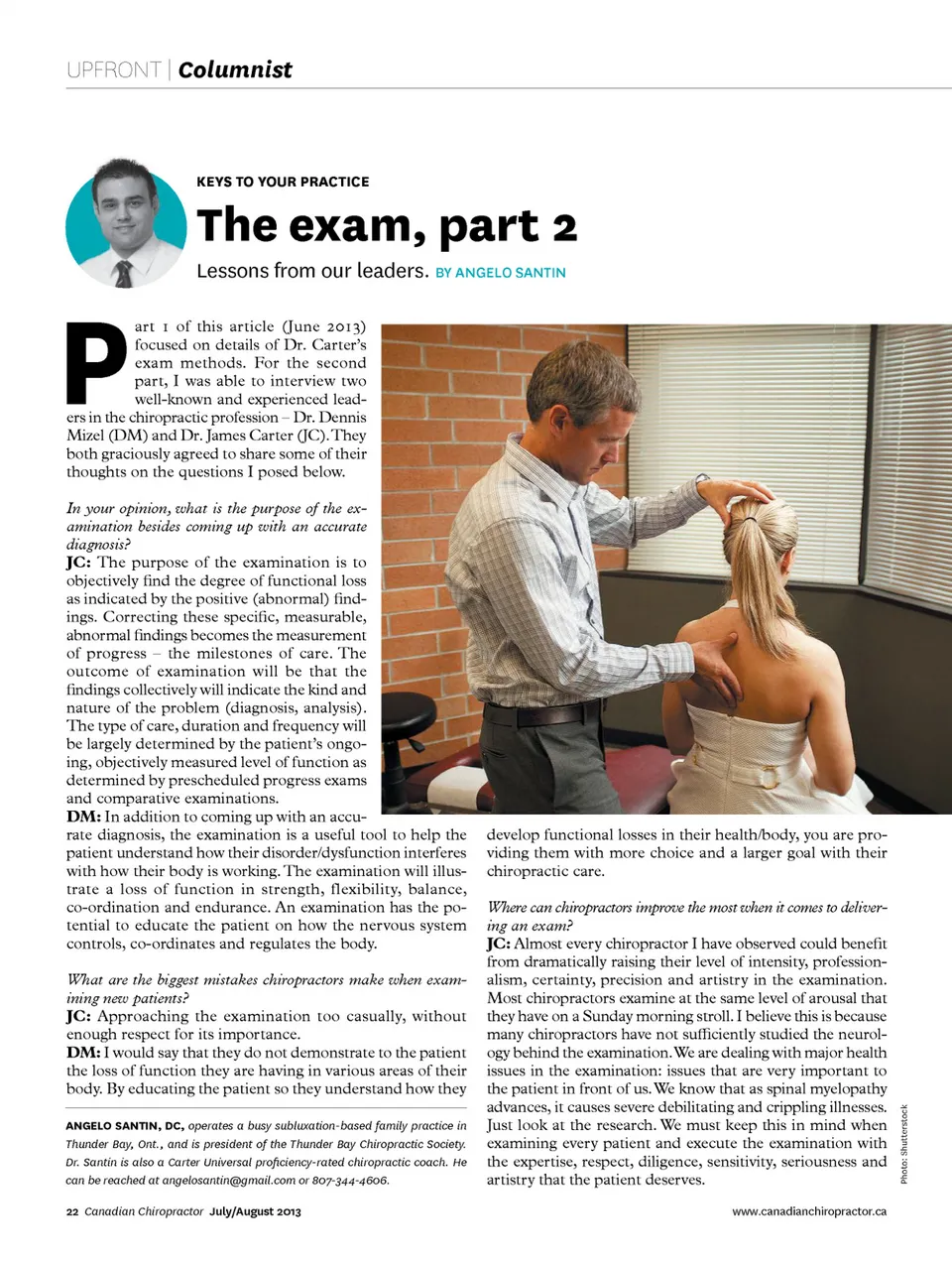
UPFRONT | Columnist KEYS TO YOUR PRACTICE The exam, part P Lessons from our leaders. BY ANGELO SANTIN art of this article (June ) focused on details of Dr. Carter’s exam methods. For the second part, I was able to interview two well-known and experienced lead-ers in the chiropractic profession – Dr. Dennis Mizel (DM) and Dr. James Carter (JC). They both graciously agreed to share some of their thoughts on the questions I posed below. In your opinion, what is the purpose of the ex-amination besides coming up with an accurate diagnosis? JC: The purpose of the examination is to objectively fi nd the degree of functional loss as indicated by the positive (abnormal) fi nd-ings. Correcting these specifi c, measurable, abnormal fi ndings becomes the measurement of progress – the milestones of care. The outcome of examination will be that the fi ndings collectively will indicate the kind and nature of the problem (diagnosis, analysis). The type of care, duration and frequency will be largely determined by the patient’s ongo-ing, objectively measured level of function as determined by prescheduled progress exams and comparative examinations. DM: In addition to coming up with an accu-rate diagnosis, the examination is a useful tool to help the patient understand how their disorder/dysfunction interferes with how their body is working. The examination will illus-trate a loss of function in strength, flexibility, balance, co-ordination and endurance. An examination has the po-tential to educate the patient on how the nervous system controls, co-ordinates and regulates the body. What are the biggest mistakes chiropractors make when exam-ining new patients? JC: Approaching the examination too casually, without enough respect for its importance. DM: I would say that they do not demonstrate to the patient the loss of function they are having in various areas of their body. By educating the patient so they understand how they develop functional losses in their health/body, you are pro-viding them with more choice and a larger goal with their chiropractic care. Where can chiropractors improve the most when it comes to deliver-ing an exam? JC: Almost every chiropractor I have observed could benefi t from dramatically raising their level of intensity, profession-alism, certainty, precision and artistry in the examination. Most chiropractors examine at the same level of arousal that they have on a Sunday morning stroll. I believe this is because many chiropractors have not su ciently studied the neurol-ogy behind the examination. We are dealing with major health issues in the examination: issues that are very important to the patient in front of us. We know that as spinal myelopathy advances, it causes severe debilitating and crippling illnesses. Just look at the research. We must keep this in mind when examining every patient and execute the examination with the expertise, respect, diligence, sensitivity, seriousness and artistry that the patient deserves. www.canadianchiropractor.ca ANGELO SANTIN, DC, operates a busy subluxation-based family practice in Thunder Bay, Ont., and is president of the Thunder Bay Chiropractic Society. Dr. Santin is also a Carter Universal proficiency-rated chiropractic coach. He can be reached at [email protected] or 807-344-4606. 22 Canadian Chiropractor July/August 2013 Photo: Shutterstock
Chiropractic + Naturopathic Doctor July/August 2013: Page 22