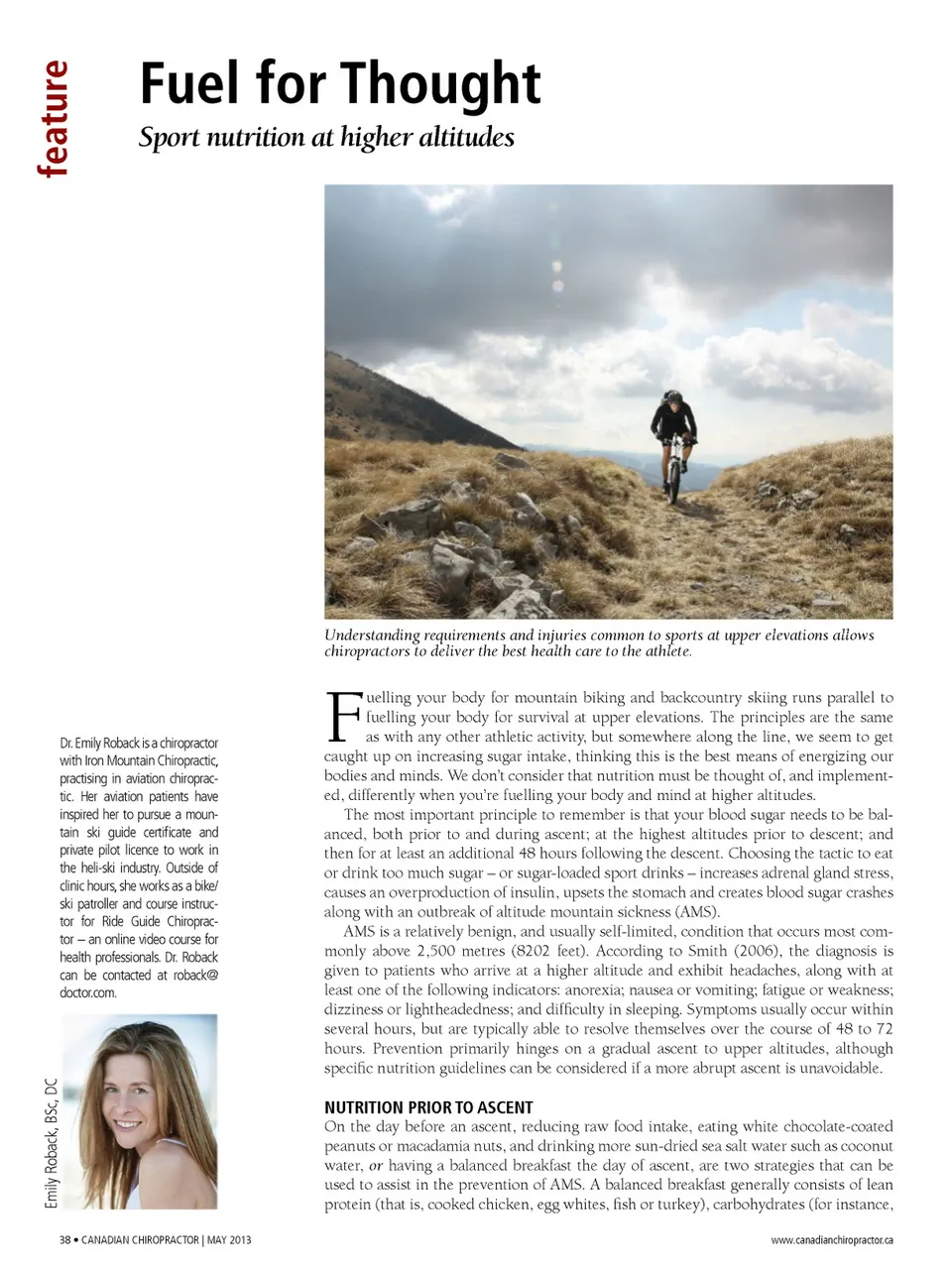
quinoa, millet or couscous) and essential fats (such as flaxseed, almonds, peanuts or sesame) consumed one hour before the ascent. Additionally, lightly salting the breakfast meal may, in fact, enhance the body’s ability to absorb water and keep its electrolytes in balance. AMS and sugar crashes. Worsening head -ache or respiratory symptoms should alert the athlete to possible altitude ill -ness. Understanding injuries common to sports at upper elevations allows chiro -practors to deliver the best health care to the athlete.• • • ASCENT AND DESCENT During mountain travel – during ascent, at the arrival of the highest altitude, and during descent – it is recommended you modify your diet to include items such as organic peanut butter and jam on whole-wheat pitas; white chocolate macadamia cookies; perogies; sea salt in water (i.e., 1/3 teaspoon sun-dried sea salt per litre of water, 1/5 pinch of sea salt per one bottle of water, or finger dip and drink sea salt water); sea-salt gluten-free sweet potato chips; and coffee-flavored gel packs. Mountain bikers and skiers tend to loose sodium when they are under physical stress, or when they consume too much water leading to hyponatre -mia (a disturbance in sodium levels). By adding small carbohydrate-based snacks with salt to your diet, you will be able to keep the electrolytes balanced and guard against cramping. ARRIvAL AT BASE LEvEL Upon descent to the lowest altitude, the nutrition regime for mountain travel (as -cent and descent) stops. Once you arrive at the final base level, body treatment usually consists of heat therapy for thigh muscles; cold packs wrapped around knee joints; going for a swim in the lake or pool; chiropractic care; therapeutic massage; stretching; drinking chocolate milk and having a balanced dinner con -sisting of, for instance, three ounces of chicken, half a cup of quinoa and two teaspoons of fish oil. Balancing one’s nutritional intake for alpine sports is the key to unlimited endurance with minimal to no conse -quence of experiencing AMS 48 hours after arrival at the highest altitude. Oxy -gen administration should be considered a treatment option for individuals with respiratory and pulse irregularities. Mountain bikers and backcountry skiers are at risk for injuries and ill -ness because of the mountainous region where they participate in their sport. Proper preparation for exercising at dif -ferent elevations is imperative to prevent www.canadianchiropractor.ca SOuRCES • Schneider M, Bernasch D, Weymann J, et al. Acute mountain sickness: influence of susceptibility, pre-exposure and ascent rate. Med Sci Sports Exerc 2002; 34(12):1886-91. Smith, Larry. Alpine Climbing: In-juries and Illness. Phys Med Rehabil Clin N Am 2006; 17(1): 633-644. Sutton JR, Coates G, Houston C. The Lake Louise consensus in the definition and quantification of altitude illness. In: Sutton JR, Coates G, Houston C, editors. Hypoxia and mountain medicine. Burlington (VT): Queen City Press; 1992. P . 327-30. CANADIAN CHIROPRACTOR | MAY 2013 • 39
Chiropractic + Naturopathic Doctor May 2013: Page 39