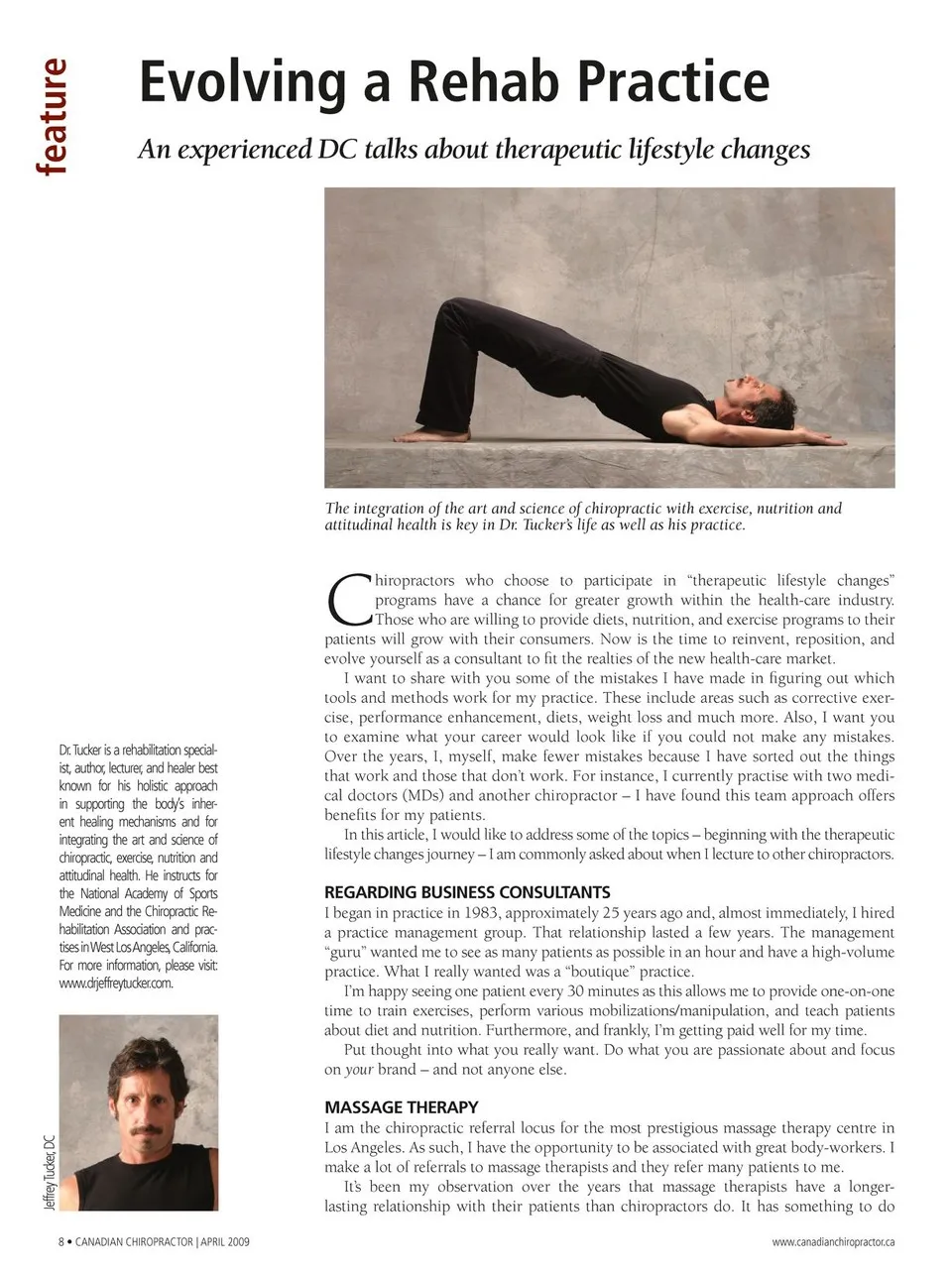
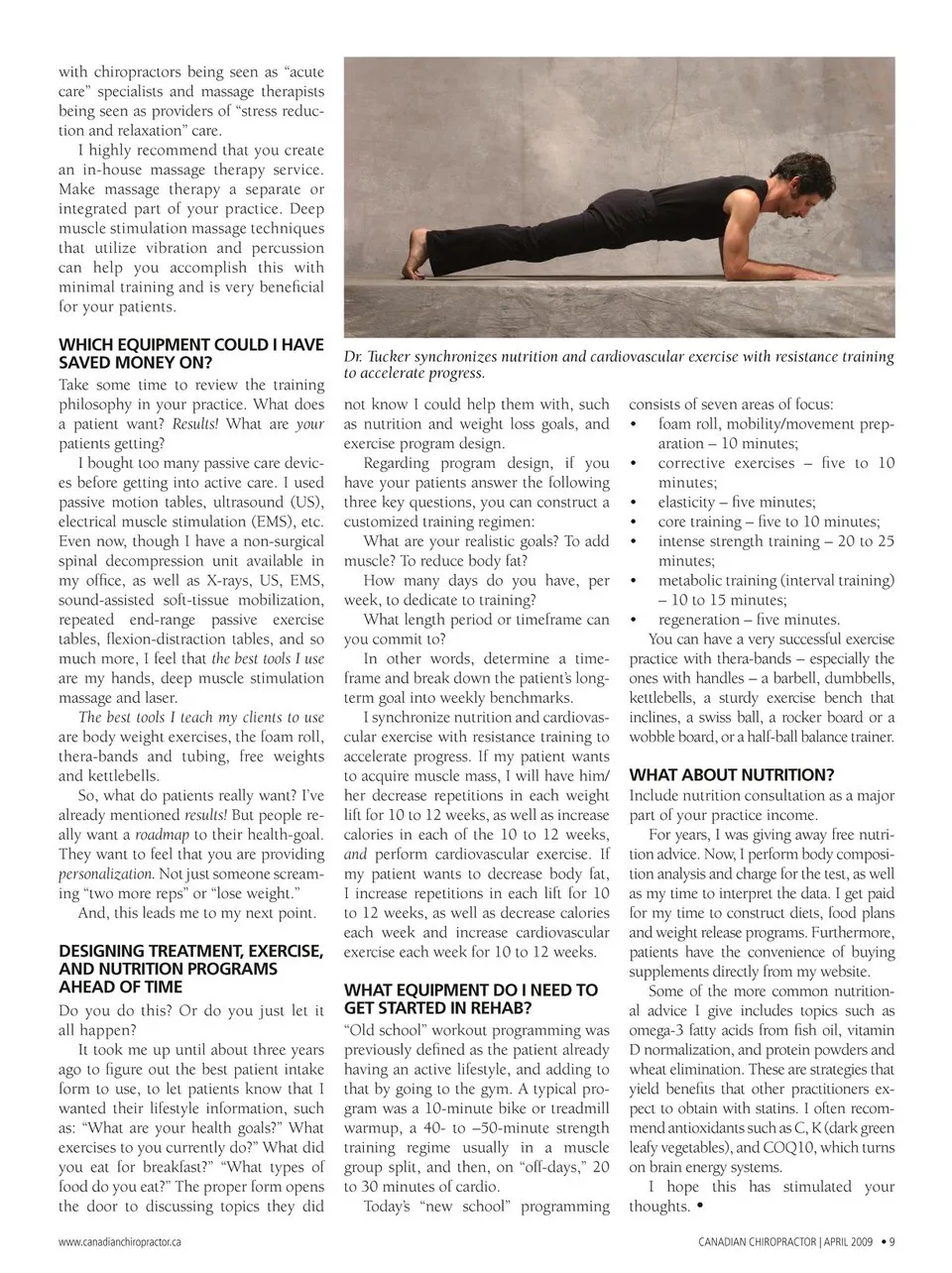
Evolving a Rehab Practice An experienced DC talks about therapeutic lifestyle changes The integration of the art and science of chiropractic with exercise, nutrition and attitudinal health is key in Dr. Tucker’s life as well as his practice. C Dr. Tucker is a rehabilitation special- ist, author, lecturer, and healer best known for his holistic approach in supporting the body’s inher- ent healing mechanisms and for integrating the art and science of chiropractic, exercise, nutrition and attitudinal health. He instructs for the National Academy of Sports Medicine and the Chiropractic Re- habilitation Association and prac- tises in West Los Angeles, California. For more information, please visit: www.drjeffreytucker.com. hiropractors who choose to participate in “therapeutic lifestyle changes” programs have a chance for greater growth within the health-care industry. Those who are willing to provide diets, nutrition, and exercise programs to their patients will grow with their consumers. Now is the time to reinvent, reposition, and evolve yourself as a consultant to fit the realties of the new health-care market. I want to share with you some of the mistakes I have made in figuring out which tools and methods work for my practice. These include areas such as corrective exer- cise, performance enhancement, diets, weight loss and much more. Also, I want you to examine what your career would look like if you could not make any mistakes. Over the years, I, myself, make fewer mistakes because I have sorted out the things that work and those that don’t work. For instance, I currently practise with two medi- cal doctors (MDs) and another chiropractor – I have found this team approach offers benefits for my patients. In this article, I would like to address some of the topics – beginning with the therapeutic lifestyle changes journey – I am commonly asked about when I lecture to other chiropractors. REGARDING BUSINESS CONSULTANTS I began in practice in 1983, approximately 25 years ago and, almost immediately, I hired a practice management group. That relationship lasted a few years. The management “guru” wanted me to see as many patients as possible in an hour and have a high-volume practice. What I really wanted was a “boutique” practice. I’m happy seeing one patient every 30 minutes as this allows me to provide one-on-one time to train exercises, perform various mobilizations/manipulation, and teach patients about diet and nutrition. Furthermore, and frankly, I’m getting paid well for my time. Put thought into what you really want. Do what you are passionate about and focus on your brand – and not anyone else. MASSAGE THERAPY I am the chiropractic referral locus for the most prestigious massage therapy centre in Los Angeles. As such, I have the opportunity to be associated with great body-workers. I make a lot of referrals to massage therapists and they refer many patients to me. It’s been my observation over the years that massage therapists have a longer- lasting relationship with their patients than chiropractors do. It has something to do 8 • CANADIAN CHIROPRACTOR | APRIL 2009 www.canadianchiropractor.ca Jeffrey Tucker, DC feature
Chiropractic + Naturopathic Doctor April 2009: Page 8