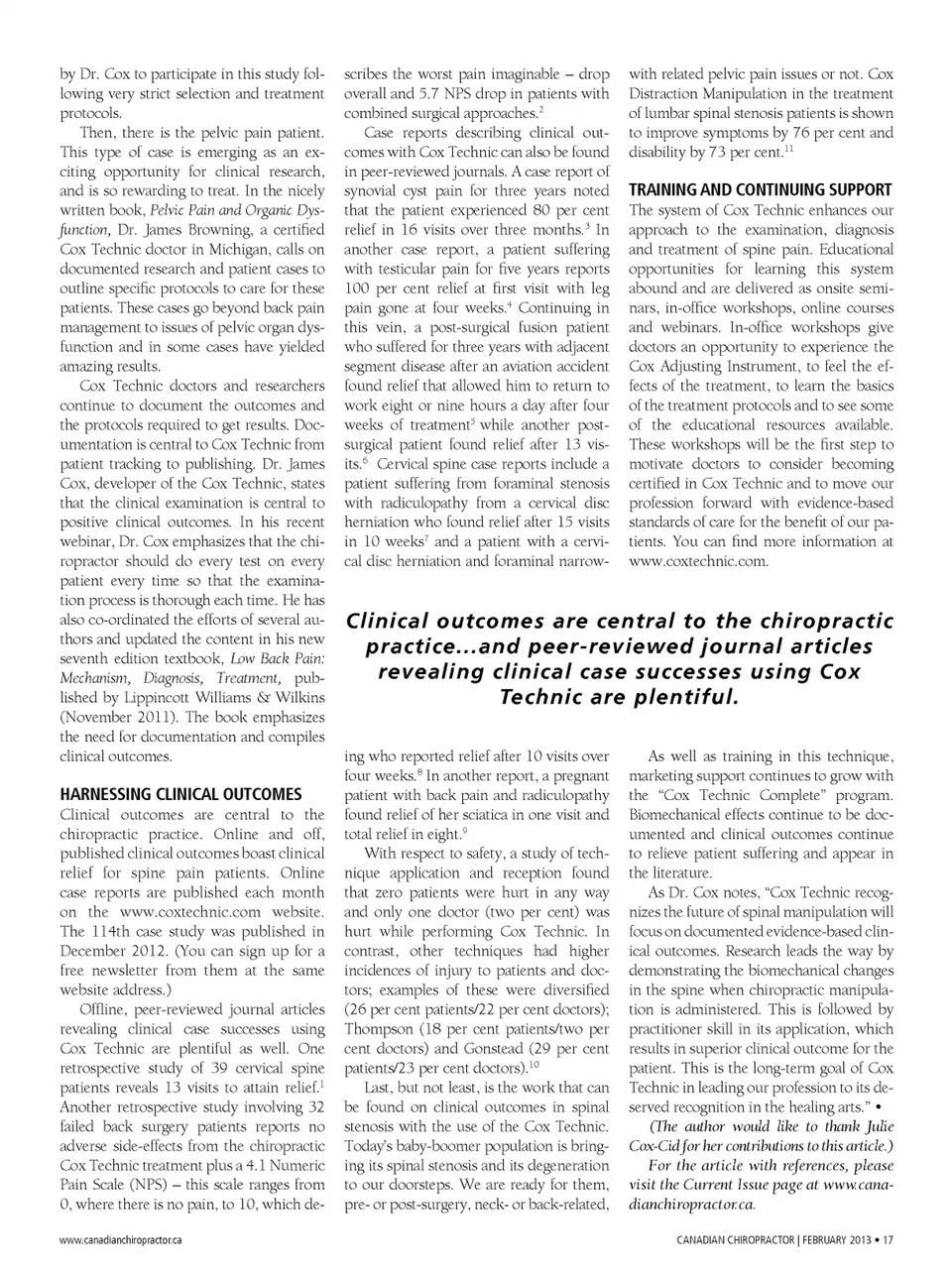
feature The Cox Technic Flexion-distraction spinal manipulation T he decision to adopt a particular technique in chiropractic practice may be based on many factors. Personal philosophy, patient demographics, trial and error, physical strain on the practitioner, equipment and training required, and current standards of practice, which are evidence based and supported by research, may play a part in making this decision. All of these factors contributed to my opting to become fully certified in Cox Technic several years ago, and to reinvigorate my practice and my purpose for choosing the profession of chiropractic as my career. It was the best choice I have made in 30 years of practice. WHAT IS COX TECHNIC? Cox Technic is a hands-on spinal manipulation method for spinal pain, be it sprains or strains or radiculopathy, sciatica or spinal stenosis due to disc herniation or spinal cysts. That seems like a wide-reaching capability for one technique, but Cox Technic is gentle enough, and effective enough, for chiropractors to confidently follow its evidence-based protocols in order to help out patients with a variety of presentations. Pregnant patients with back and leg pain, post-surgical continued pain patients, neck pain and arm pain pa-tients, back pain and even bilateral leg pain patients find relief with this form of treatment. The relief can be 50 per cent or 80 per cent, even 100 per cent for some – but most patients are quite appreciative of any relief they receive after years of frustration and pain and/or even facing a surgery they may not want. HOW DOES IT WORK? The Cox Technic system of spinal pain management is guided by documented algorithms (called protocols) of decision-making to determine the treatment of a patient. Protocol I and Protocol II are specific for patients with pain below the knee and pain that doesn’t extend below the knee, respectively. Depending on symptoms, patients may be treated daily to 50 per cent relief, which for many comes in a visit or two. The 50% Rule will guide this deter-mination. As the patient reports 50 per cent relief of pain and the doctor notes objectively a 50 per cent relief of pain, patient visits are reduced by 50 per cent. Having these research-based guidelines to share with patients and follow as physicians is a comfort. AN EVIDENCE-BASED TECHNIQUE Since the U.S. government began funding chiropractic research in the 1990s, projects in-volving Cox Technic (flexion-distraction) have received funds each granting year. These projects have been biomechanical investigations as well as clinical comparison trials involv-ing medical and chiropractic researchers and clinicians. Focus has been on building the evidence-based approach to care of spine-related pain, be it pre-surgical or post-surgical; cervical, thoracic, or lumbar; or extremity or spinal nerve related. Recently the research progress with respect to the Cox Technic care of the cervical spine, the failed back surgical patient and the pelvic pain patient has really been the strongest. I would like to describe some examples of this work. The cervical spine research being carried out at Loyola University’s Stritch School of Medicine and the Hines VA Hospital in Chicago, in conjunction with researchers from Palmer Research Center, focuses on the biomechanical effects of the Cox Technic with its data currently under analysis in preparation for publication. A clinical outcomes study is underway at Palmer Research Center that tracks patient response to Cox Technic. The failed back surgical syndrome patient (a.k.a FBSS or post-surgical continued pain) is also a focus of research. This patient has already had a surgery but continues to suffer. Cox Technic has much to offer and currently a data collection study that just finished its documentation stage is under analysis. Twenty-two practising chiropractors were asked www.canadianchiropractor.ca Dean Greenwood, DC, MSc, FACO, FCCO Dr. Dean Greenwood is a co-owner of the Vancouver Spine Care Centre in Vancouver, B.C., a 1981 graduate of the Palmer College of Chiropractic, a Fellow of the Academy of Chiropractic Orthopedists (U.S.) and of the Canadian College of Chiroprac-tic Orthopedists, and a graduate of the Master of Science in Ad-vanced Clinical Practice program at National University of Health Sciences. 16 • CANADiAN CHiROPRACTOR | FEBRUARY 2013
Chiropractic + Naturopathic Doctor February 2013: Page 16