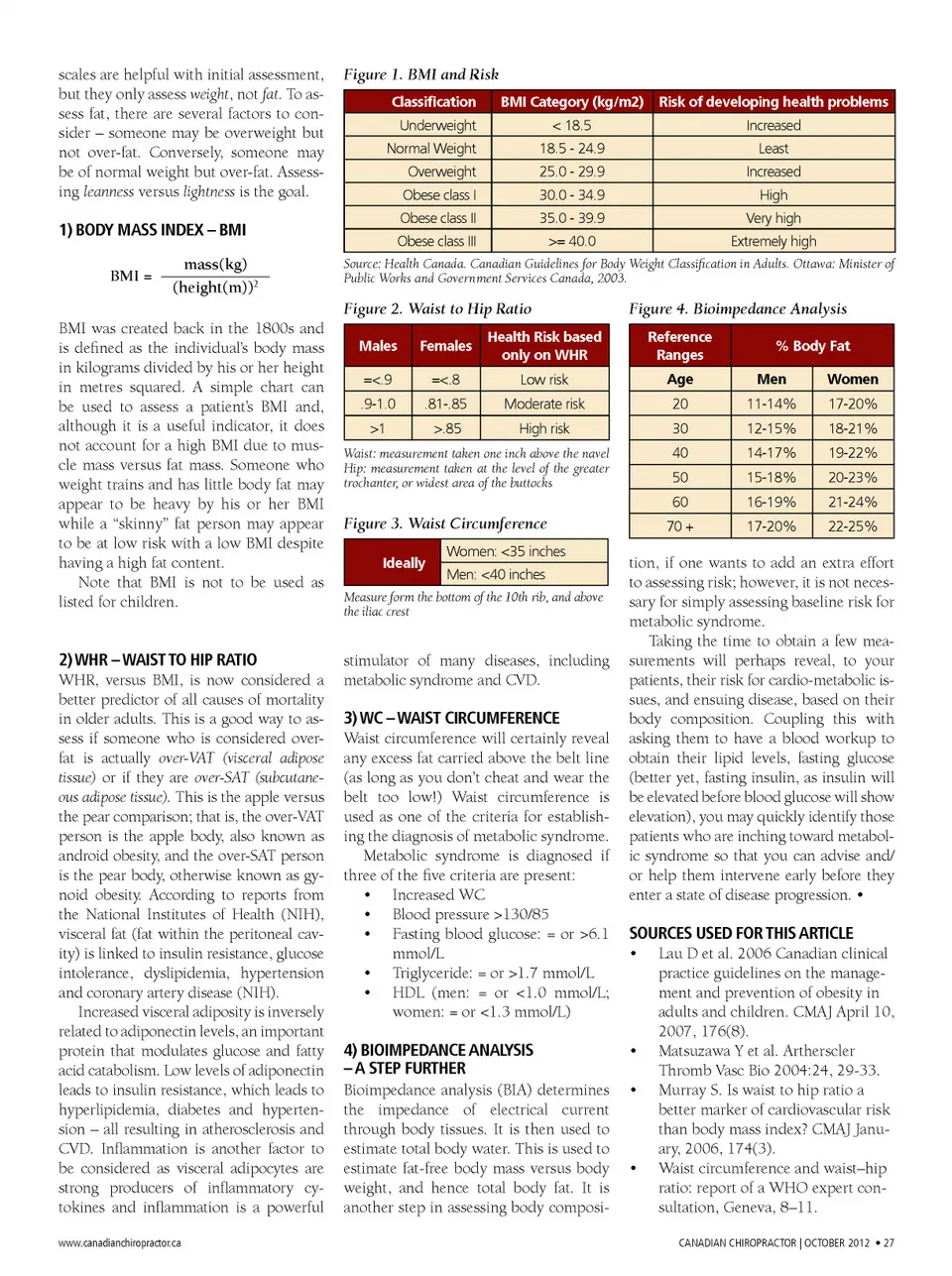
Risk Assessment for Metabolic Syndrome Helping patients understand their body composition Familiarity with just a few basics in anthropometric measurements can assist you in identifying which of your patients are at risk for cardio-metabolic syndrome. Dr. Victoria Coleman is a 1994 graduate of CMCC and a BSc in Kinesiology specializing in Fitness Assessment and Exercise Counsel-ing. In working with patients over the years, she made it her mission to teach people that everything you eat, breathe, drink, and think affects your health. This fuelled her desire to further expand her career and continue her studies. She is an avid follower of the Institute for Functional Medicine and is currently working toward her certification in Functional Medicine. Dr. Coleman is also the president of Douglas Laboratories/Pure Encapsulations Canada. A t one time or another, we have all heard the male patient with the large protrud-ing midsection say, “I am not fat, my gut is as hard as rock,” or the woman with larger thighs and buttocks complain she just cannot lose the fat on her lower body, no matter what. We may caution all of these patients against the perils of carry-ing extra body weight, regardless of the excuse. But, which of these heavier patients is actually at risk and what, precisely, are they at risk for? Becoming familiar with just a few, simple basics in anthropometric measurements can assist you in identifying which of your patients are at risk for cardio-metabolic syndrome. This article will discuss some of these measurements and what they may indicate regarding your patients’ risk levels. This information adds to the DCs’ already extensive physical exam, but might be well worth considering. From a service/primary care point of view, it is important and easy and adds value to the initial exam. OBESITY AND METABOLIC SYNDROME Obesity, and, in general, the diagnosis of metabolic syndrome, has become epidemic and is quickly rising in the younger population, setting the stage for a life of morbidity and disease. Canadian statistics in 2004 showed 59 per cent of the population were over-weight and 26 per cent of children/adolescents were overweight. Metabolic syndrome is a disease of lifestyle – poor food choices, stress, lack of exercise, toxicities. Assessing the risk factors for this, in your initial exam, is something that, as a primary care provider, you can do in a just a few minutes and then encourage intervention as soon as possible. The weight scales alone are not enough to assess risk. More and more, we see the “skinny” fat patient develop cardiovascular disease or diabetes despite not fitting the previously accepted profile of the overweight person who was a risk for these condi-tions. Alternatively, the person who weighs in heavy and would appear to be at high risk for morbidity, may not suffer at all. It comes down to understanding body composition. Early intervention is so important in mitigating this disease, it would seem prudent as primary health-care providers to know what to look for and how to show your patients their risk just by looking at their body composition. It starts with remembering that www.canadianchiropractor.ca Victoria Coleman, DC 26 • CANADIAN CHIROPRACTOR | OCTOBER 2012
Chiropractic + Naturopathic Doctor October 2012: Page 26