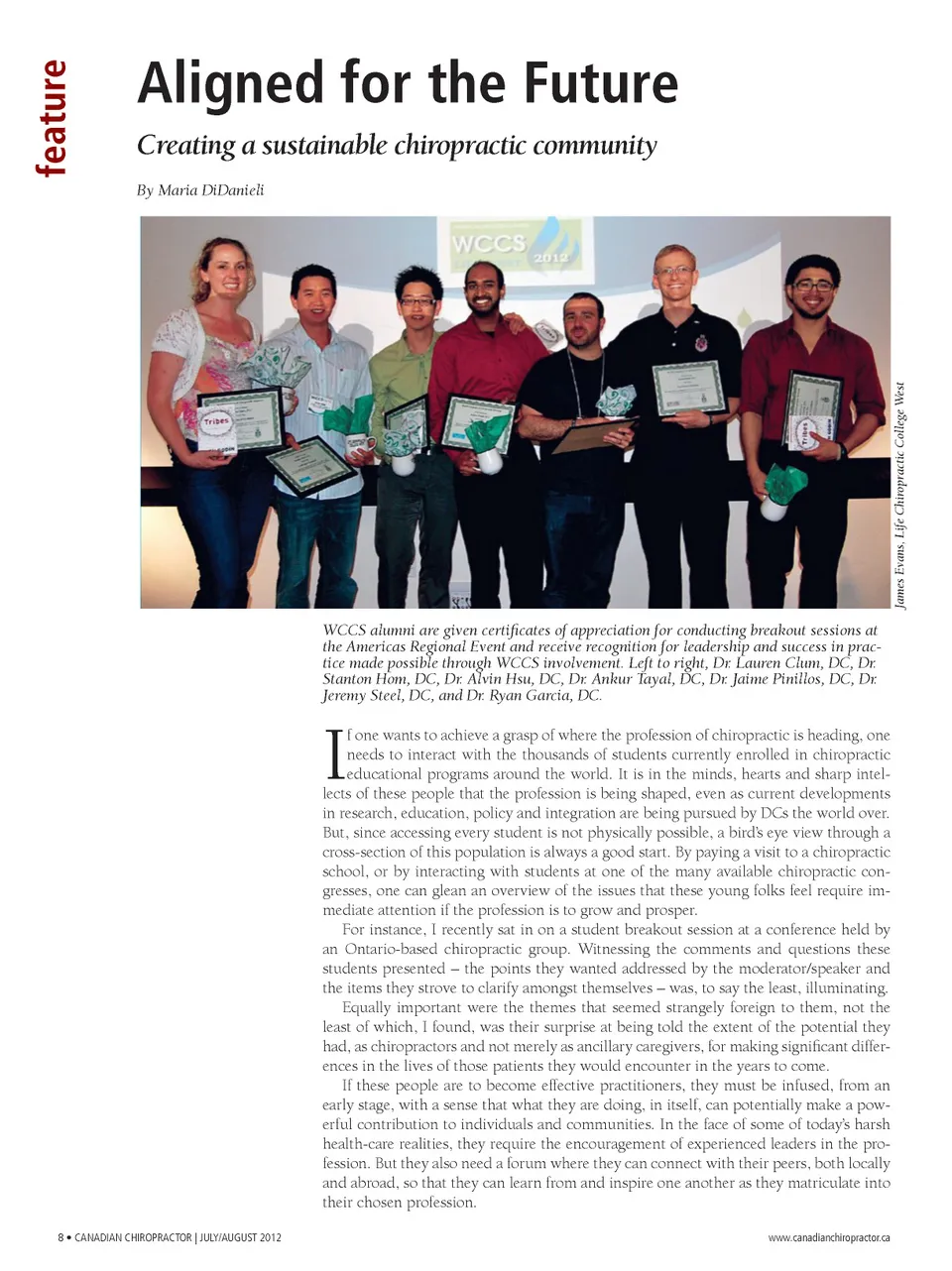
feature Aligned for the Future Creating a sustainable chiropractic community By Maria DiDanieli WCCS alumni are given certificates of appreciation for conducting breakout sessions at the Americas Regional Event and receive recognition for leadership and success in prac-tice made possible through WCCS involvement. Left to right, Dr. Lauren Clum, DC, Dr. Stanton Hom, DC, Dr. Alvin Hsu, DC, Dr. Ankur Tayal, DC, Dr. Jaime Pinillos, DC, Dr. Jeremy Steel, DC, and Dr. Ryan Garcia, DC. I f one wants to achieve a grasp of where the profession of chiropractic is heading, one needs to interact with the thousands of students currently enrolled in chiropractic educational programs around the world. It is in the minds, hearts and sharp intel-lects of these people that the profession is being shaped, even as current developments in research, education, policy and integration are being pursued by DCs the world over. But, since accessing every student is not physically possible, a bird’s eye view through a cross-section of this population is always a good start. By paying a visit to a chiropractic school, or by interacting with students at one of the many available chiropractic con-gresses, one can glean an overview of the issues that these young folks feel require im-mediate attention if the profession is to grow and prosper. For instance, I recently sat in on a student breakout session at a conference held by an Ontario-based chiropractic group. Witnessing the comments and questions these students presented – the points they wanted addressed by the moderator/speaker and the items they strove to clarify amongst themselves – was, to say the least, illuminating. Equally important were the themes that seemed strangely foreign to them, not the least of which, I found, was their surprise at being told the extent of the potential they had, as chiropractors and not merely as ancillary caregivers, for making significant differ-ences in the lives of those patients they would encounter in the years to come. If these people are to become effective practitioners, they must be infused, from an early stage, with a sense that what they are doing, in itself, can potentially make a pow-erful contribution to individuals and communities. In the face of some of today’s harsh health-care realities, they require the encouragement of experienced leaders in the pro-fession. But they also need a forum where they can connect with their peers, both locally and abroad, so that they can learn from and inspire one another as they matriculate into their chosen profession. www.canadianchiropractor.ca s CANADIAN CHIROPRACTOR | JULY/AUGUST 2012 James Evans, Life Chiropractic College West
Chiropractic + Naturopathic Doctor July/August 2012: Page 8