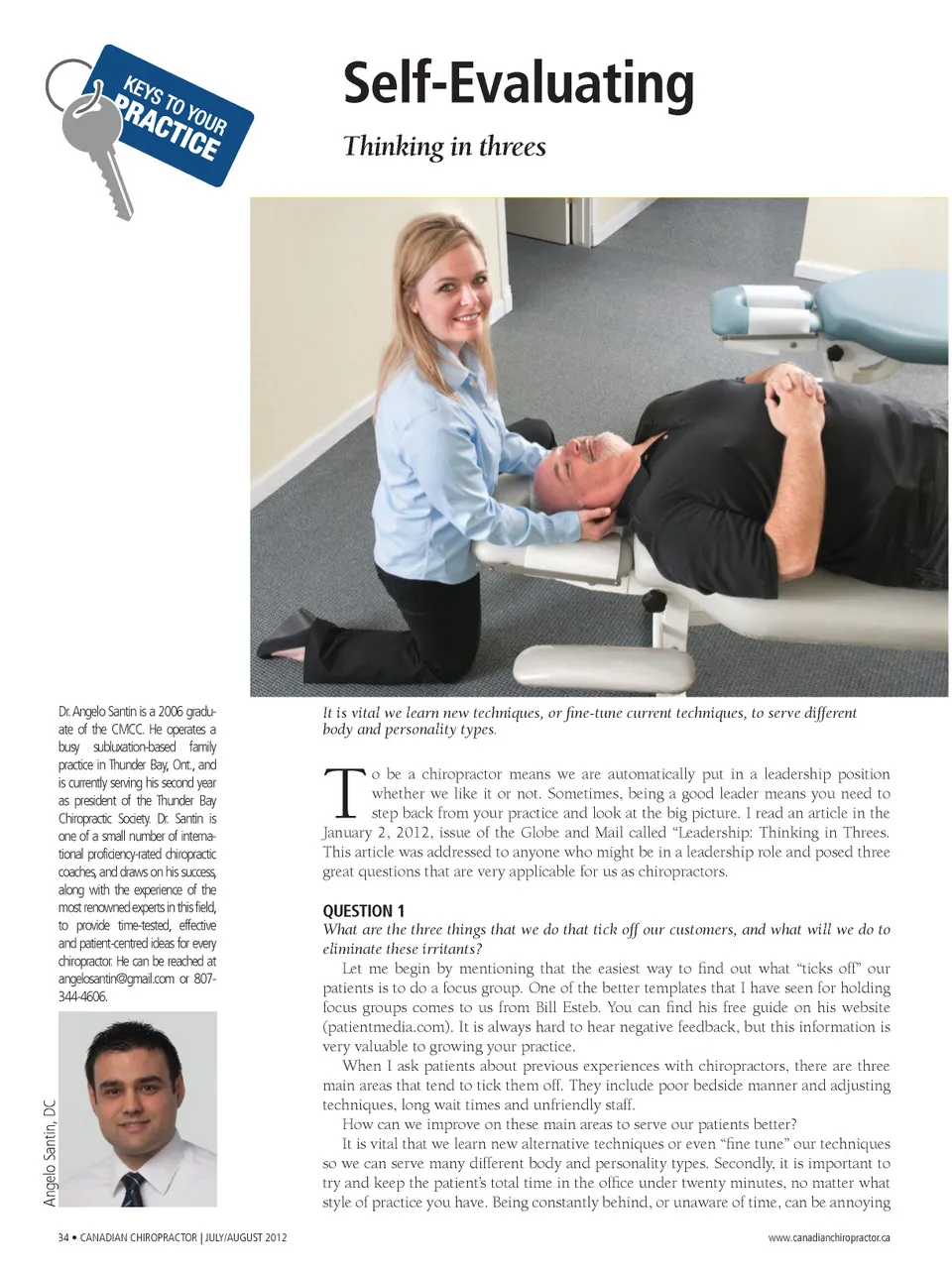
Self-Evaluating Thinking in threes Dr. Angelo Santin is a 2006 gradu-ate of the CMCC. He operates a busy subluxation-based family practice in Thunder Bay, Ont., and is currently serving his second year as president of the Thunder Bay Chiropractic Society. Dr. Santin is one of a small number of interna-tional proficiency-rated chiropractic coaches, and draws on his success, along with the experience of the most renowned experts in this field, to provide time-tested, effective and patient-centred ideas for every chiropractor. He can be reached at [email protected] or 807-344-4606. It is vital we learn new techniques, or fine-tune current techniques, to serve different body and personality types. T o be a chiropractor means we are automatically put in a leadership position whether we like it or not. Sometimes, being a good leader means you need to step back from your practice and look at the big picture. I read an article in the January 2, 2012, issue of the Globe and Mail called “Leadership: Thinking in Threes. This article was addressed to anyone who might be in a leadership role and posed three great questions that are very applicable for us as chiropractors. QUESTION 1 What are the three things that we do that tick off our customers, and what will we do to eliminate these irritants? Let me begin by mentioning that the easiest way to find out what “ticks off” our patients is to do a focus group. One of the better templates that I have seen for holding focus groups comes to us from Bill Esteb. You can find his free guide on his website (patientmedia.com). It is always hard to hear negative feedback, but this information is very valuable to growing your practice. When I ask patients about previous experiences with chiropractors, there are three main areas that tend to tick them off. They include poor bedside manner and adjusting techniques, long wait times and unfriendly staff. How can we improve on these main areas to serve our patients better? It is vital that we learn new alternative techniques or even “fine tune” our techniques so we can serve many different body and personality types. Secondly, it is important to try and keep the patient’s total time in the office under twenty minutes, no matter what style of practice you have. Being constantly behind, or unaware of time, can be annoying www.canadianchiropractor.ca Angelo Santin, DC s CANADIAN CHIROPRACTOR | JULY/AUGUST 2012
Chiropractic + Naturopathic Doctor July/August 2012: Page 34