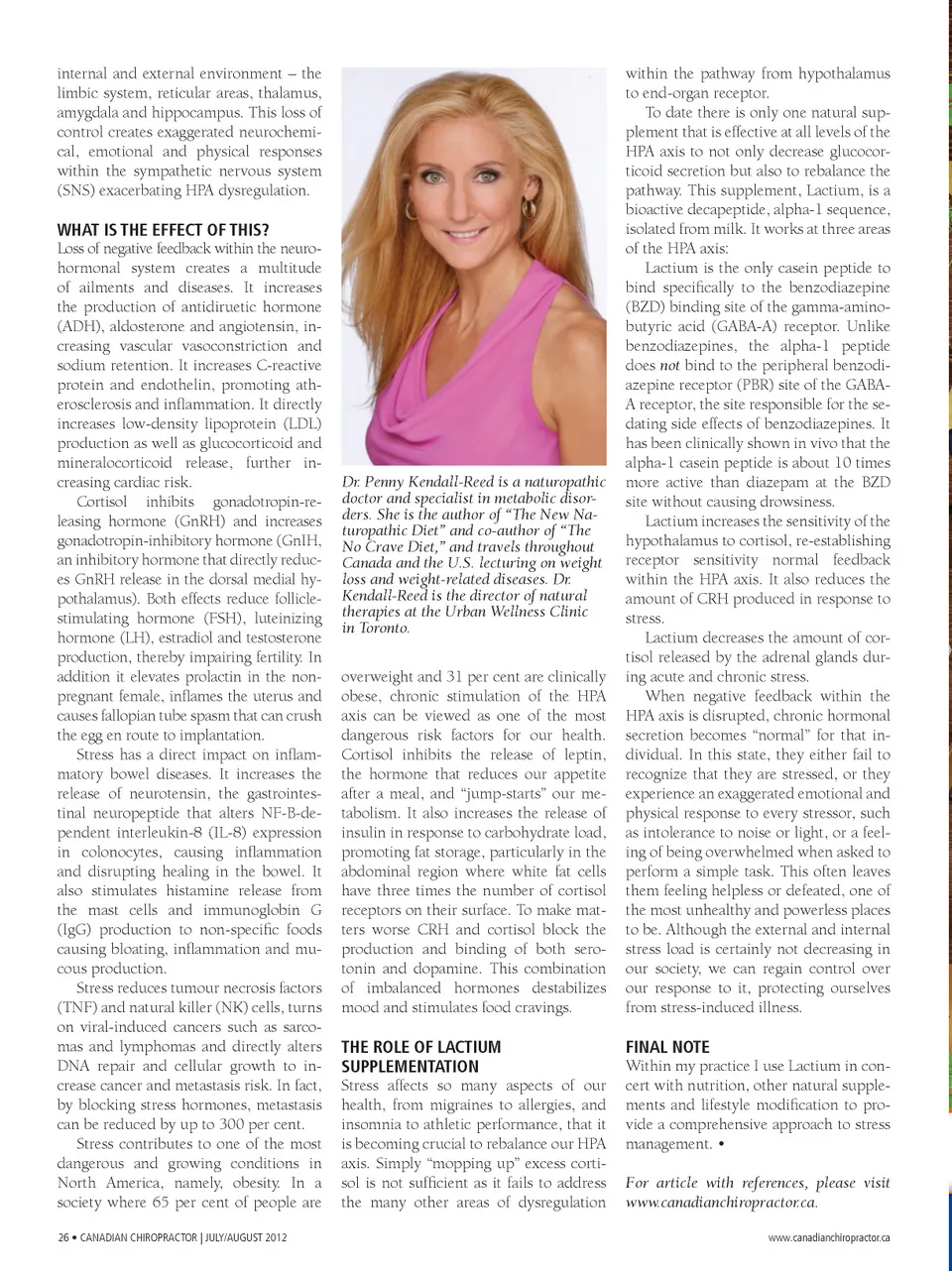
internal and external environment – the limbic system, reticular areas, thalamus, amygdala and hippocampus. This loss of control creates exaggerated neurochemi-cal, emotional and physical responses within the sympathetic nervous system (SNS) exacerbating HPA dysregulation. WHAT IS THE EFFECT OF THIS? Loss of negative feedback within the neuro-hormonal system creates a multitude of ailments and diseases. It increases the production of antidiruetic hormone (ADH), aldosterone and angiotensin, in-creasing vascular vasoconstriction and sodium retention. It increases C-reactive protein and endothelin, promoting ath-erosclerosis and inflammation. It directly increases low-density lipoprotein (LDL) production as well as glucocorticoid and mineralocorticoid release, further in-creasing cardiac risk. Cortisol inhibits gonadotropin-re-leasing hormone (GnRH) and increases gonadotropin-inhibitory hormone (GnIH, an inhibitory hormone that directly reduc-es GnRH release in the dorsal medial hy-pothalamus). Both effects reduce follicle-stimulating hormone (FSH), luteinizing hormone (LH), estradiol and testosterone production, thereby impairing fertility. In addition it elevates prolactin in the non-pregnant female, inflames the uterus and causes fallopian tube spasm that can crush the egg en route to implantation. Stress has a direct impact on inflam-matory bowel diseases. It increases the release of neurotensin, the gastrointes-tinal neuropeptide that alters NF-B-de-pendent interleukin-8 (IL-8) expression in colonocytes, causing inflammation and disrupting healing in the bowel. It also stimulates histamine release from the mast cells and immunoglobin G (IgG) production to non-specific foods causing bloating, inflammation and mu-cous production. Stress reduces tumour necrosis factors (TNF) and natural killer (NK) cells, turns on viral-induced cancers such as sarco-mas and lymphomas and directly alters DNA repair and cellular growth to in-crease cancer and metastasis risk. In fact, by blocking stress hormones, metastasis V>ÊLiÊÀi`ÕVi`ÊLÞÊÕ«ÊÌÊÎääÊ«iÀÊViÌ°Ê Stress contributes to one of the most dangerous and growing conditions in North America, namely, obesity. In a society where 65 per cent of people are s CANADIAN CHIROPRACTOR | JULY/AUGUST 2012 within the pathway from hypothalamus to end-organ receptor. To date there is only one natural sup-plement that is effective at all levels of the HPA axis to not only decrease glucocor-ticoid secretion but also to rebalance the pathway. This supplement, Lactium, is a bioactive decapeptide, alpha-1 sequence, isolated from milk. It works at three areas of the HPA axis: Lactium is the only casein peptide to bind specifically to the benzodiazepine (BZD) binding site of the gamma-amino-butyric acid (GABA-A) receptor. Unlike benzodiazepines, the alpha-1 peptide does not bind to the peripheral benzodi-azepine receptor (PBR) site of the GABA-A receptor, the site responsible for the se-dating side effects of benzodiazepines. It has been clinically shown in vivo that the alpha-1 casein peptide is about 10 times Dr. Penny Kendall-Reed is a naturopathic more active than diazepam at the BZD doctor and specialist in metabolic disor-site without causing drowsiness. ders. She is the author of “The New Na-Lactium increases the sensitivity of the turopathic Diet” and co-author of “The hypothalamus to cortisol, re-establishing No Crave Diet,” and travels throughout Canada and the U.S. lecturing on weight receptor sensitivity normal feedback loss and weight-related diseases. Dr. within the HPA axis. It also reduces the Kendall-Reed is the director of natural amount of CRH produced in response to therapies at the Urban Wellness Clinic stress. in Toronto. Lactium decreases the amount of cor-tisol released by the adrenal glands dur-ÛiÀÜi} ÌÊ>`ÊΣʫiÀÊViÌÊ>ÀiÊVV>ÞÊ ing acute and chronic stress. obese, chronic stimulation of the HPA When negative feedback within the axis can be viewed as one of the most HPA axis is disrupted, chronic hormonal dangerous risk factors for our health. secretion becomes “normal” for that in-Cortisol inhibits the release of leptin, dividual. In this state, they either fail to the hormone that reduces our appetite recognize that they are stressed, or they after a meal, and “jump-starts” our me-experience an exaggerated emotional and tabolism. It also increases the release of physical response to every stressor, such insulin in response to carbohydrate load, as intolerance to noise or light, or a feel-promoting fat storage, particularly in the ing of being overwhelmed when asked to abdominal region where white fat cells perform a simple task. This often leaves have three times the number of cortisol them feeling helpless or defeated, one of receptors on their surface. To make mat-the most unhealthy and powerless places ters worse CRH and cortisol block the to be. Although the external and internal production and binding of both sero-stress load is certainly not decreasing in tonin and dopamine. This combination our society, we can regain control over of imbalanced hormones destabilizes our response to it, protecting ourselves from stress-induced illness. mood and stimulates food cravings. THE ROLE OF LACTIUM SUPPLEMENTATION Stress affects so many aspects of our health, from migraines to allergies, and insomnia to athletic performance, that it is becoming crucial to rebalance our HPA axis. Simply “mopping up” excess corti-sol is not sufficient as it fails to address the many other areas of dysregulation FINAL NOTE Within my practice I use Lactium in con-cert with nutrition, other natural supple-ments and lifestyle modification to pro-vide a comprehensive approach to stress >>}iiÌ°ÊU For article with references, please visit www.canadianchiropractor.ca . www.canadianchiropractor.ca
Chiropractic + Naturopathic Doctor July/August 2012: Page 26