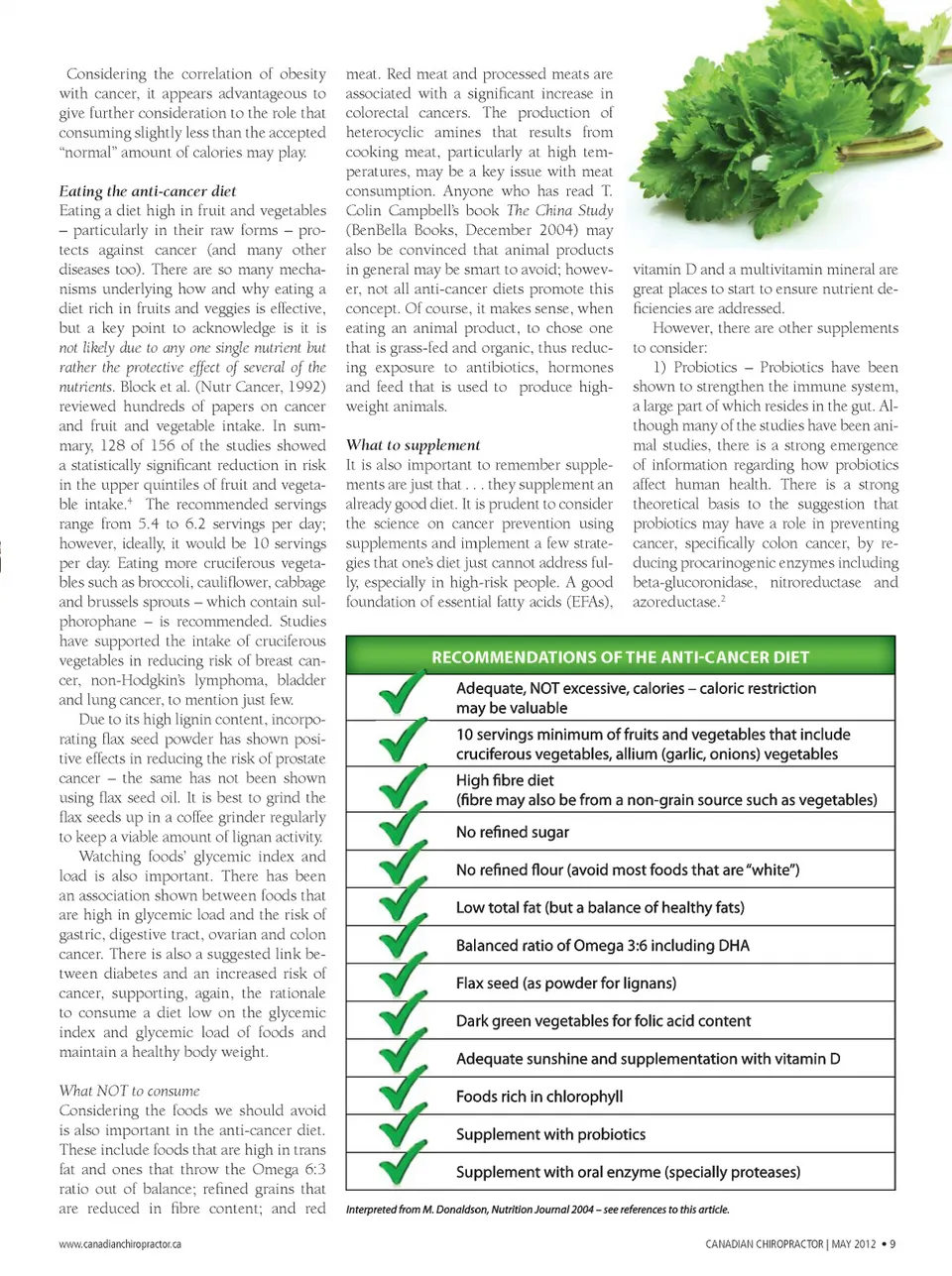
Considering the correlation of obesity with cancer, it appears advantageous to give further consideration to the role that consuming slightly less than the accepted “normal” amount of calories may play. Eating the anti-cancer diet Eating a diet high in fruit and vegetables – particularly in their raw forms – pro-tects against cancer (and many other diseases too). There are so many mecha-nisms underlying how and why eating a diet rich in fruits and veggies is effective, but a key point to acknowledge is it is not likely due to any one single nutrient but rather the protective effect of several of the nutrients . Block et al. (Nutr Cancer, 1992) reviewed hundreds of papers on cancer and fruit and vegetable intake. In sum-mary, 128 of 156 of the studies showed a statistically significant reduction in risk in the upper quintiles of fruit and vegeta-ble intake. 4 The recommended servings range from 5.4 to 6.2 servings per day; however, ideally, it would be 10 servings per day. Eating more cruciferous vegeta-bles such as broccoli, cauliflower, cabbage and brussels sprouts – which contain sul-phorophane – is recommended. Studies have supported the intake of cruciferous vegetables in reducing risk of breast can-cer, non-Hodgkin’s lymphoma, bladder and lung cancer, to mention just few. Due to its high lignin content, incorpo-rating flax seed powder has shown posi-tive effects in reducing the risk of prostate cancer – the same has not been shown using flax seed oil. It is best to grind the flax seeds up in a coffee grinder regularly to keep a viable amount of lignan activity. Watching foods’ glycemic index and load is also important. There has been an association shown between foods that are high in glycemic load and the risk of gastric, digestive tract, ovarian and colon cancer. There is also a suggested link be-tween diabetes and an increased risk of cancer, supporting, again, the rationale to consume a diet low on the glycemic index and glycemic load of foods and maintain a healthy body weight. What NOT to consume Considering the foods we should avoid is also important in the anti-cancer diet. These include foods that are high in trans v>ÌÊ >`Ê iÃÊ Ì >ÌÊ Ì ÀÜÊ Ì iÊ "i}>Ê È\ÎÊ ratio out of balance; refined grains that are reduced in fibre content; and red www.canadianchiropractor.ca meat. Red meat and processed meats are associated with a significant increase in colorectal cancers. The production of heterocyclic amines that results from cooking meat, particularly at high tem-peratures, may be a key issue with meat consumption. Anyone who has read T. Colin Campbell’s book The China Study (BenBella Books, December 2004) may also be convinced that animal products in general may be smart to avoid; howev-er, not all anti-cancer diets promote this concept. Of course, it makes sense, when eating an animal product, to chose one that is grass-fed and organic, thus reduc-ing exposure to antibiotics, hormones and feed that is used to produce high-weight animals. What to supplement It is also important to remember supple-ments are just that . . . they supplement an already good diet. It is prudent to consider the science on cancer prevention using supplements and implement a few strate-gies that one’s diet just cannot address ful-ly, especially in high-risk people. A good foundation of essential fatty acids (EFAs), vitamin D and a multivitamin mineral are great places to start to ensure nutrient de-ficiencies are addressed. However, there are other supplements to consider: 1) Probiotics – Probiotics have been shown to strengthen the immune system, a large part of which resides in the gut. Al-though many of the studies have been ani-mal studies, there is a strong emergence of information regarding how probiotics affect human health. There is a strong theoretical basis to the suggestion that probiotics may have a role in preventing cancer, specifically colon cancer, by re-ducing procarinogenic enzymes including beta-glucoronidase, nitroreductase and azoreductase. 2 R CO MM EN DA TI ON RE O S OF O T HE A NT I-I C AN A CE R D IE I T CANADIAN CHIROPRACTOR \-!9 s
Chiropractic + Naturopathic Doctor May 2012: Page 9