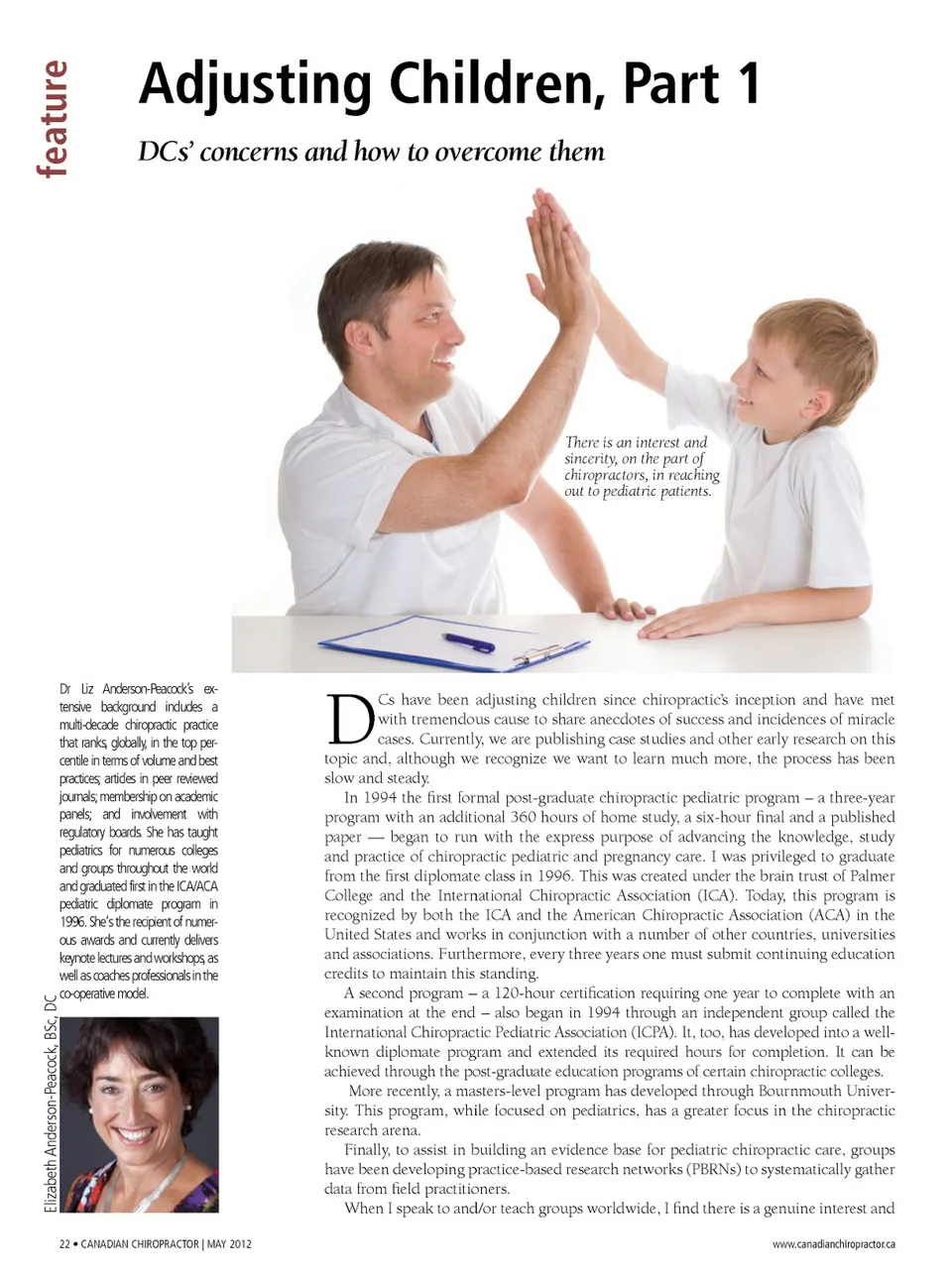
feature Adjusting Children, Part 1 DCs’ concerns and how to overcome them There is an interest and sincerity, on the part of chiropractors, in reaching out to pediatric patients. Elizabeth Anderson-Peacock, BSc, DC Dr Liz Anderson-Peacock’s ex-tensive background includes a multi-decade chiropractic practice that ranks, globally, in the top per-centile in terms of volume and best practices; articles in peer reviewed journals; membership on academic panels; and involvement with regulatory boards. She has taught pediatrics for numerous colleges and groups throughout the world and graduated first in the ICA/ACA pediatric diplomate program in 1996. She‘s the recipient of numer-ous awards and currently delivers keynote lectures and workshops, as well as coaches professionals in the co-operative model. D Cs have been adjusting children since chiropractic’s inception and have met with tremendous cause to share anecdotes of success and incidences of miracle cases. Currently, we are publishing case studies and other early research on this topic and, although we recognize we want to learn much more, the process has been slow and steady. In 1994 the first formal post-graduate chiropractic pediatric program – a three-year program with an additional 360 hours of home study, a six-hour final and a published paper — began to run with the express purpose of advancing the knowledge, study and practice of chiropractic pediatric and pregnancy care. I was privileged to graduate from the first diplomate class in 1996. This was created under the brain trust of Palmer College and the International Chiropractic Association (ICA). Today, this program is recognized by both the ICA and the American Chiropractic Association (ACA) in the United States and works in conjunction with a number of other countries, universities and associations. Furthermore, every three years one must submit continuing education credits to maintain this standing. A second program – a 120-hour certification requiring one year to complete with an examination at the end – also began in 1994 through an independent group called the International Chiropractic Pediatric Association (ICPA). It, too, has developed into a well-known diplomate program and extended its required hours for completion. It can be achieved through the post-graduate education programs of certain chiropractic colleges. More recently, a masters-level program has developed through Bournmouth Univer-sity. This program, while focused on pediatrics, has a greater focus in the chiropractic research arena. Finally, to assist in building an evidence base for pediatric chiropractic care, groups have been developing practice-based research networks (PBRNs) to systematically gather data from field practitioners. When I speak to and/or teach groups worldwide, I find there is a genuine interest and www.canadianchiropractor.ca 22 • CANADIAN CHIROPRACTOR | MAY 2012
Chiropractic + Naturopathic Doctor May 2012: Page 22